
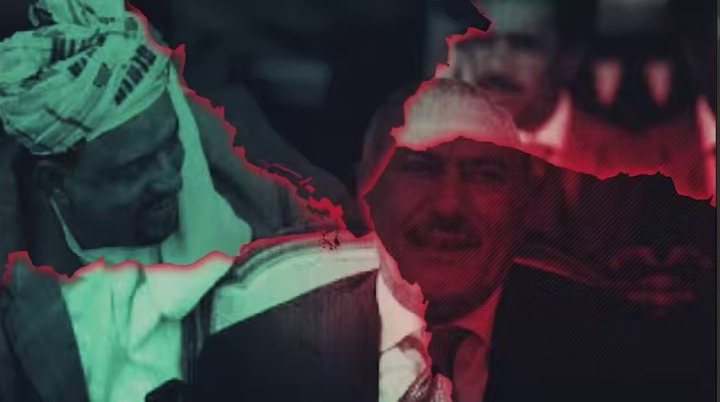
December 2nd… The Final Exposure of the Traitor Saleh and the Failure of the Guardianship Project
On the second of December, a long-term conspiracy was revealed—one through which the traitor Ali Saleh sought to resurrect the project of internal guardianship and control over Yemen, backed directly by the UAE and Saudi Arabia. That day marked a decisive turning point, as the true intentions of the late traitor became clear to the Yemeni people: a plan aimed at dismantling national unity and dragging the country into chaos and total division.
December 2 was not just another ordinary day; it was a true test of Yemeni awareness and national resilience. The vigilance of the people, the army, and the Popular Committees demonstrated that any project founded on treachery and dependency is inevitably doomed to fail—and that loyal Yemenis are capable of thwarting every attempt to fragment their nation or undermine its security.
Between False Loyalty and Exposed Betrayal
The December sedition did not emerge overnight; it was the result of a long accumulation of evasions, secret communications with the countries of aggression, and hidden plans to carry out a coup and destabilize the internal front. Years of political partnership between the General People’s Congress, Ansar Allah, and national forces served merely as a cover, for the late Saleh worked in silence to recreate his political presence through a coup, seizing every opportunity to send signals to the UAE and Saudi Arabia, attempting to turn Yemen into a scene of internal chaos.
August… The Month That Almost Set the Capital Ablaze
The original plan for the sedition was scheduled for August 24, 2017, during a mass celebration marking the anniversary of the founding of the GPC. Saleh used the mosque located in Al-Sabeen Square to store weapons amid a crowded gathering, hoping to ignite the capital. Yet the vigilance of the army and the Popular Committees, and their close monitoring from that moment on, prevented the plot from erupting. It also exposed the fragility of planning and the unilateral decision-making of the traitor Tariq Saleh, who declared the “zero hour” before the preparations were complete—causing confusion in the operations room backed by the UAE.
Shadow Camps and Secret Operations Rooms
After the failure of the August plot, the treason did not cease. Military groups were reactivated, and secret camps were opened in Dhamar and other locations. What became known as the “Commission for the Preservation of the Armed Forces and Security” was formed, serving as an operations room for planning coup movements. At the same time, intense media campaigns were launched against Ansar Allah and state institutions, aiming to create public resentment that would pave the way for sedition.
Hidden Alliances and Foreign Support
The conspiracy led by the late Saleh was not merely an internal struggle; it was part of a larger scheme serving regional powers. The UAE and Saudi Arabia provided direct support—funding, arms supplies, and intelligence planning—to reproduce a guardianship influence over Yemen’s national decision. These secret alliances revealed the danger of internal betrayal when it converges with foreign ambitions, as Saleh attempted to exploit every segment of Yemeni society to redraw the political map according to external interests, using his position—before all these plans fell apart in the face of the vigilance of the army, the Popular Committees, and an aware Yemeni people.
The Morning of Sedition… December 2 in the Crosshairs of Vigilance
At sunrise on the second of December, Sana’a appeared on the brink of explosion. Armed groups belonging to Saleh spread across the capital, blocking streets and firing at passers-by. Meanwhile, foreign media outlets—Al-Arabiya, Al-Hadath, and Sky News—promoted the notion of a “Sana’a Uprising,” while popular vigilance and the Popular Committees moved with precision. Communication routes to the fronts in Sirwah and Nihm were cut off, yet these attempts were met with a firm response from the army and the committees, leading to the failure of the plot before it escalated into a national catastrophe.
Leadership Speech… Awareness That Prevented Division
The role of Sayyed Abdul-Malik Al-Houthi was pivotal in foiling the conspiracy. Through his direct address to Saleh, he warned him of the national disgrace of betrayal, urging him to withdraw from alignment with the aggression and to stop the chaos. He also worked to protect national unity, mobilizing intermediaries, tribal dignitaries, and sheikhs to correct the course and prevent the sedition from spreading into the neighborhoods of the capital and other surrounding areas.
The Fall of the Last Card… The End of Saleh’s Project and the UAE’s Bet
Just hours after the sedition began, the lac