
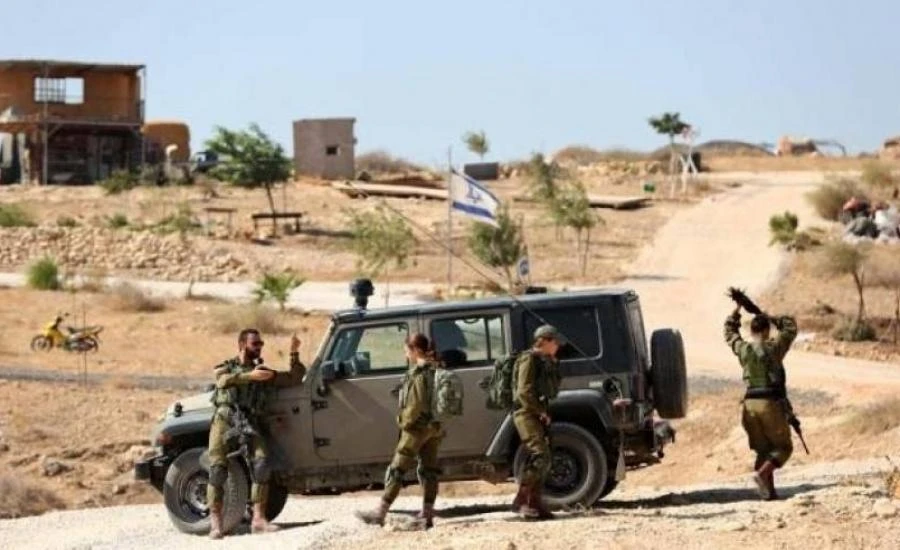
Enemy forces raid towns, villages, cities in occupied WB
Israeli enemy forces raided several villages, towns, and cities in the occupied West Bank on Tuesday evening, as part of their ongoing escalation against the Palestinian people.
Local sources told the Palestinian News Agency (Wafa) that Israeli forces raided the town of Aqrabah, south of Nablus, firing tear gas and detaining worshippers inside a mosque. This led to clashes with residents, though no injuries were reported.
In the northeastern part of Ramallah, Israeli forces raided the western area of Al-Mughayyir village, stormed a house, and detained several residents before withdrawing towards the eastern plain. No arrests were reported.
Al-Mughayyir village and other villages and towns northeast and east of Ramallah are subjected to frequent raids by Israeli forces, in addition to attacks by Israeli settlers on Palestinian homes, lands, and property.
In the city of al-Bireh, Israeli forces stormed the area with several military vehicles and positioned themselves in the courtyard of the Ali bin Abi Talib Mosque in the Karam Jasser neighborhood, near the old al-Bireh cemetery. They detained a number of worshippers as they were leaving the mosque and checked their IDs, though no arrests were reported.
Earlier in the day, Israeli special forces stormed al-Amari refugee camp south of Ramallah, before deploying military reinforcements to the camp and its surroundings. This resulted in clashes during which a 13-year-old boy and a young man were wounded by live ammunition in their lower extremities.
Also this afternoon, Israeli forces stormed the town of Sebastia, northwest of Nablus.
The mayor of Sebastia, Muhammad Azem, explained that several Israeli military vehicles, accompanied by engineering teams, stormed the town and raided the archaeological site, the Mosque of Yahya (John the Baptist), and the Roman royal cemetery.
He pointed out that this raid carries dangerous implications for the future of the town, especially since the shrines that were raided are religious and historical, and are located within the area classified as “B” according to the Oslo Accords.