
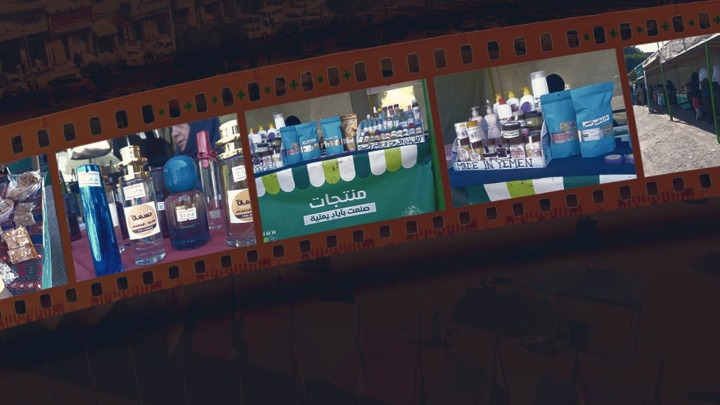
Localization of Domestic Industries: A Strategic Path Forged by Yemen After the September 21 Revolution
Yemen is today witnessing one of its most significant economic transformations in decades—an overhaul that has reshaped the structure of the national market and launched a strategic trajectory centered on localizing domestic industries and protecting national products. This shift follows long years of economic dependency and external dumping policies that devastated national production and turned the Yemeni consumer into a hostage of foreign imports.
This transformation did not occur by chance. Rather, it is a direct outcome of the September 21 Revolution, which restored sovereign decision-making and opened the door to a new economic vision built on the principle: “We eat what we grow and wear what we make.” This vision translates the directives of the Leader of the Revolution, Sayyed Abdulmalik Badr al-Din al-Houthi (may God protect him).
The First Joint Decision: A Decisive Turning Point
The first joint decision issued by the Ministries of Finance and of Economy, Industry, and Investment marked a watershed moment in the protection of local products. It represented the first integrated governmental step to curb random imports and regulate the market in a way that enables domestic industries to expand and recover.
The Acting Prime Minister, Allama Mohammed Muftah, affirmed that the release of restricted goods falls within a framework aimed at regulating imports, supporting national production, and empowering local factories to grow.
The decision sought to reduce the import bill and redirect a substantial portion of it inward by:
Banning imports of goods fully covered by domestic production, such as liquid dairy products, barley, millet, mineral water, paper tissues, galvanized poles, sponge, iron products, janabiyas and belts.
Restricting imports of goods partially covered by local industry, including juices, tomato paste, soft drinks, refined sugar, plastics, ceramics, bags, and packaging materials.
Minister of Finance Abduljabbar Ahmed stressed that these measures are “not temporary, but effective protection programs that place Yemen on the path toward self-sufficiency.”
Yemen’s Industrial Revival: Indicators for 2024–2025
Restarting Idle Factories
Over the past two years, dozens of idle factories have resumed operations, while new factories have entered construction and production. Some began operating without publicity for reasons related to economic security. Notably, even major importers have shifted toward local production after realizing that, in some cases, the cost of establishing a production line does not exceed the value of just two import shipments.
The Garment Sector: Remarkable Growth
The year 2025 marks a turning point for the clothing sector, characterized by:
National factories producing millions of garments.
Significant expansion in production lines.
Warehouses filled with locally made products.
Government exemptions that have reinforced growth in this vital sector.
Poultry Sector: On the Threshold of Self-Sufficiency
According to a Ministry of Agriculture report:
2,800 tons of locally produced poultry have been marketed.
800 facilities have resumed operations.
Five idle slaughterhouses have been reactivated, with three new ones established.
A move toward halting imports of frozen chicken.
Adoption of local feed alternatives such as millet.
These indicators suggest Yemen is approaching poultry self-sufficiency within less than two years.
Why Localization Was an Existential Necessity
Yemen’s experience during the era of Martyr Ibrahim al-Hamdi demonstrates that the national economy can thrive without reliance on oil. At that time:
The dollar stabilized at 4 riyals.
Economic growth exceeded 56% in 1977.
Local production played an active role within the economic fabric.
Following al-Hamdi’s assassination, Yemen entered a phase of systematic destruction of domestic production through dumping policies and external dependency. Today, the Government of Change and Construction is correcting this legacy and restoring the economy to its natural course.
The Intellectual Foundation of Change: Directives of the Leader of the Revolution
The first joint decision of the Ministries of Finance and of Economy, Industry, and Investment directly reflects national priorities in safeguarding the economy and building independent productive capacity. At its core, it is a practical embodiment of the directives of Sayyed Abdulmalik Badr al-Din al-Houthi (may God protect him), who has repeatedly emphasized the necessity of caring for domestic production.
In his lectures from the series “Lessons from the عهد of Imam Ali to Malik al-Ashtar,” the Leader underscored that one of the state’s foremost responsibilities is “to regulate trade in a way that safeguards the interests of the nation and prevents market flooding wit