
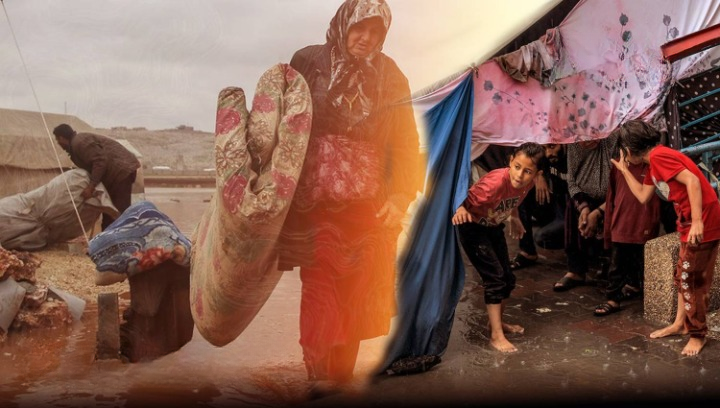
Gaza Between the Grip of Genocide and Floods: An Ongoing Tragedy
The Gaza Strip is enduring a compounded humanitarian catastrophe, combining the continuation of Israeli genocide since October 2023 with escalating damage caused by recent severe weather systems. More than 70,000 people have been killed and 171,000 injured, most of them women and children. Meanwhile, thousands of displaced families are struggling under harsh conditions in flooded tents and destroyed homes, amid acute shortages of basic supplies and medical necessities. Warnings are mounting about the spread of disease and food insecurity, as medical teams face extreme difficulty reaching victims trapped beneath rubble.
The Toll of the Genocide
The Palestinian Ministry of Health in Gaza announced that the total death toll since the start of the aggression has reached 70,654 martyrs, with 171,095 injuries. According to the daily report, hospitals received two new martyrs and one body recovered over the past 48 hours, along with 16 injured. The report notes that approximately 628 bodies have recently been retrieved, while many victims remain trapped under debris or in streets inaccessible to ambulances and civil defense teams due to infrastructure destruction and the severity of the weather.
Despite the ceasefire agreement entering into force on October 10, 2025, Israeli forces continue daily violations, including direct shelling of homes and civilian vehicles—deepening suffering and endangering civilians across the Strip.
Children and the Displaced at the Heart of the Crisis
UNICEF has warned of escalating risks facing children in Gaza, noting that continued harsh weather and delays in humanitarian aid delivery increase the likelihood of disease outbreaks and child mortality. Nutrition screenings conducted in November revealed that around 9,300 children under five are suffering from acute malnutrition, reflecting the devastating impact of the blockade and shortages of food and medical supplies on children’s health.
The National Gathering of Tribes and Clans has called for replacing deteriorating tents with mobile homes (caravans) to provide safe shelter for displaced families. The head of the Supreme Authority for Tribal Affairs, Abu Salman, stated that current tents are unfit for daily living and offer no protection from cold or flooding. He emphasized that reconstruction will take a long time and that displaced people cannot remain in tents throughout this period. Abu Salman also called for urgent intervention by Egypt and its authorities to provide caravans and remove rubble, while rejecting any attempts to establish so-called “humanitarian cities” that impose conditions on Gaza’s residents.
Ongoing Violations
Continuing its violations, four Palestinians were martyred this afternoon after an Israeli strike targeted a civilian vehicle southwest of Gaza, in a clear breach of the fragile ceasefire. Sources reported that the attack was carried out by an Israeli drone, completely destroying the vehicle and causing temporary loss of control over the area.
In the West Bank, Israeli authorities uprooted 1,608 olive trees in a single week, destroyed hundreds of meters of irrigation networks, confiscated agricultural equipment, and barred farmers from accessing their lands—threatening Palestinian food security and aiming to seize land. In occupied Jerusalem, settlers continued incursions into Al-Aqsa Mosque, with 849 settlers storming its courtyards within one week. A total of 498 violations by Israeli forces and settlers were recorded, including home demolitions, arrests, and property confiscations.
Winter Conditions and Storm Damage
The Gaza Government Media Office reported that the latest weather depression caused the deaths of 11 Palestinians and the disappearance of one person. It also led to the collapse of 13 buildings previously damaged by bombardment. Heavy rains and flooding partially or completely submerged 53,000 tents, damaging blankets and essential supplies inside them. Direct material losses are estimated at approximately USD 4 million.
UNRWA confirmed that each new wave of rain exacerbates the suffering of Palestinian families, calling for intensified relief efforts, distribution of blankets and winter clothing, and removal of floodwaters and waste. Although sufficient stock exists to shelter 1.3 million people, Israeli authorities continue to prevent direct entry of aid into the Strip.
Gaza Between Aggression and Nature
Gaza remains trapped in a dual tragedy—ongoing Israeli aggression and flooding caused by severe weather systems. Children and displaced families urgently need international intervention to provide shelter and essential aid, ensure civilian protection, and prevent an even greater humanitarian catastrophe that worsens by the day.