
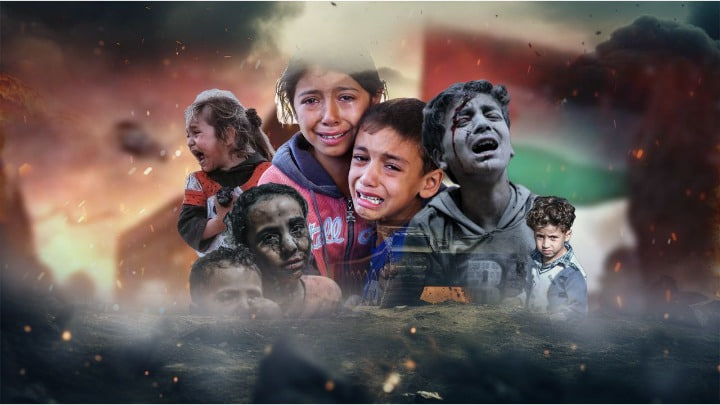
Gaza in Danger: Collapse of Services and Ongoing Genocide
Gaza is experiencing a state of comprehensive collapse in health and basic life services amid the continued Zionist siege and repeated violations of the ceasefire, further exacerbating the humanitarian crisis day after day.
Hospitals and medical centers are suffering from an acute shortage of medicines and medical supplies, while children, women, and Palestinian detainees face catastrophic conditions. This comes as the occupying entity continues to commit violations against civilians, alongside obstructing reconstruction efforts and delaying the implementation of international agreements.
Severe Deterioration of the Health System
The Ministry of Health in the Gaza Strip announced a shortage exceeding 50% in essential medicines and the suspension of vital services, warning that the health system is nearing total collapse. The ministry stated that 321 essential medications are completely depleted, representing a 52% shortage, while 710 types of medical consumables are unavailable, with a shortage rate of 71%. Cardiac catheterization and open-heart surgery services have completely ceased, and specialized orthopedic and ophthalmic surgeries are on the verge of full suspension.
Zaher Al-Waheedi, Head of the Information Unit at the Ministry of Health, explained that approximately 1,500 children are awaiting travel for medical treatment, while 110,000 children suffer from malnutrition, including 9,500 severe cases. Additionally, 42% of pregnant women suffer from anemia, posing serious risks to their health and that of their unborn children.
Tragic Incidents
Several tragic incidents were recorded in Gaza today as a result of building destruction and violations by the Zionist enemy:
-
Five people were killed and three others remain missing following the collapse of a house belonging to the Labed family in Sheikh Radwan neighborhood, northwest of Gaza, including a 17-year-old girl.
-
Three civilians were killed in the Shuja’iyya neighborhood east of Gaza after a missile strike by occupation aircraft, raising the death toll since the ceasefire agreement to 404 martyrs and 1,108 wounded.
-
The bodies of two young sisters were recovered from a collapsed house in Sheikh Radwan, while searches continue for their parents.
Medical Neglect of Prisoners
The Commission of Detainees and Ex-Detainees Affairs revealed catastrophic conditions facing Palestinian prisoners, including Dhafer Al-Rimawi and Mohammad Klib, due to medical neglect and mistreatment inside Zionist prisons. Detainees suffer from chronic illnesses, lack of medical care, severe overcrowding in cells, and deprivation of treatment, leading to the death of dozens of prisoners since the beginning of the war on Gaza.
Violations and Delayed Reconstruction
The Euro-Mediterranean Human Rights Monitor confirmed that the United States provides cover for the Zionist entity to continue committing genocide in Gaza through military, political, and logistical support. This enables the continuation of the siege, the prevention of aid entry, the destruction of thousands of homes, the displacement of civilians, and the denial of patients’ right to travel for medical treatment.
The Democratic Front also held the Zionist enemy government responsible for obstructing the transition to the second phase of the ceasefire agreement, calling on guarantor parties to exert pressure to compel the entity to open crossings, allow the entry of aid, and implement agreements without delay—especially in light of the ongoing siege and humanitarian suffering.
Humanitarian Catastrophe
Amid this catastrophic reality, the Palestinian people in Gaza face immense challenges to preserve their lives and health, in the shadow of continued international silence and complicity with the occupying entity. All indicators suggest that the persistence of the siege and violations will further deepen the humanitarian crisis and turn civilians’ lives into a perpetual nightmare, necessitating urgent international intervention to ensure civilian protection, secure the delivery of medical and food aid, and rebuild the destroyed infrastructure before an even greater catastrophe unfolds.