
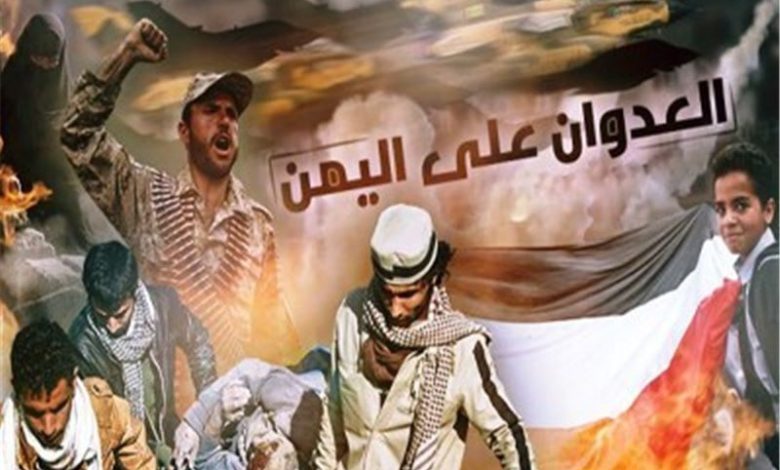
December 27: A Wound That Never Heals in Yemen’s Body—and a Memory Time Cannot Erase
December 27 returns as a recurring black page in Yemenis’ memory—a day whose sky remained heavy with aircraft, and whose ground was laden with fragments of internationally banned cluster munitions, bullets, and missiles that made no distinction between a child at play and a family seeking shelter at home. On this date, throughout the years of the U.S.–Saudi–Emirati aggression, killing assumed an organized, systematic character; civilian infrastructure and residents were targeted openly and relentlessly. Year after year, evidence has accumulated—testimony to the brutality of the crime and its persistence.
Crimes of 2015: The Beginning of Fire
On December 27, 2015, the Republican Palace in Taiz was struck by airstrikes, along with areas in Hayfan District. In Sa’ada, citizens’ homes in the Al al-Sayfi area were reduced to piles of rubble after five consecutive strikes. Majz District became a scene of banned cluster munitions being dropped—one of the early instances of their use on this date—causing extensive damage to agricultural and civilian property. In Hajjah, airstrikes targeted the Aham Triangle and the Al-Shi‘ab area in Haradh District.
2016: Children Fall in Silence
The following year was no less brutal. On December 27, 2016, the girl Mona (13) and her brother Taha (4) were killed by shelling carried out by the aggression’s mercenaries west of the old Taiz airport, while hostile aircraft continued striking mountains and military camps in Al-Mokha. In Sa’ada, raids intensified on the areas of Walad Mas‘ud, Al-Malahiz, and Al-Buqa‘—including a cluster bomb that fell on Kataf. In Nihm, Sana’a, ‘Amran, Shabwah, and Al-Hudaydah, attacks extended to citizens’ homes, roads, and farms, in a wide assault that revealed the breadth of civilian targeting.
2017: Families Wiped from the Record
In 2017 came one of the most repeated scenes of misery: five civilians from a single family were killed in an airstrike on a home in the Hajroufah area of Al-Tuhayta. In Al-Jarrahi, a citizen’s vehicle was targeted, and at Al-Khokhah junction, property and shops were damaged. Raids also coincided with strikes on Baqim, Kataf, Sa’ada, Najran, and Jizan, while Nihm, Sanhan, and Ma’rib saw farms and houses shelled. Apache helicopters rained more than 198 rockets on Al-Huthayrah and Al-Rumaydah.
2018: Daily Gunfire and Shelling in Al-Hudaydah
This year saw an escalation in non-airborne patterns of violence: a child and a man were wounded by mercenary fire in Al-Jabliyah (Al-Tuhayta), while villages and farms east and west of the district were shelled with artillery and machine guns. In Al-Durayhimi, the village of Mahall Al-Shaykh and the vicinity of the old courthouse were struck with three artillery shells, before rocket fire continued in 50th Street. In Sa’ada, Saudi missile attacks continued against inhabited border areas.
2019: The Memory of the Al-Raqw Massacre Returns
This date revived the grim scene of the Al-Raqw massacre in Munabbih District, Sa’ada, where the death toll rose to 24 victims, including African migrants, after additional bodies were later found at the site. In Al-Hudaydah, missiles and shelling continued on Al-Jabliyah, Al-Fazah, and the Al-‘Udayn Triangle, alongside the burning of farms and citizens’ homes.
2020: Reconnaissance Drones Join the Targeting
In 2020, reconnaissance aircraft carried out strikes on Al-Durayhimi, while mercenary fortifications continued in Al-Jabliyah and Al-Jah, and shelling remained concentrated in Al-Hudaydah, Sa’ada, Hajjah, and Al-Jawf.
2021: Systematic Targeting of Civilian Infrastructure
Saudi missile attacks continued on the border area of Shada in Sa’ada. Ma’rib saw raids on Sirwah and Al-Wadi, while Al-Hudaydah was struck by both warplanes and reconnaissance aircraft, in addition to artillery fire on residential areas.
2022: Direct Targeting of Civilians
On December 27, 2022, the young man Issa Qasim (25) was shot in the head by a sniper while in the Al-Rawas area of Al-Ta‘ziyah District in Taiz—another image of direct targeting of civilians. Reconnaissance aircraft also conducted three strikes on Al-Jabliyah and Hays in Al-Hudaydah, while artillery shelling continued in various areas.
A Day That Repeats—and Never Disappears
December 27 is not merely a date on Yemen’s calendar; it carries layers of memory weighed down by bombardment, bombs, and families who vanished without return. It is a day that exposes the crimes of aggression and confirms that wounds do not close—and that Yemen’s collective memory will continue to carry these testimonies as enduring witnesses to the crime, no matter how long time passes.