
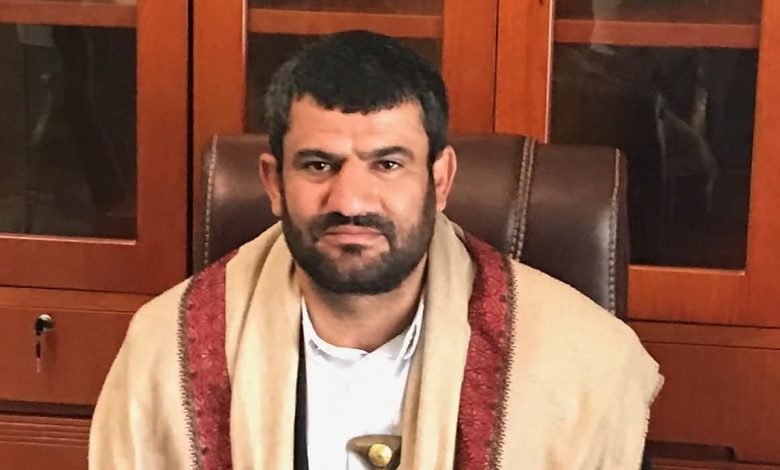
Head of the Committee for Addressing Prison and Detainee Cases to “21 September”:
The Leader’s Clemency Liberates the Wronged and Restores Human Dignity and the Rule of Law
In what is considered the boldest step in years, the Revolutionary Leadership has opened the file of prisons and detainees, viewing it as an entry point to redefining justice—not merely administering punishment. The recent measures were not seasonal releases, but part of an organized path aimed at dismantling heavy backlogs within the justice system and addressing cases long left unresolved due to complexity and neglect—starting with insolvent debtors, passing through protracted disputes, and extending to revenge cases that have drained both society and the state.
At the heart of this transformation, the Joint Committee for Addressing Prison and Detainee Cases has emerged as an executive arm operating on the ground, far from comfortable offices, with a single objective in mind: emptying prisons of the wronged, ending the detention of the poor, and moving from rigid punishment toward restorative justice—one that seeks to resolve disputes at their roots and restore the law as a tool of fairness rather than revenge.
In this context, this interview with the Head of the Committee for Addressing Prison and Detainee Cases, Sheikh Mujahid Ali Nasser Qirsha, sheds light on what has been achieved so far, what is currently underway, and the features of a new phase that places reforming the justice system, closing stalled cases, and resolving revenge disputes at the top of leadership priorities—considered as much a battle to build the state as it is a battle for justice.
The Leader’s Clemency: Lifting Injustice from the Wronged
– What are the main motivations behind launching the Leader’s clemency to release detainees and insolvent prisoners?
The clemency of the Leader, Abdulmalik Badr al-Din al-Houthi—may God protect him—is a natural extension of a comprehensive Qur’anic project whose essence is establishing justice, lifting injustice, and restoring human dignity as a supreme value. It stems from the Almighty’s words: “And We intend to favor those who were oppressed in the land”, and from an awareness of the immense suffering accumulated by years of aggression and blockade, and the repercussions that have weighed heavily on many citizens—some of whom found themselves behind bars due to financial incapacity or procedural flaws.
The Leader—may God protect him—views injustice in any form as a crime that cannot be tolerated. Keeping a person imprisoned without legal justification, or due to financial inability, constitutes compounded injustice: injustice by law and injustice against humanity.
From a social perspective, a prisoner is not an isolated individual, but a father, son, brother, or family provider. An insolvent prisoner means an entire family trapped in ongoing suffering. Hence, the clemency came as a practical step to recalibrate priorities and affirm that the state, under its revolutionary leadership, is not an authority of coercion, but a guardian—responsible before God for every wronged person.
– What is the humanitarian and social vision of this step from your perspective?
Our vision goes beyond opening prison doors to opening horizons of hope within society. Releasing an insolvent prisoner liberates an entire family and repairs society rather than breaking its members. Prison is not merely detention; it is an indicator of the health of justice and the spirit of social solidarity.
The Leader’s clemency—may God protect him—reaffirms that a faithful society frees the captive just as it feeds the hungry and shelters the orphan. It restores the concept of restorative justice, which balances the rights of society, the victim, and the prisoner without injustice or neglect, thereby building a cohesive and principled community.
The Leader’s Directives: A Profound Responsibility to Humanity and the Law
– How did the committee receive the Leader’s directives regarding this file?
With full clarity and responsibility. We received this great mandate not as a routine administrative task, but as a jihadi duty and a heavy trust. Lives are suspended, families are waiting, and rights cannot be preserved without seriousness and sincerity.
From the outset, the Leader—may God protect him—was clear: the goal is not symbolic releases, but going to the field, looking prisoners in the eye, listening to their stories, reviewing files meticulously, and bearing full responsibility before God and the people. With God’s help, we are proceeding to empty all prisons of those eligible for release.
The directives were explicit: no oppressor is to be released, no wronged person left behind, no erosion of the law’s authority, and no violation of human dignity.
– What mechanism is used to review detainees’ cases?
We adopted a multi-stage mechanism: comprehensive enumeration of detainees; classification by type of case, nature, and social co