
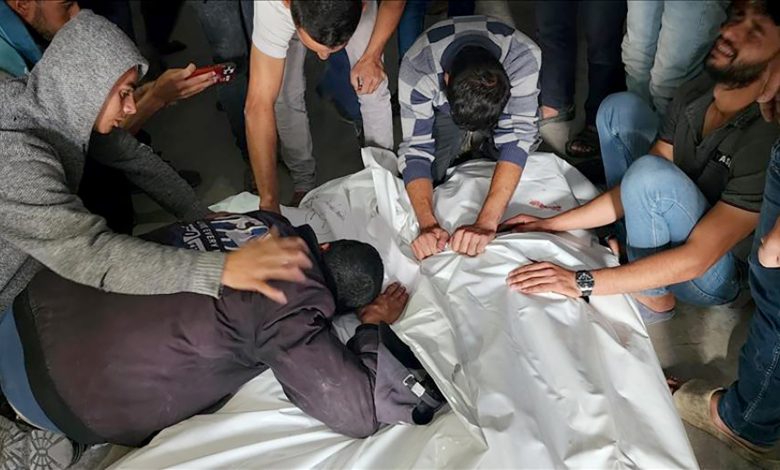
Gaza in the Grip of Zionist Genocide: A Ceasefire Without Protection and a Siege That Devours Life
While a “ceasefire” is supposed to provide a zone of safety for civilians in Gaza, daily realities reveal that the war has not stopped—it has merely reshaped its tools. Beyond direct killing, policies of siege, denial of medicine, closure of crossings, and the collapse of the healthcare system are forging a reality harsher than bombardment alone. In Gaza today, genocide continues in a muted tone, but with deeper impact and consequences that threaten the very future of life.
Rising Toll… Endless Suffering
The Palestinian Ministry of Health in Gaza announced that the death toll from the Israeli aggression since October 7, 2023 has risen to 71,439 martyrs and more than 171,324 injured. In the past 24 hours alone, hospitals received 15 martyrs—including two newly killed and 13 recovered from beneath the rubble. A large number of victims remain trapped under debris and on roadways, as ambulance and civil defense crews are unable to reach them due to destruction and field dangers.
Since the ceasefire agreement came into effect last October, 449 martyrs and 1,246 injuries have been recorded from Israeli army fire, in addition to 710 martyrs whose bodies were recovered, confirming that the truce has not translated into real protection for civilians.
Field Violations and Ongoing Bloodshed
On the ground, Israeli violations of the agreement continue. Citizen Fadi Youssef Ahmad was killed by Israeli gunfire east of Khan Younis, while nurse Hatem Ibrahim Abu Saleh was martyred in the same area. Artillery shelling also targeted eastern Al-Bureij refugee camp.
These field realities underscore that the “ceasefire” remains fragile and that civilians—including healthcare workers—are still directly targeted.
“Slow Killing”: A War on the Palestinian Womb
The Director General of Gaza’s Ministry of Health, Munir Al-Barsh, described what is happening as a policy of slow killing that does not rely solely on bombardment, but on denying medicine and real food while flooding markets with ineffective products—amid the spread of seasonal diseases and new variants.
He explained that this policy has had severe repercussions on public health, especially among mothers and children. In 2025, alarming figures were recorded:
48,500 births, resulting in 49,180 newborns
Approximately 4,900 infants with abnormal birth weights
Nearly 4,000 premature births
315 infants with congenital deformities
616 intrauterine deaths
Around 5,000 early miscarriages
450 infant deaths within the first week after birth
According to Al-Barsh, these indicators constitute irrefutable evidence of a systematic war targeting Palestinian life at its very beginning, aiming to undermine the ability to survive and endure.
Rafah Crossing: A Closed Gate and Lives on Hold
The Director of the Government Media Office in Gaza, Ismail Al-Thawabteh, confirmed that the occupation entity is using the Rafah crossing as a tool of political blackmail, deliberately stalling and showing no genuine commitment to opening it.
He noted that more than 22,000 patients and wounded urgently need to travel abroad for treatment—including cancer patients, heart patients, and those with critical injuries—yet the closure of the crossing deprives them of this right, leading to the deaths of thousands due to denial of timely medical care.
He added that this behavior constitutes a silent crime for which the occupation bears full legal and moral responsibility, calling for serious international pressure to force the immediate and unconditional opening of the crossing.
Recovering the Martyrs… An Open Wound
In Al-Daraj neighborhood in central Gaza City, civil defense crews announced the recovery of 37 bodies from the land of “Ahl,” one of them unidentified. The scene serves as a stark reminder that thousands of families continue to live with the tragedy of loss months after the bombardment, while recovery operations stand as a constant testament to the scale of destruction and the depth of the humanitarian catastrophe.
A Harsh Winter and Closed Crossings
The Palestinian Red Crescent Society described conditions in Gaza as catastrophic by all standards. Ongoing weather depressions have caused tents to be swept away and thousands of displaced people to suffer further damage.
The Society confirmed that humanitarian needs are escalating dangerously, including food, water, medical care, and heating supplies, while camps are witnessing a rapid spread of disease due to cold weather and poor sanitation.
Since the onset of winter, 7 Palestinians have died from cold exposure and 24 others from building collapses. Nearly 7,000 tents were swept away within two days, according to official data—highlighting the magnitude of the disaster with each new weather system.
Threats of Reoccupation and Rights Warnings
The Democratic Front for the