
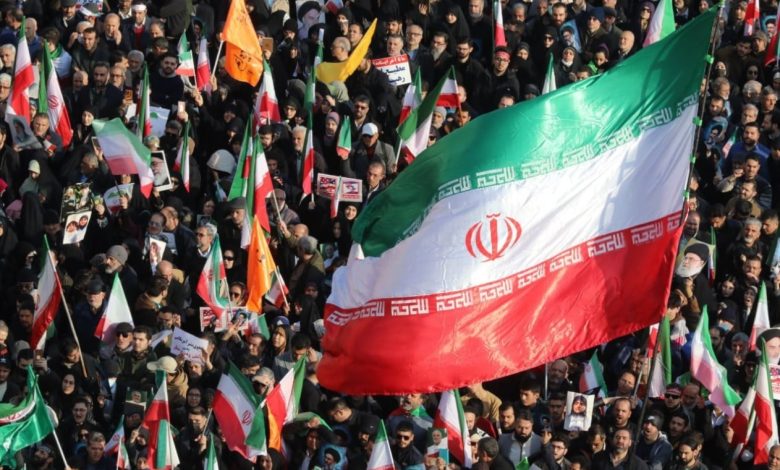
Iran Decisively Settles the Battle: Preserved Sovereignty, Restored Security, and Ready Deterrence Against Chaos and Foreign Intervention
At a regionally charged moment marked by escalation and pressure, Iran is outlining the contours of a new phase of comprehensive confrontation—political and diplomatic, security and judicial, military and deterrent. From restoring internal security to entrenching the missile deterrence equation, and from holding Washington and the Zionist enemy accountable for bloodshed and chaos to affirming unity of national decision-making, Iran’s messages converge to underscore that the country has moved beyond containment and entered a phase of decisive action in defense of sovereignty, stability, and national cohesion.
Araqchi: Security Restored, Sovereignty Is a Red Line
Iranian Foreign Minister Abbas Araqchi, in high-level communications with his counterparts in the UAE, Turkey, and France, affirmed that Iran has restored its security thanks to public awareness and the vigilance of security agencies. He stressed that Tehran is “determined to protect its sovereignty and security” against any foreign interference.
Araqchi pointed to the core of recent events, asserting that the unrest was not spontaneous but the result of incitement by terrorist groups driven by U.S. and Zionist backing, aimed at turning peaceful protests into armed chaos. In a clear political message, he described inflammatory statements by U.S. officials as direct interference in Iran’s internal affairs, emphasizing Iran’s readiness to confront any attempts to undermine security.
Regional Coordination to Seal Security Gaps
In a related context, Iraqi National Security Advisor Qasim al-Araji and Iran’s Secretary of the Supreme National Security Council Ali Larijani confirmed enhanced coordination to secure borders and prevent infiltration attempts by terrorist groups between the two countries.
This joint security track reflects a mature understanding of the current phase, as Iran’s internal front has become part of a broader confrontation with cross-border sabotage networks supported by U.S. and Israeli intelligence.
The United Nations Faces a Test of Responsibility
At the international level, Iran’s mission to the United Nations held the United States and the Zionist enemy fully responsible for civilian casualties, asserting that U.S. President Donald Trump openly encourages destabilization, incitement to violence, and threats to Iran’s sovereignty.
The mission called on the UN Security Council to condemn all forms of U.S. incitement to violence and to warn Washington against miscalculations that could lead to military aggression. These positions followed provocative American posts that openly called for continued unrest and the seizure of state institutions—conduct that clearly exposes the nature of the U.S. role in the crisis.
Deterrence Is Present: Missile Stockpiles Larger Than Before
Alongside the political and diplomatic track, a message of strength came from the military field. Brigadier General Majid Mousavi, commander of the IRGC Aerospace Force, confirmed full readiness to confront any aggression and stated that Iran’s missile stockpiles today are larger than they were prior to the U.S.–Zionist aggression.
Mousavi noted that all damage to force equipment has been repaired, sending a clear signal that Trump’s repeated threats will only result in further strengthening of Iran’s deterrent capabilities—not their rollback.
300 Martyrs… and the Street Makes Its Choice
In a solemn scene encapsulating the gravity of the moment, Tehran held funeral processions for nearly 300 martyrs who fell during the armed unrest—the largest such procession in the capital.
The ceremonies began from Tehran University amid massive public participation, conveying a profound political and moral message: the blood that was shed will not become an entry point to chaos, but fuel for greater national cohesion and rallying around the state and its institutions. Iranian authorities revealed links between sabotage elements and terrorist and separatist groups serving the interests of Mossad and the United States, reaffirming that what occurred was not protest but a complex war employing internal tools.
The Judiciary Speaks: Zero Tolerance for Terrorism
On the judicial front, Judiciary Chief Gholam-Hossein Mohseni-Ejei announced a move toward swift, public trials for leaders of the unrest, affirming that handling these cases would be decisive and uncompromising.
He emphasized prioritizing the prosecution of armed perpetrators and all those involved in terrorist attacks, sending a clear message that security and stability are red lines and that justice will reach executors, instigators, and backers without exception. He also noted that some crimes were committed with unprecedented brutality, necessitating rapid judicial resolution to preempt any attempt to replicate