
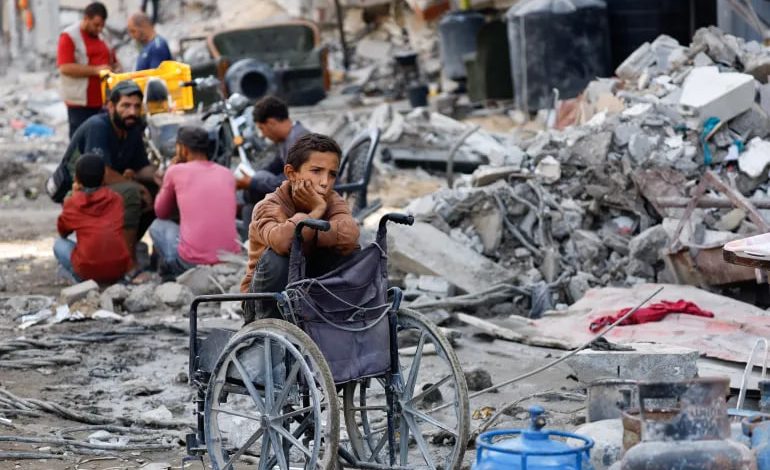
Gaza Between Aggression and Collapse: An Escalating Humanitarian Crisis
Despite the ceasefire agreement entering into force on October 10, 2025, Israeli forces have continued daily violations in the Gaza Strip, recording 1,244 serious breaches since the start of the first phase.
These violations have resulted in 1,760 people killed, injured, or detained, including 449 martyrs and 1,246 wounded who were admitted to hospitals, in addition to 50 arrests.
Daily Violations
Statistics reveal the scale of ongoing violations committed by the occupying entity, directly targeting civilians, their property, and vital institutions. This reflects a pattern of systematic and deliberate breaches that violate international humanitarian law and the humanitarian protocol annexed to the ceasefire agreement.
Key violations include:
402 incidents of direct gunfire targeting civilians.
66 incursions by Israeli military vehicles into residential areas.
581 cases of shelling and attacks on unarmed civilians and their homes.
195 acts of demolition and destruction of civilian homes, institutions, and buildings.
Casualties
Over the past 24 hours, Gaza hospitals received two martyrs and five wounded as a result of continued ceasefire violations. According to the Palestinian Ministry of Health, since the ceasefire began on October 11, 2025, the toll has reached 451 martyrs and 1,251 injured, in addition to the recovery of 710 bodies.
Since the beginning of the Israeli aggression on Gaza on October 7, 2023, the death toll has risen to 71,441 martyrs, with 171,329 injured, underscoring the magnitude of the humanitarian catastrophe facing the Strip.
Shelter Crisis and Flooding
With the onset of winter, the humanitarian crisis has worsened due to a severe shortage of shelter materials. Recent winter storms caused flooding in displacement camps, exposing families to freezing temperatures and contaminated water.
More than 127,000 tents are no longer usable.
Over 1.5 million displaced people have been affected by the loss of safe shelter.
Seven children have died due to extreme cold.
More than 50 previously damaged homes and buildings have collapsed.
UNRWA has warned of the severe inadequacy of shelter supplies to meet the massive needs, calling for the immediate lifting of restrictions on the entry of aid.
Acute Shortages
The continuation of violations has led to severe shortages of essential supplies:
Only 24,611 aid trucks entered Gaza out of 57,000 planned.
Just 601 fuel trucks were allowed in out of 4,750 required.
This shortfall has directly impacted hospitals, bakeries, and water and sanitation facilities, leading to near paralysis of essential services and increased civilian suffering.
Targeting Infrastructure and Civilians
Israeli forces have continued the destruction of civilian homes and buildings:
Demolition operations in Jabalia refugee camp and Al-Tuffah neighborhood.
Artillery shelling east of Gaza City and east of Al-Bureij camp.
Civilians killed and injured due to the collapse of previously damaged buildings.
These violations confirm that the occupying forces are not adhering to any provisions of the ceasefire and continue to pursue a policy of systematic starvation and deprivation of water.
International Calls to Protect Civilians
The Government Media Office in Gaza has called on the international community, the United Nations, and guarantors of the ceasefire agreement to fulfill their legal and moral responsibilities by:
Compelling the occupying entity to fully implement its obligations.
Ensuring the protection of civilians.
Securing the immediate flow of food supplies, fuel, and shelter materials.
Position of the Resistance
On the anniversary of Al-Isra and Al-Mi’raj, Hamas affirmed that the blessed Al-Aqsa Mosque is a historic trust and that defending it is the responsibility of the entire nation.
The movement emphasized the steadfastness of the Palestinian people in Gaza, the West Bank, and occupied Jerusalem, asserting that the resistance will remain a bulwark against any enemy schemes, regardless of the sacrifices required.
Gaza Bleeds
Gaza remains under constant threat from daily violations despite the ceasefire agreement. The humanitarian crisis continues to deepen amid flooding, shortages of food, fuel, and shelter, and ongoing attacks on civilians and infrastructure.
The figures cited reflect the scale of the catastrophe and demand urgent action from the international community to protect civilians and salvage what can still be saved.