
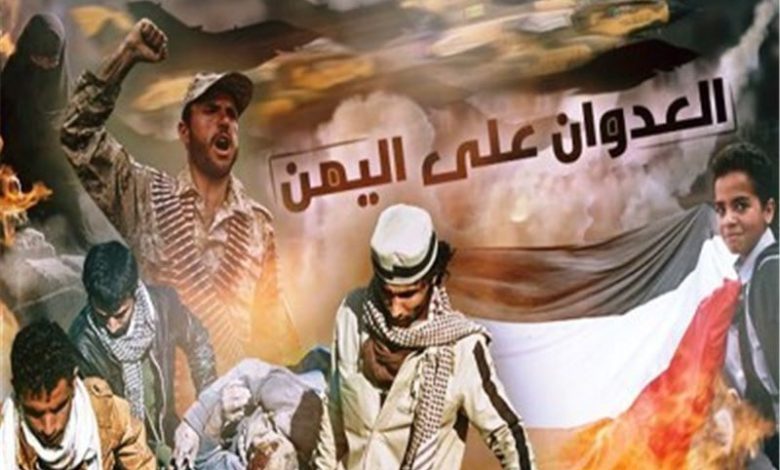
January 20… The Day Life Was Violated in a Systematic Aggression Against Yemen
January 20 represents a fixed bloody milestone in the record of crimes committed by the American-Saudi-Emirati aggression against Yemen. On this day, scenes of killing and systematic destruction are repeatedly renewed, as civilians, infrastructure, and service and economic facilities are once again targeted — a clear confirmation that this war has not been merely military, but rather a comprehensive war against people, the state, and life itself.
Aggression Without Red Lines: Crimes of 2016
On January 20, 2016, coalition warplanes launched a series of intensive airstrikes on Taiz Governorate, targeting residential homes and populated neighborhoods, including the house of the former security director of Taiz in Al-Harir district and the Republican Palace east of the city. The attacks caused injuries among civilians and widespread destruction of homes and property.
The targeting extended to the areas of Al-Dhabab, Al-Rahda, Al-Shareeja, and Al-Omari in Dhubab, in addition to strikes on commercial and agricultural facilities and civilians’ homes — a pattern reflecting a deliberate assault on the foundations of daily life.
In Sana’a, airstrikes hit Nihm, Bani Hashish, and Bani Matar, targeting public roads and agricultural lands. Hodeidah, Ibb, and Marib were also bombed, and the Nu’ bridge linking Marib and Sana’a was struck in an attempt to paralyze civilian and economic movement.
Cluster Bombs and Escalation of Targeting (2017)
January 20, 2017 witnessed a qualitative escalation with the use of cluster munitions. Civilians’ homes in Nihm were targeted, resulting in the martyrdom of a woman and two children and the injury of others, while dozens of houses were damaged.
This coincided with intensive airstrikes on Sanhan, Dhamar, Saada, Marib, and Hodeidah, along with Saudi artillery and missile shelling of border villages — a blatant violation of all international laws.
Continued Killing of Civilians (2018)
On January 20, 2018, the aggression continued to directly target civilians. A man and his wife were martyred in Razih, Saada Governorate, while Hajjah, Marib, and Taiz were subjected to a new wave of airstrikes, amid ongoing cross-border shelling of Yemeni regions.
Targeting the Economy and Industrial Facilities (2019)
January 20, 2019 marked a direct assault on the national economy through the bombing of the Azal Sponge Factory in Sana’a, which led to the martyrdom and injury of civilian workers and the outbreak of large fires.
Food factories, industrial facilities, air bases, and residential areas were also targeted — a clear attempt to destroy what remained of Yemen’s productive infrastructure.
Hodeidah Under Fire and Border Shelling (2020)
On January 20, 2020, the Saudi enemy escalated artillery and missile attacks on border villages in Saada, directly targeting civilians, while coalition forces and their mercenaries continued shelling Hodeidah city and its districts with artillery and Katyusha rockets, causing extensive damage to homes and farms.
Ongoing Airstrikes and a Compound Siege (2021–2022)
In the following years, intensive airstrikes continued on Marib, Al-Jawf, Al-Bayda, Hajjah, Shabwa, and Sana’a, with hospitals, airports, service projects, and food warehouses targeted. Military fortifications were reinforced and residential neighborhoods in Hodeidah shelled, as part of a comprehensive military and economic siege.
An Aggression Without Accountability (2023)
On January 20, 2023, reconnaissance aircraft and artillery shelling continued to target districts of Hodeidah, alongside the establishment of new combat fortifications — confirming that the aggression persists with the same criminal doctrine, without deterrence or international accountability.
A Project Targeting the Yemeni Human Being
The crimes committed on January 20 throughout the years of aggression clearly reveal that what Yemen has faced is not a “war” in the conventional sense, but a comprehensive project of destruction targeting the Yemeni people, the state, the economy, and collective memory — in one of the most horrific contemporary wars that does not fade with time.