
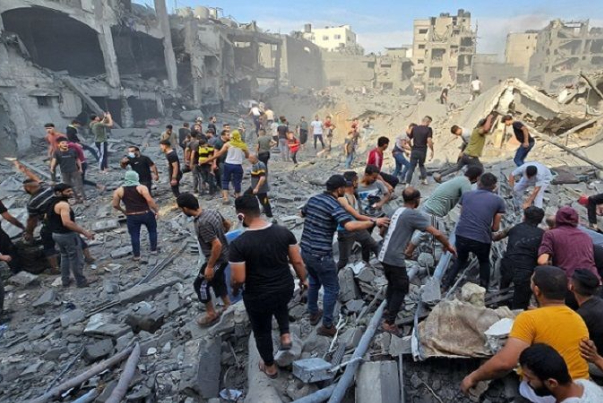
Gaza: An Ongoing Tragedy and Shocking Figures
Gaza continues to face one of the most severe humanitarian crises in the world, following two years of ongoing Zionist aggression since October 7, 2023. The death toll has risen to 71,657 martyrs, with 171,399 injured, amid continued daily violations despite the ceasefire that came into effect on October 11, 2025.
The humanitarian crisis affects every aspect of life in the Gaza Strip—from health care, education, and infrastructure to basic services and shelter—while civilians remain under constant threat, further compounding their daily suffering.
Shocking Toll
The Palestinian Ministry of Health announced on Sunday, January 25, 2026, that three martyrs and eight injured were brought to hospitals in the Gaza Strip during the past 24 hours as a result of ongoing Israeli violations.
The ministry confirmed that a number of victims remain trapped under the rubble and in the streets, as ambulance and civil defense crews are still unable to reach them.
Since the ceasefire (October 11, 2025):
Number of martyrs: 484
Number of injuries: 1,321
Recovered bodies: 713
Since the beginning of the aggression (October 7, 2023):
Number of martyrs: 71,657
Number of injuries: 171,399
Systematic Targeting
In the Al-Tuffah neighborhood, northeast of Gaza City, citizen Mahmoud Qassem was killed on Sunday, and others were wounded to varying degrees after direct gunfire by Israeli occupation forces. Eyewitnesses reported that the shooting directly targeted a group of civilians. The injured were transferred to Al-Maamadani Hospital for treatment, with some injuries described as critical.
In a separate incident, four additional civilians were injured after the “Shawa and Hasri” Tower in central Gaza City was targeted by an explosive-laden Zionist drone, causing extensive destruction to the building, followed by artillery shelling.
An Ongoing Crisis
The Commissioner-General of the United Nations Relief and Works Agency for Palestine Refugees (UNRWA), Philippe Lazzarini, confirmed that more than 600,000 children in Gaza have been without formal education for over two years, due to continued attacks and widespread destruction.
Currently, UNRWA provides education to:
65,000 children in temporary learning spaces
Approximately 300,000 children receiving basic education through digital platforms
Lazzarini stressed that returning children to a safe educational environment is a top priority for the agency.
Under Constant Danger
Lazzarini also stated that the Gaza Strip has become the most dangerous place in the world for journalists and humanitarian workers, with more than 260 journalists killed since the beginning of the aggression.
He emphasized the urgent need to:
Protect journalists in accordance with international humanitarian law
Ensure freedom of media access
Lift the ban on the entry of international journalists to prevent media disinformation
Catastrophic Conditions
Large areas of Gaza have witnessed continued military escalation since early morning hours, particularly in eastern neighborhoods of Gaza City and surrounding areas, where the sounds of explosions and gunfire persist without pause. Most residents are living in dilapidated tents made of fabric and plastic bags, offering no protection from heavy rain or strong winds, further worsening daily hardships.
At the same time, the ongoing siege and the closure of the Rafah crossing continue to prevent patients and the wounded from leaving the Strip, despite provisions in the ceasefire agreement. Meanwhile, a new weather depression threatens to further aggravate the humanitarian crisis amid a severe shortage of basic services and essential supplies required for survival.
Urgent Appeal
Gaza continues to endure an unprecedented humanitarian catastrophe, with the number of martyrs and injured reaching hundreds of thousands, widespread damage to the education, health, and infrastructure sectors, and persistent threats to the lives of journalists and humanitarian workers.
These figures reflect an ongoing tragedy that demands immediate protection of civilians, the lifting of the siege, and the urgent provision of education and care for children and displaced populations.