
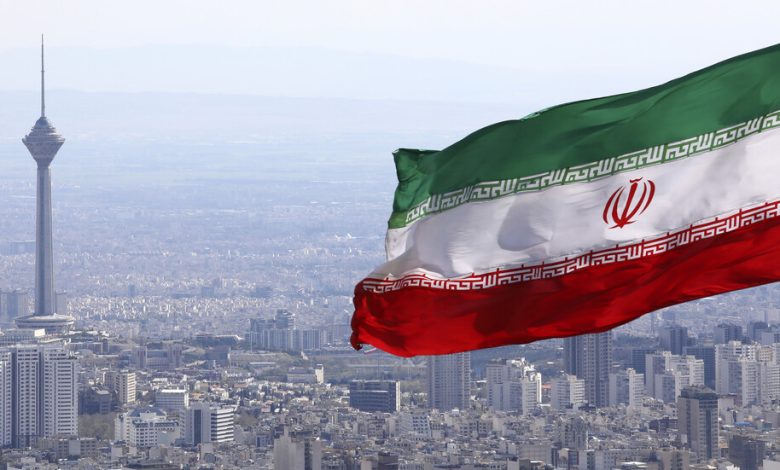
No Compromise, No Retreat: Iran Draws the Equation of Power and Confronts U.S. Threats with Unyielding Resolve
Amid escalating U.S. pressure, intensified military threats, and attempts to destabilize the internal front through instruments of sedition and hybrid warfare, the positions of Iran’s political and military leadership stand out as a comprehensive roadmap for managing confrontation on multiple levels—from the social and economic interior, through security and military deterrence, to conditional diplomacy and the nuclear file. Tehran affirms that it is engaged in an open confrontation with a project of hegemony, but does so with the steadiness of a state, the unity of society, and the readiness of power.
Fortifying the Home Front: Realistic Diagnosis and Responsible Crisis Management
Iranian President Masoud Pezeshkian emphasized that Iran’s enemies are constantly seeking to exploit circumstances to incite unrest and undermine stability, stressing that the real confrontation begins at home—through a realistic and transparent diagnosis of weaknesses and shortcomings, rather than merely blaming external factors.
In this context, Pezeshkian tasked the relevant ministries with forming working groups to analyze the causes of recent events and to open structured channels of dialogue with various segments of society, including students, educators, artists, athletes, and social figures. This approach aims to defuse tensions, respond to demands, and strengthen trust between the state and society.
Economic Reforms: Broad Support and Social Reassurance
For her part, government spokesperson Fatemeh Mohajerani explained that the government’s economic reforms encompass all segments of society, noting that the livelihood support basket covers approximately 59 million citizens, and that the government has allocated 82 trillion tomans in direct financial support paid four months in advance. The move is intended to enhance purchasing power and counter inflation.
Mohajerani affirmed that the recent million-strong demonstrations reflected the awareness of the Iranian street and its ability to distinguish between legitimate protest and acts of rioting. She noted that the government is dealing with protesters with “Islamic compassion,” while responding firmly to instigators of chaos involved in organized vandalism and violence.
Sedition and Riots: Foreign Interference and Security Deterrence
Mohajerani revealed the scale of damage inflicted on several cities—particularly Tehran, Mashhad, and Isfahan—stating that preliminary losses in the capital alone were estimated at around 3 trillion tomans.
She stressed that foreign interference was evident, and that security agencies clearly distinguished between peaceful protests and acts of sabotage that went as far as targeting civilians—practices she likened to the methods of ISIS—necessitating firm measures to protect public security and constitutional institutions.
The Army and the IRGC: Full Readiness and Deterrence Without Red Lines
On the military front, Iranian Armed Forces Chief of Staff Admiral Habibollah Sayyari stressed that the army is at the highest level of readiness and that any aggressive adventure would inflict heavy losses on the enemy.
He asserted that displays of force through aircraft carriers are no longer effective, and that what Washington calls “gunboat diplomacy” has historically failed to subdue Iran. He added that Tehran possesses full capability to inflict severe damage on any aggressor by land, sea, and air.
Sayyari pointed out that soft and cognitive warfare constitutes one of the enemy’s main tools, but that the awareness and unity of the Iranian people—as demonstrated by the massive public turnout following the Twelve-Day War—have repeatedly foiled these schemes.
Negotiations Under Threat: An Iranian Red Line
Politically, Foreign Minister Abbas Araghchi denied any contact with U.S. envoy Steve Witkoff or any request for negotiations, stressing that talk of negotiations under threats is unacceptable.
Araghchi underscored that any negotiating track must be based on parity and mutual respect, warning that military threats only lead to further regional instability—a view shared by many countries in the region that reject the option of war.
The Nuclear File: Legal Commitment and Rejection of Politicization
Regarding the nuclear energy file, Head of the Atomic Energy Organization of Iran Mohammad Eslami affirmed that Tehran has never violated the regulations of the International Atomic Energy Agency, and that all its activities are conducted within the legal frameworks of the Non-Proliferation Treaty.
Eslami criticized attempts to politicize technical reports, calling on the IAEA Director General to adhere to his technical role and not succumb to political pressures aimed at using the nuclear file as a tool of blackmail.
National Security: Clear and Unambiguous Messages
In a