
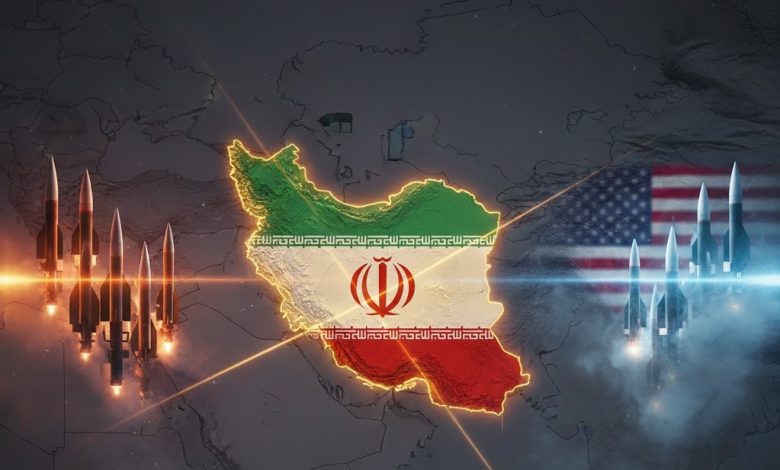
Diagnosis of the Psychological War on Iran and Exposing the Hidden Threads Between U.S. Arrogance and Zionist Expansionist Ambitions
In the intertwined worlds of contemporary international politics—where the lines between hard and soft power blur—the arena of collective consciousness emerges as a decisive battleground. It is a conflict that transcends geographic borders to settle in minds and hearts, where legitimacy is forged or dismantled, and where wills are built or broken. In this complex landscape, the Islamic Republic of Iran stands as an exceptional case, subjected to a systematic psychological campaign that represents one of the largest operations of cognitive engineering in this century. This campaign is merely the most refined face of a hegemonic project rooted in colonial eras, now dressed in the garments of modernity and globalization. The following report does not merely document this phenomenon; it delves into the infrastructure of Iran’s confrontation strategy, which has evolved from reactive responses into an integrated theoretical framework for psychological and political resistance.
Amid this intense struggle over the mind and awareness, an exceptional reading emerges—one that analyzes the conflict from within and illuminates its roots and strategic dimensions: the perspective of Abdulmalik al-Houthi. His vision does not come from the stance of a distant observer, but from within the heart of the regional confrontation, where his discourse offers a deep analysis that unveils the hidden mechanisms of psychological warfare and exposes the organic links between targeting Iran and the broader project of domination in the region. His diagnosis does not stop at describing symptoms; it penetrates the intellectual and political structure that drives these campaigns, offering a framework for understanding how the “deceptive labels” used by hegemonic powers become tools to justify aggression—and how collective awareness grounded in identity and free will can serve as the strongest fortress against the most sophisticated weapons of modern warfare.
Decrypting the Dominant Discourse
The American mechanism in its psychological war against Iran is built on a deeply rooted assumption: that societies are programmable entities that can be reshaped according to the interests of the superpower. This logic—drawing on a long tradition of orientalist thought—views other peoples as objects of study and control rather than independent actors in history. The practical application of this worldview manifests in a stark contradiction between rhetoric that champions freedom and democracy, and policies based on siege, sanctions, and support for directed violence. While official U.S. documents speak of respecting national sovereignty, realities on the ground reflect ongoing attempts to breach Iranian sovereignty through multiple means, ranging from comprehensive economic warfare to covert support for sabotage networks.
Iran’s response to this challenge was not random; it was grounded in a deep understanding of the mechanism itself. Rather than being dragged into a reactive cycle, Tehran chose to develop a counter-strategy centered on exposing the core contradiction in the hostile discourse. This exposure is not mere rebuttal of political statements; it is a complex analytical process showing how the West’s glossy slogans clash with its actual practices. In this context, Abdulmalik al-Houthi offers a forward-looking analysis when he explains that what hegemonic powers call a “peace project” or “regional stability” is, in reality, a systematic targeting project aimed at “seizing control, looting resources, and removing any obstacle” standing in the way of full domination. This diagnosis is not simply political critique—it is a dismantling of a whole deceptive discourse system adopted by Washington and Tel Aviv, where neo-colonialism is repackaged as human rights, aggression as self-defense, and normalization with the Zionist entity as a step toward peace.
A practical indicator of the effectiveness of this Iranian strategy is the repeated failure of attempts to destabilize Iran internally—attempts that instead became occasions to demonstrate national cohesion and strengthen domestic legitimacy. The capacity to expose the contradiction between discourse and practice, as al-Houthi notes, would not have been possible without the “high awareness and vigilance” of the Iranian people, who differentiate precisely between an enemy’s slogan-wrapped rhetoric and its real project embodied in supporting criminal gangs and igniting chaos. This shift from defense to exposing the opponent’s contradictions represents a qualitative leap in political warfare: Iran moves from being a targeted state to an active agent in dismantling the Western narrative, affirming that the real battle is over the power to define reality itself—and to impose a narrative in which moral strength and national unity become a natural re