
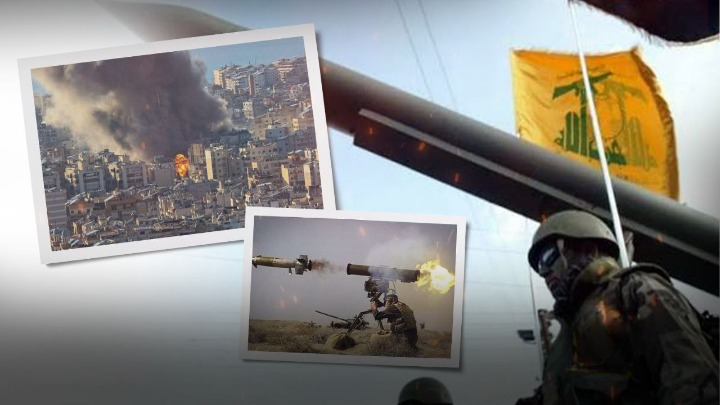
60 Operations in Hours: Islamic Resistance Pounds the Occupation Entity and Imposes a Comprehensive Attrition Equation from the Border to the Interior
In an unprecedented escalation on the ground, the Islamic Resistance in Lebanon, in recent hours, has painted a new picture of confrontation with the Israeli enemy, characterized by intense fire, multiple targets, and a widening scope of engagement. Dozens of simultaneous operations, exceeding sixty in record time, revealed a qualitative shift in combat performance, based on complex strikes and systematic attrition, plunging the occupation entity into a state of escalating operational confusion along its northern front.
Simultaneous Operations: Continuous Fire Pressure on the Front Lines
According to military statements, resistance units carried out a series of concentrated attacks targeting enemy troop concentrations and vehicles at several border points, most notably Rashaf, Qantara, Ainata, and Beit Leef, using rocket barrages and precision artillery shells, inflicting direct hits on the targeted forces.
The strikes extended to locations within the settlements, with Malkiya, Metula, Yir’on, and Avivim being repeatedly shelled. This was part of a broader effort to expand pressure on the northern front and transform the settlements into permanent points of attrition rather than safe havens.
Strikes Targeting the Strategic Depth: Command Bases Under Fire
In a significant development, resistance operations escalated to targeting the enemy’s command and military infrastructure. The headquarters of the Northern Command of the occupation army, known as the “Dado” base north of Safed, was shelled, in addition to military installations in Kiryat Ata, east of Haifa.
This shift reflects the expansion of the target bank to include military decision-making centers, threatening the enemy’s command and control system and posing complex challenges in managing the battle.
Precise Operations: Tank Destroyed and Fortified Force Targeted
On a tactical level, the resistance continued to carry out highly precise operations. They successfully targeted a Merkava tank east of the Khiam detention center with a guided missile, achieving a direct hit.
A Zionist force holed up inside a house in the town of Qouzah was also targeted. The site was destroyed, and confirmed casualties were inflicted, before the fleeing elements were pursued and targeted again. This demonstrates the accuracy of the reconnaissance and the complete fire control over the operational theater.
Drones and Air Defense: Multimodal Superiority
The operations were not limited to ground operations. The resistance demonstrated a remarkable development in the use of combat equipment, targeting an enemy helicopter in the skies over the town of Ramiya with a surface-to-air missile, forcing it to withdraw. This is a clear indication of the growing air defense capabilities.
In addition, attack drones were used to strike targets inside settlements, including Even Menachem, as part of a tactic aimed at disrupting air defense systems and inflicting precise hits deep inside enemy territory.
Continuous Attrition and Smart Fire Management
The operations were spread throughout the night, dawn, and morning, in a pattern reflecting continuous fire management aimed at exhausting the enemy and preventing it from regrouping. Settlements like Metula have been subjected to repeated attacks, as part of a strategy to force the evacuation of northern Israel.
The operations also targeted sites and gatherings in the Fatima Gate, Kfar Giladi, and Marj, confirming the geographical scope of the operations and the diversity of the axes of engagement.
A Shift in the Rules of Engagement: From Retaliation to Initiative
This intense escalation, supported by high-level field coordination and the integrated use of missiles, drones, and artillery, reveals a clear shift in the rules of engagement. Resistance operations are no longer limited reactions, but have become organized offensive initiatives aimed at exhausting the enemy, striking its vital centers, and expanding the sphere of influence.
Ultimately, the Islamic Resistance is imposing a new equation on the ground: continuous fire, an open target bank, and exposed Israeli territory, in a confrontation that appears poised for further escalation, as the enemy’s inability to contain the strikes or regain the initiative grows.