
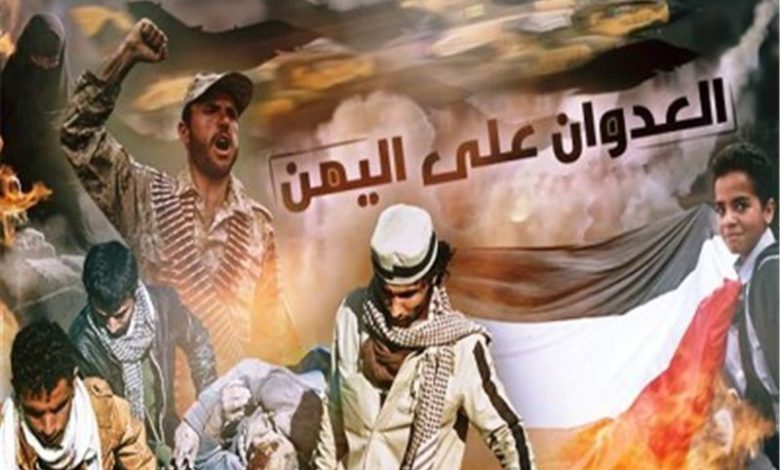
April 7th… A Memory of Open Blood: Crimes of Aggression Between Targeting Humanity and Destroying the Foundations of Life
In a record heavy with blood and suffering, April 7th stands out as one of the days that clearly reveals the extent of the crimes and violations committed by the US-Saudi-Emirati aggression coalition against Yemen, its land, and its people.
The attacks were not limited to targeting military sites, as they claim, but extended to schools, hospitals, roads, bridges, and residential neighborhoods, in a scene that reflects a systematic policy of destroying life in all its forms and a direct targeting of civilians, especially children and women.
2015… Targeting Education and Infrastructure
From the early days of the aggression, the machinery of death turned to vital sectors. Coalition warplanes targeted the Martyr Al-Rashidi School in Ibb Governorate, resulting in the martyrdom of students and the injury of dozens, in a crime that reflects the deliberate targeting of the educational process.
In the same context, airstrikes targeted residential areas in Sana’a, targeting the mountains overlooking the Jarban area in Sanhan, as well as numerous camps and sites, leaving damage to buildings and property.
In Saada, airstrikes were complemented by Saudi artillery and missile shelling that targeted border villages, even targeting communication networks and hospitals, in an attempt to isolate the areas and deprive them of basic services.
Infrastructure was not spared either, as the aggression’s warplanes destroyed the Aqan Bridge in Lahj, a vital artery linking the governorates of Taiz and Lahj, exacerbating the suffering of citizens and isolating areas from one another.
2016: Expanding the Scope of Targeting and Destroying Cities
The following year, the aggression continued its escalation, targeting residential neighborhoods in Taiz with a series of airstrikes that hit Al-Dhabab, Hadhran, and the vicinity of the Presidential Palace, resulting in widespread damage to homes and property.
The airstrikes extended to Hajjah, targeting Wadi Al-Masrouhi and vital crossings, in addition to bombing the Sarwah district in Marib and areas in Al-Jawf, as part of a policy of expanding the scope of destruction to include various governorates.
2017: Massacres of Families and Homes
This year witnessed a significant escalation in the targeting of civilians. A number of citizens, including children and women, were killed and wounded in the bombing of their homes in Hajjah, in crimes reflecting a direct targeting of families.
In Saada, airstrikes intensified on villages and farms, coinciding with Saudi missile strikes on civilian homes. Meanwhile, areas in Marib were targeted by artillery shelling, causing widespread property damage.
2018: Escalation in Targeting of Children and Residential Areas
The aggression continued to target civilians. A number of children and women were killed in airstrikes on their homes in Hajjah, while airstrikes also targeted public roads in Saada, destroying public and private property.
The governorates of Hodeidah and Amran also witnessed a marked escalation in the number of airstrikes, targeting infrastructure and vital areas in an attempt to tighten the siege and further restrict the lives of civilians.
2019: Massacres and Targeting of Residential Areas
This year was one of the bloodiest, with the Saudi-led coalition warplanes committing a horrific massacre in the Sa’wan neighborhood of Sana’a, the capital, killing a large number of students in one of the most heinous crimes targeting education.
Artillery shelling continued in Hodeidah, targeting residential areas, while airstrikes hit areas in Hajjah and Sa’dah, amid a continuous escalation in the targeting of civilians.
2020: Unprecedented Escalation and Expansion of Targeting
This year witnessed a significant escalation in the number of airstrikes, with the coalition warplanes launching dozens of raids on Al-Bayda, Ma’rib, Sana’a, and Al-Jawf, targeting residential areas and infrastructure.
In Sa’dah, Saudi missile strikes targeted populated border villages, while airstrikes hit multiple areas, continuing the scorched-earth policy.
2021-2023: Continued Crimes and a Deepened Siege
Despite years having passed since the start of the aggression, the crimes have not ceased. Air and artillery bombardments continued on Hodeidah, Marib, and Saada, accompanied by an escalation in the use of reconnaissance aircraft.
Mercenaries also continued targeting residential neighborhoods with artillery shelling, while simultaneously establishing military fortifications in some areas, indicating a continued escalation.
Documented Crimes That Will Not Be Forgotten
The events of April 7th, throughout the years of aggression, reveal a recurring pattern of systematic crimes targeting the Yemeni people in their daily lives, from school to home, and from the road to the hospital. These are documented crimes that will not be forgotten and stand as living proof of the scale of suffering imposed by the aggression and of the resilience of a people who faced the war machine with an unbreakable will, clinging to their right to life, dignity, and sovereignty.