
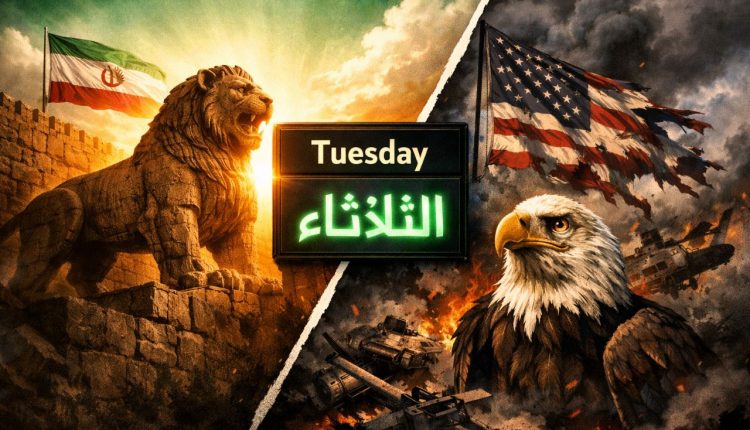
Iran’s Tuesday Triumphs Over America’s Tuesday
In the context of an unprecedented escalation in the conflict between the US-led axis of evil and the Islamic Republic of Iran, which reached its peak on a day dubbed “Decisive Tuesday” or “Hard Tuesday” by the US administration, and amidst explicit American threats and promises of devastating strikes, all eyes were on the Iranian response. However, what transpired today was not as Washington anticipated. Instead, it became a turning point, demonstrating remarkable Iranian resilience and clear confusion in the American position, transforming “America’s Tuesday” into a resounding “Iran’s Tuesday.”
The Arrogance of the American Threat
Before the arrival of the “promised Tuesday,” American statements were characterized by a high degree of threat and intimidation. US President Trump declared that Iran would be “completely obliterated,” and threatened that the United States “will not tolerate the coming strikes,” indicating that “Tuesday will be tough.” The threats were not limited to the president; the US Secretary of Defense confirmed that Tuesday would witness “the largest bombing campaign since the start of operations,” and that the level of strikes in Iranian airspace would be the highest. These statements painted a picture of an imminent and large-scale military operation targeting Iranian infrastructure, including ports and power plants, with the aim of eliminating Iranian capabilities “in one night.”
The Battlefield: Steadfastness and Painful Strikes
Contrary to American expectations, Iran demonstrated remarkable resilience and a decisive response to the threats. Instead of backing down, Tehran rejected ceasefire proposals, including a proposed 45-day truce, asserting that it would not retreat “until the enemy is defeated.” On the military front, reports indicated that Iran defied American threats with “painful strikes against US bases in the region.” Media sources reported a “military setback” suffered by US forces in Isfahan, accompanied by “images described as embarrassing for the American administration” showing the wreckage of American aircraft. These events demonstrated that the American threats had failed to achieve their intended objectives and that Iran was capable of responding effectively.
American Diplomatic Confusion
After the failure of military threats to achieve their objectives, the American position appeared to be heading toward diplomatic confusion. Following threats of total destruction, Iranian reports indicated that President Trump was “begging for a ceasefire.” This shift from threatening rhetoric to seeking mediation to de-escalate the situation reflects a retreat in the American stance in the face of Iranian resilience. Pressure has increased in Washington to end the war with Iran after the aforementioned “military setback,” and reports have revealed intensive mediation efforts by international parties to reach a truce, confirming that the military option was not decisive in the United States’ favor.
The Significance of Iran’s Tuesday Victory
The events of Tuesday, which witnessed a confrontation between the United States and Iran, carry profound implications for the balance of power in the region. Iran demonstrated its ability to withstand American military threats and even transform these threats into an opportunity to showcase its strength and capacity to respond. The softening of the American tone and the search for diplomatic solutions after the alleged military failure represent a strategic victory for Iran. This victory is not limited to the military aspect alone, but extends to the moral and political dimensions, confirming that Iranian power and popular resilience can confront major threats and turn them into a defeat for the threatening party. Thus, Iran’s Tuesday triumphed over America’s Tuesday, establishing a new equation in the region.