
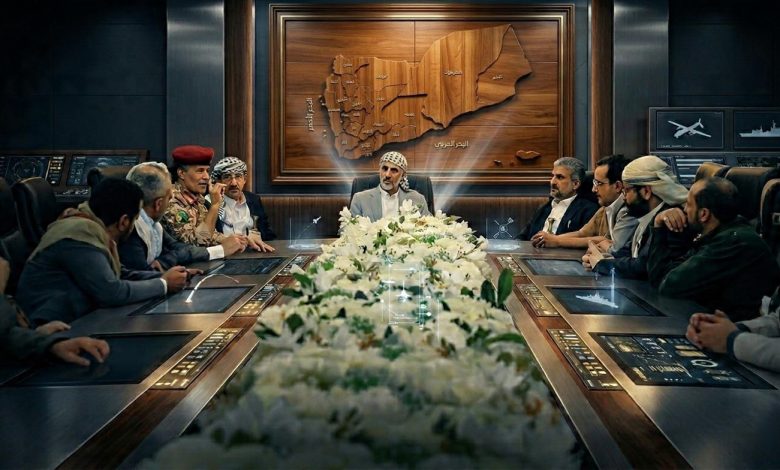
Parity in a Time of “Global Conflict”: The Cohesion of the Administrative, Security, and Combat Pillars in Sana’a as a Guarantee for Imposing Yemen’s Sovereign Political Path
The cabinet meeting in Sana’a, chaired by Sheikh Mohammed Muftah, was not merely a routine administrative procedure to review annual plans. Rather, it served as a comprehensive political declaration, granting the field operations “legitimacy” and profound strategic significance. This meeting represents the “reference platform” linking the stability of state institutions domestically with the calculated escalation in external theaters of operation. Here, the government emerges as the political backbone of the leadership’s choices, transforming official statements into a working matrix that translates the concept of “comprehensive mobilization” from a mere slogan into a tangible institutional reality, integrating military capability with security resilience and independent political decision-making.
The importance of this timing lies in its occurrence on the heels of structural shifts in the nature of the regional conflict. The cabinet seeks to institutionalize the “victories of the resistance axis” and transform them into a lever for national steadfastness. Through its unwavering alignment with the leadership’s decisions, Sana’a positions itself as an indivisible regional player, linking the fate of the home front to the nation’s major issues. This systematic linkage reflects a governmental awareness that the battle is no longer merely a border or defensive one, but has become a battle for “identity and existence,” demanding a fundamental harmony between political decision-makers and those executing field operations within the framework of confronting the American-Zionist project.
The Shift in Deterrence: Breaking the Geopolitical Encirclement
The briefing by Defense Minister Major General Mohammed al-Atifi embodied a strategic shift from “passive defense” to “active offense,” highlighting Yemen’s transformation into a “spearhead” in the direct confrontation with the trio (America, Britain, and Israel). This characterization is based on field realities that have eroded American deterrence, beginning with the targeting of the Eisenhower aircraft carriers and their forced withdrawal, and culminating in the transformation of the Red Sea and Bab al-Mandab into no-go zones for hostile warships. The failure of Operation Prosperity Guardian proves that the Yemeni armed forces have imposed a new military equation that has surpassed the traditional expectations of the international coalition.
In the depths of the technological battle, Sana’a revealed locally manufactured capabilities such as the “Toofan” suicide boats and the “Hatem” and “Falastin” missiles equipped with radar-evading technology. This effectively neutralized Western defense technology and stripped billion-dollar warships of their superiority. The culmination of this shift was demonstrated in the “Jaffa” strategy, where the Yemeni drone penetrated the heart of Tel Aviv, bypassing all layers of protection. This shattered the Zionist entity’s “deep state” doctrine and forced it to redeploy its defense systems to counter the threat emanating from the south, confirming that Yemeni geography has become a key factor in shaping the regional conflict map.
Unity of the Arenas: Joint Fire Protocol
The concept of “unity of the arenas” appears in Cabinet deliberations as an effective military protocol that goes beyond media coordination to joint operational execution. This was evident in the coordinated operations with the Islamic Resistance in Iraq targeting the port of Umm al-Rashrash (Eilat). This field coordination represents a radical shift in conflict management. Yemen is no longer fighting in isolation from its surrounding resistance environment; rather, it has become the driving force behind operations targeting enemy ports and vital sites. This field integration reflects a confidence stemming from the possession of advanced deterrent capabilities managed through joint operations rooms whose effectiveness extends from the Indian Ocean to the Mediterranean.
In this context, the effectiveness of the military operations of the resistance axis stands out as a tool for undermining American hegemony. Recent rounds of conflict have demonstrated that American bases are no longer sources of strength, but rather potential targets lacking adequate protection against precision strikes. The Council’s praise for these victories is an interpretation of the “failure of Western military technology” in the face of local will and innovation. This reality compels major powers to reassess their calculations, not only in the Red Sea, but across the entire map of influence, as Yemeni missiles and drones now possess the capability to turn the tide at critical junctures in the global conflict.
Sovereignty of Decision: Diplomacy of Action on the Ground
The Cabinet’s endorsement of the decisions of the Leader of the Revolution represents a shift in the concept of Yemeni diplomacy, where “missiles” have become the most eloquent tool for asserting political parity. Sana’a today does not negotiate from a position of weakness, but rather rejects deals that attempt to separate the Yemeni track from the Palestinian track. It rejected American offers that included economic incentives and political recognition in exchange for halting the support front. This independent decision confirms that Sana’a has become an international “decision-maker,” and that the Palestinian issue is an integral part of Yemeni national security for it—a moral stance that has transformed into a solid political force.
At the level of the “Government of Change and Construction,” there is a trend toward institutionalizing resilience through decisions that reinforce “political parity,” making Yemen an indispensable conduit for any stability in the Middle East. The harmony between the official position of the Council and the field operations of the armed forces creates a unified political front that is difficult to penetrate through diplomatic pressure. Furthermore, the strategic rapprochement with the (Russian-Chinese) axis in the face of unipolar hegemony reflects Yemen’s transformation into a player in the “new world order,” where Washington is no longer able to pass resolutions condemning Yemen in the Security Council as easily as it did previously.
Regional parity: Economic deterrence equations
Political parity was manifested in its most striking form through the “economic deterrence” equation, which the Council implicitly referred to in response to the Saudi escalation, embodied in the principle of “an airport for an airport, a bank for a bank.” This approach reflects a regional recognition of the strength of Yemeni deterrence, as direct threats forced regional parties (Riyadh in particular) to back down from their economic escalation measures.