
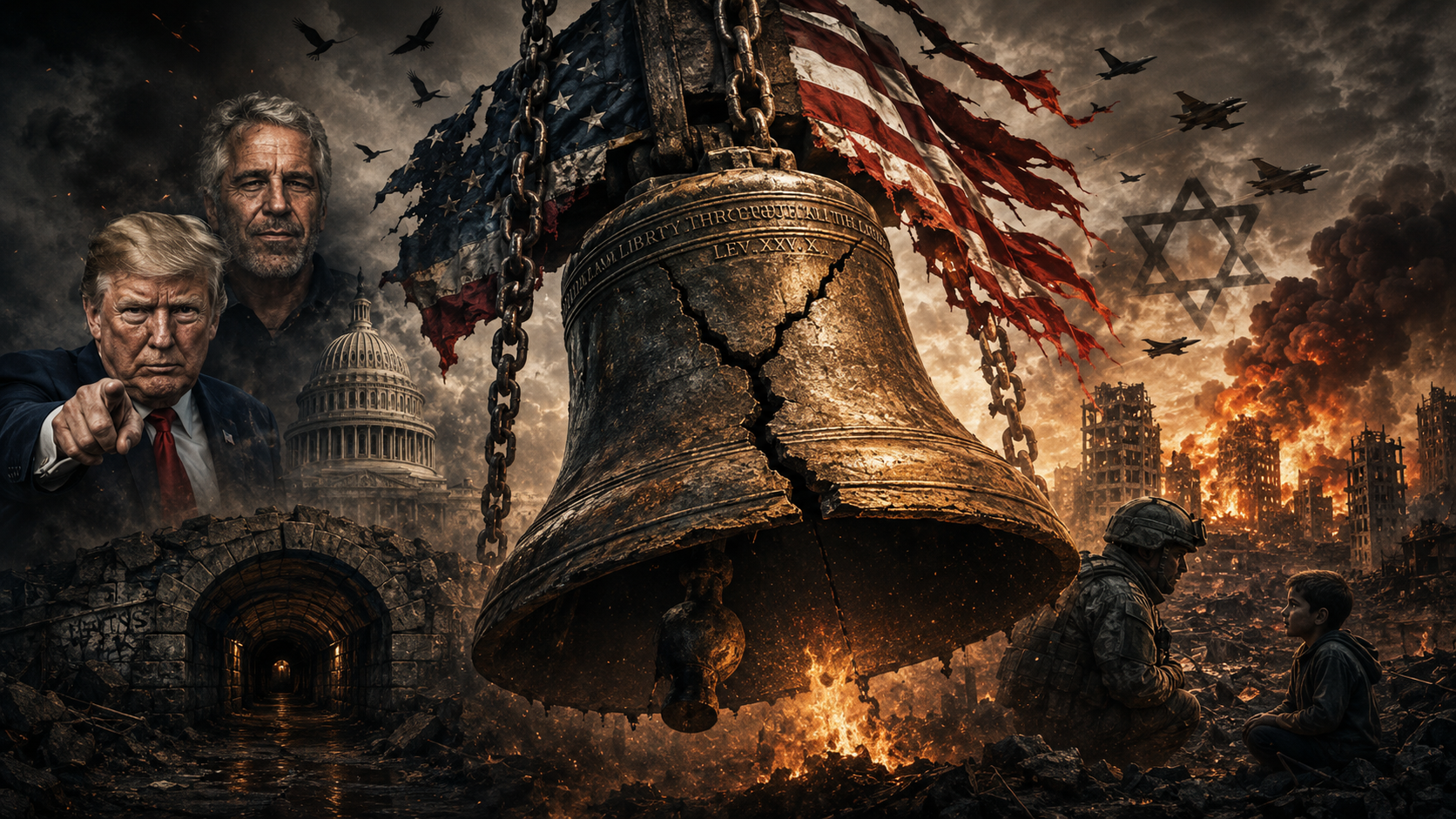
Epstein, Blackmail, and the Hidden Architecture of Political Control
The Epstein affair is no longer viewed by many observers as an isolated moral scandal, but rather as a window into a deeper structure of influence, pressure, and political blackmail. According to this perspective, sensitive files, private relationships, and compromising material may have been used as instruments to shape political behavior and restrict the independence of decision-makers.
Within this framework, certain pro-Israeli and Zionist-aligned power networks are seen as having used such tools to expand their influence over Western political systems, especially the American establishment. The objective, according to this reading, is not merely to protect Israel diplomatically, but to ensure that American military, financial, and political power remains aligned with Israeli strategic interests in the Middle East, regardless of the cost to the region or even to the American public itself.
For this reason, successive U.S. presidents have operated under intense pressure from powerful lobbying structures, media networks, financial interests, and political pressure groups. Any decision that could weaken Israel’s position or limit its regional military freedom becomes politically dangerous. In this view, American policy in the Middle East is not always the product of independent national calculation, but the result of a complex system of pressure, leverage, and strategic dependency.
From this angle, the aggression targeting Lebanon, Yemen, Iran, and the continued brutality against the Palestinians can be understood as part of an accelerated effort to reshape the region in favor of Israeli expansion and long-term dominance. The tools may have changed, but the strategic goal remains the same: weaken regional resistance forces, dismantle opposing power centers, and impose a new balance that serves Israel’s security and expansionist ambitions.
A Puppet Whose Image Is Constantly Repaired
The Epstein files continue to represent a dangerous source of political leverage. Their impact did not end with the exposure of the scandal, nor with the fall or disappearance of certain figures connected to it. Instead, these files remain useful as instruments of pressure against individuals, parties, governments, and institutions.
In this sense, the scandal is not merely about personal corruption. It is about the political use of corruption. The international arena begins to resemble a chessboard, where influential figures move under the threat of exposure, scandal, and reputational destruction.
Before the scandal, the United States was perceived as the power capable of imposing its will on the world. Today, according to this interpretation, even the United States itself appears vulnerable to hidden rooms of influence that use blackmail and political leverage to direct policy. The choice becomes brutally simple: obey the required path or face exposure.
Trump, in this context, appears as a political figure whose public image is constantly repaired and repackaged despite repeated ethical and political crises. He remains, according to this analysis, one of the most suitable figures for playing the role of the aggressive ruler: loud, impulsive, confrontational, and ready to turn chaos into policy.
The Calculations Behind the Epstein Files
In Trump’s recent aggression against the Islamic Republic of Iran, many observers did not sufficiently examine the deeper motives behind the timing of the attack. According to this reading, the escalation was not separate from a broader plan to reshape the Middle East, especially at a moment when negotiations over Iran’s nuclear file were weakening the justifications for military action.
The international community had been following the negotiations closely, hoping for an agreement that could prevent a new war in a region central to global energy, trade, and economic stability. However, forces committed to escalation had no interest in a diplomatic outcome. For them, the objective was not stability, but controlled chaos.
From this perspective, the political explosion of the Epstein files served a purpose beyond public scandal. It helped create a climate of pressure, confusion, and coercion. It also provided a tool for pushing certain political actors toward more aggressive decisions, particularly when the diplomatic path was beginning to reduce the possibility of war.
The Epstein Affair as a Planned Mechanism
The Epstein case now appears to many as one of the most effective tools of political blackmail in modern history. Its power does not end when one individual exits the scene, because the files themselves can continue to be used against wider political circles, parties, and governments connected to those involved.
According to this interpretation, the affair did not emerge as a spontaneous scandal. Rather, it was the result of a long network of relationships, protection, access, and documentation that developed over years. Once accumulated, this material became a strategic reserve of leverage, ready to be activated when necessary.
Although American foreign policy has long relied on pressure, sanctions, threats, and military intervention, the Trump era appears even more dangerous in this regard. The issue is no longer only about hegemony or resource control. It is about removing regional powers from the balance of influence, preventing the emergence of any serious military competitor, and keeping the Middle East locked under a single strategic ceiling that benefits Washington and Israel.
Blackmail as a Political Weapon
Many analysts argue that Trump’s repeated appearance in discussions surrounding the Epstein files made him vulnerable to pressure and manipulation. The man who raised the slogan “America First” and promised his voters an era without new wars found himself moving toward conflicts that served Israeli interests more than the direct interests of ordinary Americans.
According to this reading, Trump’s escalation was not driven only by ideology or temperament. It was also shaped by pressure, fear of exposure, and the need to protect or rehabilitate his political image. In this way, blackmail becomes more than a personal scandal. It becomes a strategic tool for redirecting foreign policy.
The central idea is clear: any independent American move that falls outside the framework of Israeli strategic dominance becomes a threat to pro-Israeli power structures. Therefore, American decision-making must remain contained, disciplined, and usable.
Neutralizing “America First”
Trump’s retreat from much of his “America First” rhetoric can be understood through several factors: the timing of the escalation, internal legal and political pressure, the rise of violence in the Middle East, and the weaponization of compromising files.
As a result, “America First” became more of an electoral slogan than a governing doctrine. It could not survive the combined pressure of lobbying networks, intelligence-linked scandals, legal threats, media influence, and strategic commitments to Israel.
In this context, Trump’s pro-Israeli tendencies did not protect him from pressure. On the contrary, they made him easier to use. His prior support for Israel created the political foundation for pushing him toward even more extreme and aggressive positions. He moved from promising to protect American interests to serving agendas that do not necessarily benefit the American people.
An International Community Without Political Morality
Disrupting the negotiation process required a major shock. According to this view, Trump was the ideal card: impulsive, undisciplined, easily provoked, and willing to take reckless decisions. The mere threat of damaging revelations was enough, in this analysis, to push the world toward a new war that further exhausted the region and created serious economic and political consequences.
The silence of several international powers can also be explained through fear. Many leaders who publicly present themselves as defenders of civilization, democracy, and morality may themselves be vulnerable to scandals, hidden dealings, or compromising material. Silence, therefore, becomes a form of self-protection rather than a moral position.
From the Perspective of Zionist Strategic Interests
From the viewpoint of Zionist strategic interests, allies and enemies are not always treated according to traditional categories. Even absolute American power can become a threat if it is not fully controlled or guaranteed. Therefore, the goal is not merely alliance, but control over the direction of decision-making.
This is why scandals, legal pressure, financial influence, media campaigns, and political blackmail can become tools for managing leaders across the world. The objective is not always to destroy these leaders immediately, but to keep them as usable cards. Their scandals remain like timed explosives, ready to be activated whenever their policies deviate from the required path.
The Epstein affair, in this reading, is therefore not only a criminal or moral case. It is a symbol of how global influence is managed: files are collected, scandals are stored, leaders are pressured, and major geopolitical decisions are shaped in rooms hidden from public view.
The conclusion is that Epstein’s network may have exposed more than individual corruption. It revealed a method of power: create dependency, document weakness, weaponize shame, and use blackmail to redirect nations.