
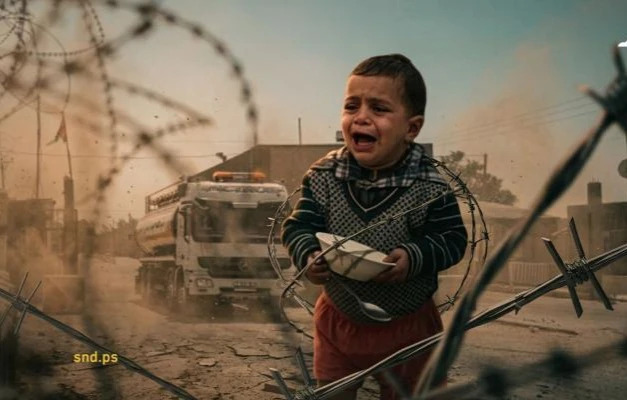
Al-Thawabta: Gaza faces most dangerous stage of starvation engineering amidst drastic aid cuts
The Government Media Office in the Gaza Strip confirmed that field data and documented humanitarian information indicate that the Strip is experiencing one of the most dangerous stages of a systematic “starvation engineering” campaign.
The Director General of the Government Media Office, Ismail Al-Thawabta, stated in an interview with Sanad News Agency on Thursday that the humanitarian crisis has worsened as a result of the “deliberate reduction” in the flow of food and relief aid into the Strip.
He added that the Israeli enemy is using food, medicine, and basic necessities as “tools of pressure and siege” against more than two million Palestinians living in unprecedented and catastrophic humanitarian conditions.
He explained that since the ceasefire came into effect on October 10, 2025, only 48,636 aid trucks out of the 131,400 that were supposed to enter have been allowed in—a compliance rate of no more than 37%. This means the Gaza Strip is deprived of more than 63% of its humanitarian needs.
He also noted that only 2,719 trucks out of the 10,800 required were permitted entry, a rate of no more than 25%, considering this an indication of a systematic policy of restricting humanitarian aid deliveries.
Al-Thawabta stated that these figures reflect an organized policy of managing mass starvation and controlling the basic needs of the population, which constitutes a clear violation of international humanitarian law and the Geneva Conventions, which prohibit the use of starvation as a weapon against civilians.
He explained that the decline in aid flows has caused significant difficulties for relief organizations, leading to a reduction in food programs and humanitarian services. He emphasized that more than 1.5 million people are now at risk, including approximately 250,000 families who are almost entirely dependent on aid.
Al-Thawabta pointed to the restrictions imposed by the Israeli enemy on the entry of meat, frozen food, and basic supplies, in addition to the disruption of cold chains due to power outages and the prevention of fuel deliveries. This has led to a deterioration in food quality and a rise in malnutrition rates, especially among children, the sick, and the elderly.
He added that poor storage conditions and high temperatures inside displacement centers and tents have led to an increase in food spoilage and a rise in food poisoning and foodborne illnesses, amidst a widespread collapse of the health sector and a severe shortage of medical resources.
He noted that the percentage of aid delivered during May did not exceed 25%, which is accelerating the depletion of food stocks and exacerbating the food security crisis, coinciding with the destruction of local production, agriculture, and livestock sectors.
Al-Thawabta concluded by emphasizing that the continuation of these policies represents a clear example of “starvation engineering” as a tool of war targeting civilians, calling on the international community, the United Nations and human rights institutions to take urgent action to stop it, and to fully and regularly open the crossings to ensure the flow of humanitarian, food, medical and fuel aid to the Gaza Strip.