
“Operation Protective Edge” Continues to Drain the Occupation: Resistance Expands its Targeted Strikes, and Zionist Aggression Worsens the Humanitarian Crisis in Lebanon
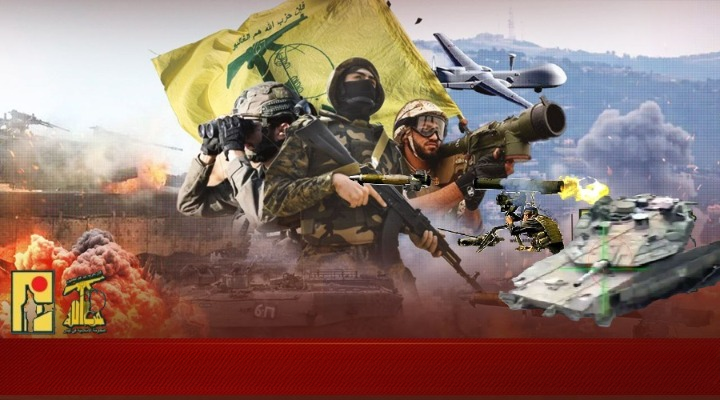
The confrontation on the Lebanese front continues at an escalating pace, with the Zionist enemy persisting in violating the ceasefire understandings and expanding its attacks against civilians, villages, and civilian infrastructure. Meanwhile, the Islamic Resistance in Lebanon continues to carry out targeted and precise operations against occupation positions, troop concentrations, and military vehicles, as part of the “Operation Protective Edge” campaign, which has become a prominent feature of the ongoing war of attrition waged by the occupation on Lebanese soil.
While international and human rights organizations report a worsening humanitarian catastrophe, a widening displacement of people, and a rising death toll, the resistance’s field operations confirm that the occupation’s attempts to impose new realities through military force continue to be met with escalating responses targeting its positions and forces across various fronts in southern Lebanon.
Successive Strikes Target Occupation Sites and Troop Gatherings
In the past few hours, the Islamic Resistance announced the execution of a wide range of qualitative operations against Israeli enemy army sites and gatherings in southern Lebanon, affirming that these operations come in defense of Lebanon and its people and in response to the ongoing Israeli attacks targeting civilians and southern villages.
In the town of Bayada, the Resistance targeted a gathering of occupation vehicles and soldiers with a concentrated rocket barrage, while other enemy gatherings on the southeastern outskirts of the town of Yahmar al-Shaqif were subjected to a series of successive strikes with qualitative missiles and artillery shells in successive waves.
The operations were not limited to targeting military gatherings, but also included command structures and newly established centers of the occupation. The Resistance announced targeting the newly established headquarters of the 401st Armored Brigade of the enemy army in the town of Dibil in southern Lebanon with a swarm of attack drones, in a strike that reflects the development of the Resistance’s offensive capabilities and its ability to reach sensitive command and military targets.
Drones Target Occupation Vehicles
The Qantara and Zawtar al-Sharqiya fronts witnessed a significant escalation in the use of drones. The resistance successfully targeted an Israeli military transport vehicle loaded with stolen goods from Lebanese civilian homes in the al-Sal’a hill area of Qantara. The vehicle was seen burning for an extended period after being directly hit.
The resistance also targeted an occupation communications vehicle at the same location using an Ababil drone, achieving a confirmed hit. A tent where occupation soldiers were stationed near the river on the outskirts of Zawtar al-Sharqiya was also targeted in a similar attack, resulting in a direct hit.
As part of ongoing operations, the resistance also targeted an Israeli military command post in the town of al-Bayada with a rocket barrage. Additionally, gatherings of soldiers and vehicles in Qantara and the vicinity of Yahmar al-Shaqif were targeted with a series of rocket and artillery strikes.
These operations reflect the diversity of combat methods employed, from sophisticated missiles to precision artillery and attack drones, confirming the continued development of the resistance’s operational capabilities and its ability to target both stationary and moving targets simultaneously.
Israeli Acknowledgment of the Difficulty of the Confrontation
In parallel with the escalation of resistance operations, Israeli media outlets have begun to increasingly discuss the challenges facing the occupation forces on the ground.
In this context, the Hebrew newspaper Maariv acknowledged that subduing Hezbollah or breaking its fighting spirit is no easy task, noting that the resistance possesses a high capacity for resilience and continued fighting, and warning that the continuation of the confrontation could lead the entity into a long and open-ended war of attrition.
Other Hebrew media outlets also admitted that the number of wounded in the occupation army since the start of the battle in southern Lebanon has risen to more than 1,300, including dozens of serious and moderate injuries, indicating the significant human cost the occupation is incurring as a result of the ongoing operations.
In the same context, statements by Israeli analysts raised questions about the effectiveness of the ongoing military operations against Lebanon and the possibility of achieving their stated objectives, given the resistance’s continued operations and its ability to maintain its field readiness.
A Bloody Zionist Escalation Targeting Civilians
Meanwhile, the Zionist enemy continued its extensive attacks on Lebanese areas, carrying out a series of airstrikes and artillery bombardments targeting several towns and villages in the south and the Western Bekaa Valley.
In the towns of Siddiqin and Tayr Dibba in southern Lebanon, Israeli airstrikes resulted in the martyrdom of three citizens and left several wounded. Other areas witnessed airstrikes on Kfardounine and Bnaafoul, and artillery shelling targeted Sahmar and Yahmar in the Western Bekaa Valley.
In a more bloody development, the death toll from Israeli enemy airstrikes on towns in the Tyre district and the city of Sidon rose to fifteen martyrs and fifteen wounded in just one day.
The attacks included the town of Tayr Debba, which was subjected to a series of intense airstrikes resulting in a large number of martyrs and wounded, in addition to the town of Deir Qanoun al-Nahr and the public housing complex in Tyre. Another airstrike targeted a civilian vehicle in Sidon, killing two people inside.
These crimes come within the context of the ongoing Israeli policy targeting civilians, infrastructure, and residential areas, despite the ceasefire agreement that came into effect months ago.
Figures Reveal the Scale of the Disaster
Official Lebanese statistics confirm that the Israeli aggression, which began on March 2nd, has caused enormous human and humanitarian losses.