
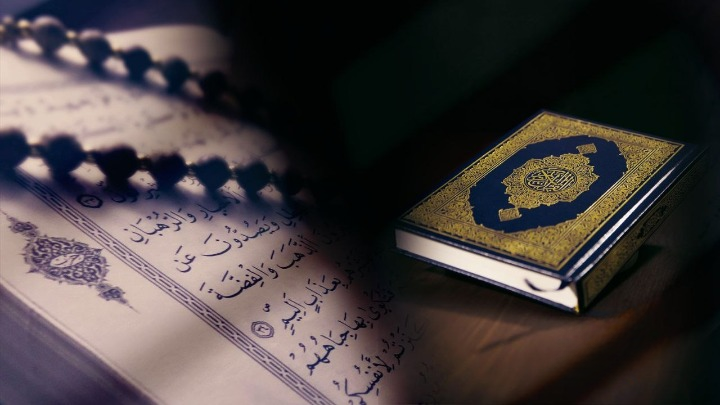
Insulting the Qur’an… When American Vulgarity Turns into a War on Islam
In a scene reflecting the peak of moral decline, the United States has witnessed provocative acts against the most sacred symbols of Islam. The Republican candidate for the U.S. Senate from Florida, criminal Jake Lang, placed a copy of the Holy Qur’an in the mouth of a pig during a demonstration in Plano, amid anti-Islam slogans.
This incident was not an isolated act, but part of an escalating wave of insults that has included the burning of copies of the Holy Qur’an by other candidates, such as the criminal Valentina Gomez, driven by political motives deeply rooted in Zionist-American racism.
These crimes fall within a comprehensive scheme by the arms of global Zionism (the United States, Britain, and the Zionist entity) to restrict Islamic identity and target the Holy Qur’an as a spiritual and cultural symbol. This coincides with systematic violations against Palestinians in Gaza and the West Bank, and against the sovereignty of peoples in Syria, Yemen, and Lebanon, within calculated strategies aimed at destabilizing the Muslim Ummah on religious, cultural, and political levels.
Strategic Dimensions of Zionist-American Hostility
The insults to Islamic sanctities in the United States represent an extension of the existential war waged by Zionist-American powers against the Islamic Ummah. The objective is clear: to weaken the bond between Muslims and their sacred symbols, exploit internal divisions to undermine religious and political influence, and reframe the narrative of “Islam as a global threat.”
According to data from Islamic human rights organizations, religious hate crimes have increased by 56% in recent years, alongside significant financial support from Zionist lobby networks exceeding $1.5 billion through more than 40 organizations, most notably the “Middle East Forum” and the “Center for Security Policy.” Additionally, AIPAC contributed more than $100 million to the 2024–2025 election cycle to support extremist voices aligned with Christian Zionism, reflecting the systematic nature of this targeting.
Historical Background and Ongoing Criminality
Insults to the Holy Qur’an are not new. Past years have witnessed several similar crimes, including:
The “Terry Jones” incidents in 2010.
The use of the Qur’an as a tool of psychological torture in Guantánamo Bay in 2005.
The burning of Qur’an copies at Bagram Air Base in Afghanistan in 2012.
All these incidents confirm that the targeting is part of a deeply rooted hostile doctrine, not merely individual excesses or isolated extremist acts.
Popular and Official Reaction in Yemen
The response of the Yemeni people was decisive, with more than 1,500 marches held across various liberated governorates, in response to the call of Sayyed Abdulmalik Badr al-Din al-Houthi (may God protect him). He affirmed that insulting the Qur’an is not freedom of expression, but a crime against sacred values, calling for the activation of economic and media boycotts to confront the Zionist-American war on the Qur’an.
The Supreme Political Council emphasized that these crimes represent a systematic hostile approach aimed at distorting the status of the Qur’an and weakening the Ummah in the face of internal and external challenges, noting that the popular response reflects the true embodiment of Yemen’s faith-based identity.
The Role of the Scientific and Religious Elite
The importance of the role played by the Yemeni Scholars Association and religious scholars stands out in correcting public awareness and mobilizing society against symbolic and cultural targeting. They stressed that the responsibility of the elite lies in channeling public anger into practical and effective action, including economic and media boycotts and confronting intellectual and cultural aggression—transforming every protest into a unified message that strengthens the protection of the Qur’an and faith-based identity.
Dimensions of Popular Anger
The Yemeni popular movement embodies a firm and conscious stance toward the repeated insults against the Holy Qur’an. Public anger has transformed into a unified collective position through marches and rallies, expressing religious and cultural identity and a commitment to defending the sacred values of the Ummah. This mass mobilization indicates that defending the Qur’an is the first line of defense for the Ummah, and that popular action is not merely an expression of anger, but a practical response to the call of the Sayyed Leader for field action and confronting hostile schemes.