
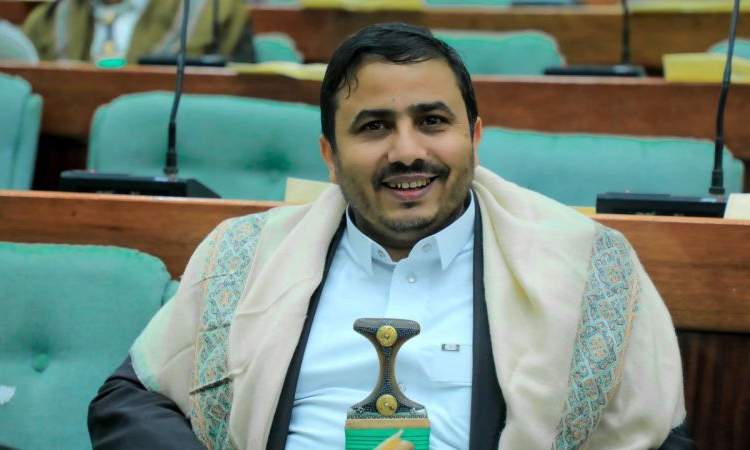
Ansar Allah Political Bureau Member: Real Peace Begins with Lifting the Blockade and Paying Salaries
Mohammed Al-Farah, a member of the Political Bureau of Ansar Allah, said that the political roadmap is facing clear Saudi obstruction, noting that Riyadh has yet to make a decisive choice. He asked whether Saudi Arabia wants to be a neighboring state that respects Yemen’s sovereignty, or to remain an instrument in the hands of the United States and the Zionist entity, waging war by proxy.
In an exclusive interview with Al-Khandaq website, Al-Farah explained that “Sana’a has presented a clear vision based on ending the aggression, lifting the blockade, paying salaries from Yemen’s looted wealth, releasing all prisoners on both sides, reconstruction, and compensation for damages. What we are facing, however, is a Saudi attempt to circumvent the core entitlements and turn peace into nothing more than a fragile truce that guarantees Saudi border security while keeping Yemen economically and politically suffocated. This is the essence of aggression and can never be called peace.”
He pointed out that Riyadh is betting on regional variables and has failed to realize that Yemen is today at the peak of its strength, and that the Yemeni people are dozens of times more convinced of confronting the aggression coalition than they were in 2015. He clarified that “the main points of obstruction are direct U.S. interference in the details of the file through the Saudi channel, and Riyadh’s insistence on retaining economic and humanitarian pressure cards.” He stressed that “the continuation of the blockade and the obstruction of salary payments is neither an administrative mistake nor a financial inability; it is part of a deliberate strategy and a dirty political weapon used by the coalition to collectively punish the Yemeni people.”
Al-Farah said the social and economic impacts of this weapon are evident: rising living costs, the exhaustion of poor families, and attempts to undermine trust in national institutions. He added that the aggression has not yet understood that a people who withstood bombardment and a military siege will not be defeated by a war on salaries and bread. On the contrary, people have become more aware that poverty here is not fate, but a political decision taken by Riyadh and Washington to subjugate Yemen.
He affirmed that the patience of the Yemeni people is not limitless. They are capable of reclaiming their rights and possess the anger and morale needed to retaliate against Riyadh and its mercenaries, defeat them, and recover their full rights. He noted that Yemenis are acting with a high sense of responsibility and extending their hands for peace—but from a position of strength, not weakness.
He continued: “We are ready for a just peace based on full sovereignty, the liberation of wealth, payment of salaries, opening land crossings and airports, the withdrawal of foreign forces, the release of prisoners, and repairing what the aggression has destroyed in Yemen.” He added, however, “We do not bet on others’ promises; rather, we work to advance the peace process in practical terms through three tracks: adherence to the constants of sovereignty, dignity, and rights; rejecting any settlement that undermines Yemen’s independent decision-making; and continuing engagement with mediators to explain our fair vision for a solution.”
Al-Farah stressed that keeping military power cards present on the table is necessary, as experience has proven that the enemy respects only those who possess the ability to respond. A peace that is not protected by force becomes nothing more than a truce serving the aggressor. To demonstrate sincere intentions toward peace, Sana’a has presented several unilateral initiatives, including the release of hundreds of prisoners and the opening of roads, among others. He affirmed that Sana’a is ready to offer everything that could open the door to a real solution, but will not accept cosmetic initiatives used merely to whitewash the aggressor’s image before the world.
He emphasized that Saudi Arabia is not a mediator in Yemen, but a principal party to the aggression and blockade, and therefore bears direct legal, humanitarian, and moral responsibility for every drop of blood, every hungry or sick child due to closed crossings and the prevention of fuel and medicine imports, and the suffering of thousands of families whose homes and businesses were destroyed, as well as families left orphaned after losing their breadwinners. He called on the world to stop treating Yemeni suffering as mere numbers in media reports and to link clearly between those who wage war, those who obstruct peace, and those who close ports. He added that international silence and the blatant complicity of the UN Security Council so far encourage the aggressor to continue, but this silence will not prevent Yemenis from reclaiming their rights with their own hands.