
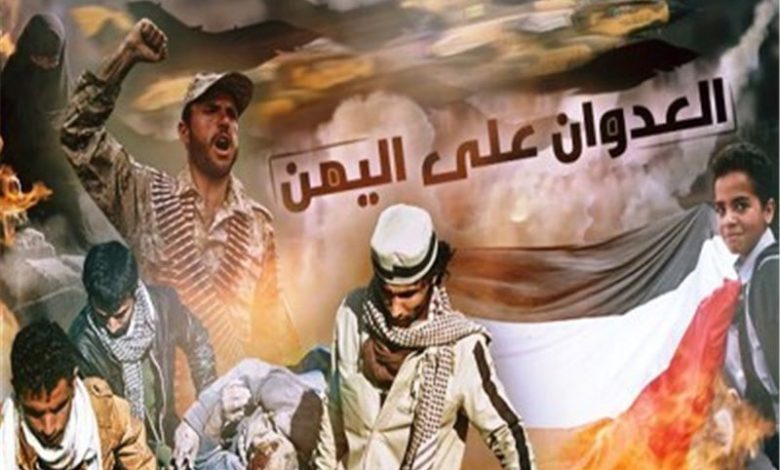
January 5: An Undying Witness — Years of Aggression and an Open File of Crimes
The dates of the U.S.–Saudi–Emirati aggression against Yemen never pass unnoticed. Every day bears its own bloody imprint, and every date stands as a living witness to the scale of systematic criminality that has targeted the Yemeni people—their lives, security, and essential services. January 5 stands out as one of the darkest days in the memory of the war, where massacres intersect and the true nature of the aggression is laid bare—one that made civilians a direct target and turned service infrastructure into an open arena for bombardment and destruction.
2016: Targeting the Most Vulnerable and Exposing the Aggression’s Moral Bankruptcy
On January 5, 2016, coalition warplanes committed a shocking crime by striking Al-Noor Center for the Rehabilitation and Care of the Blind in the capital, Sana’a, resulting in the killing and injury of several residents. It was one of the most heinous crimes, exposing the deliberate targeting of the most vulnerable and the utter disregard for humanitarian and ethical values.
The crimes did not stop there. Coalition aircraft carried out multiple airstrikes on residential neighborhoods and populated areas across several governorates, causing widespread damage to citizens’ homes and property as part of a systematic policy of collective intimidation.
2017: Bloody Escalation and Targeting of Civilian Infrastructure
On January 5, 2017, the aggression expanded its criminal scope, launching airstrikes and artillery shelling that hit popular markets and public roads, leading to civilian deaths and injuries and the destruction of the livelihoods of dozens of families.
Service facilities and vital infrastructure were also targeted, once again confirming that the aggression was not limited to direct killing, but sought to paralyze daily life and impose compounded suffering on the Yemeni people.
2018–2019: Civilians in the Crosshairs
In the following years, the crimes of January 5 intensified. Several governorates witnessed Saudi missile and artillery attacks on border villages and populated areas, resulting in civilian casualties—including women and children—and damage to farms and public and private property.
Coalition mercenaries continued to shell residential neighborhoods with heavy and medium weapons, in blatant violation of all international and humanitarian laws, amid shameful international silence.
2020–2021: Destruction of Services and the Continuation of Collective Punishment
On January 5 of these years, the aggression focused on targeting service infrastructure—roads and public facilities—alongside heavy shelling of residential areas, exacerbating the humanitarian situation and placing additional burdens on civilians.
Several governorates also endured intensive air raids and sustained bombardment, in a futile attempt to break the steadfastness of the Yemeni people, without achieving any real military gains.
A Crime That Does Not Expire
What occurred on January 5 throughout the years of aggression cannot be reduced to numbers or dates. It stands as a stark model of a war of annihilation and systematic targeting—one that turned schools, humanitarian centers, markets, and homes into military objectives, in flagrant violation of international conventions.
This bloody record confirms that the U.S.–Saudi–Emirati aggression was never a “legitimate” war, but a fully fledged criminal project whose brutality will remain a witness—fueling continued steadfastness and resistance until full victory is achieved, sovereignty is restored, and all those involved in these crimes are held to account.