
Israeli Enemy’s Decision to Ban Humanitarian Organizations: Between Security Control & Strangulation of Palestinian People
The Israeli enemy authorities have not contented themselves with the crimes they have committed—and continue to commit—against the Palestinian people for more than two years, including the crime of genocide in the Gaza Strip, accompanied by systematic attacks in the West Bank that have destroyed most aspects of Palestinian life.
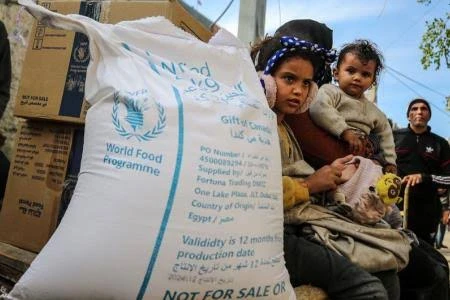
In further escalation of the strangulation of the Palestinian people, and as a continuation of a plan of starvation and torture within an ongoing war of extermination, the Israeli enemy has taken a decision to ban international non-governmental organizations from operating in the Palestinian territories under various pretexts. This effectively deprives Palestinians of many health, food, and shelter services provided by these organizations.
Humanitarian work by organizations in the occupied Palestinian territories—especially in the Gaza Strip—has become an urgent necessity in light of the severe deterioration of economic, agricultural, and health conditions due to the genocide, which has left most, if not all, of Gaza’s Palestinians without sources of income.
However, the Israeli enemy authorities have imposed what they call “new registration rules” targeting the work of dozens of international humanitarian NGOs operating in Jerusalem, the West Bank, and the Gaza Strip. Under these rules, they threaten to bar 37 humanitarian organizations from entering Gaza.
Palestinian sources considered that the Israeli entity seeks to “politicize humanitarian aid and turn it into a tool of blackmail against Palestinians,” calling on the international community to “take urgent and effective action to condemn this criminal behavior.”
Among the international relief organizations whose licenses would be suspended are ActionAid, the International Rescue Committee, Médecins Sans Frontières (Doctors Without Borders), and the Norwegian Refugee Council, starting in early 2026, with operations to cease within 60 days.
The Israeli enemy authorities claim that these organizations failed to provide “complete personal data for their staff,” while international NGOs say that doing so could put their employees at risk.
The Israeli government’s Ministry of Diaspora Affairs, which oversees registration requests, also claimed that the “new procedures will not affect the flow of humanitarian aid into Gaza,” while all organizations assert the opposite—that the measures will undermine humanitarian work.
Turning Humanitarian Work into a Security Tool
Palestinian factions condemned the Israeli enemy’s decision, describing it as a dangerous escalation within the war of extermination and policies of starvation and attrition against the Palestinian people.
The Popular Front for the Liberation of Palestine said that notifying more than ten international humanitarian organizations of the withdrawal of their work permits constitutes a war crime and a new chapter in genocide, aimed at tightening the siege and preventing the delivery of even minimal medical and relief assistance.
The Front stated that the decision is purely political, seeking to turn Gaza and the West Bank into unlivable areas by expelling international witnesses to the enemy’s crimes, amid the absence of international accountability and direct U.S. partnership.
It stressed that the so-called “security screening” requirement for staff lists is blatant blackmail intended to transform humanitarian work into a security instrument and dismiss hundreds of Palestinian workers.
For its part, Hamas considered reports in Hebrew media about the Israeli government’s move to cancel licenses for dozens of relief institutions a dangerous escalation and a blatant disregard for the international humanitarian system.
The movement affirmed that the enemy seeks to politicize relief work and turn it into a tool of blackmail, calling on the international community, the United Nations, and human rights institutions to take urgent action to condemn the decision and pressure the enemy government to reverse it.
The Palestinian Mujahideen Movement likewise strongly condemned the ban on a wide range of humanitarian organizations, considering it a further escalation of the siege and the war of extermination.
The movement stated that the decision targets civilians’ lifelines—especially children, the sick, the wounded, the displaced, and persons with disabilities—warning that imposing “security screening” on staff exacerbates the humanitarian catastrophe and turns aid work into a tool in the hands of the Israeli enemy.
International and UN Condemnation
In this context, ten countries condemned the move, affirming that these rul