
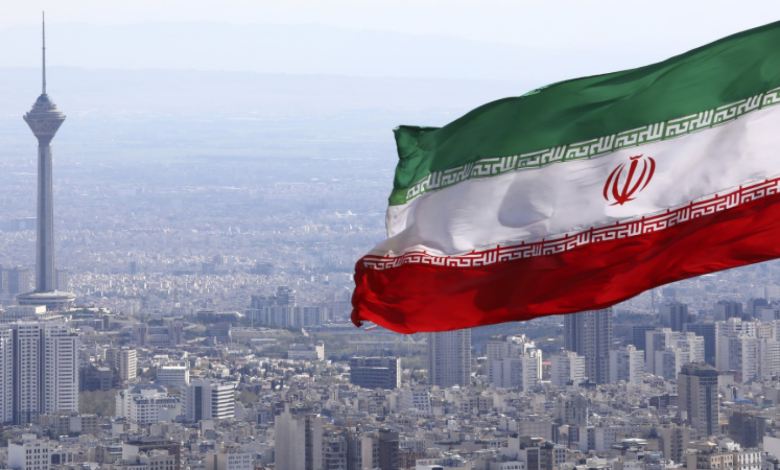
Iran Shapes Regional Equations: No Foreign Guardianship and Open Deterrence Against US Threats
At a highly sensitive regional juncture, the political, diplomatic, and security messages emanating from Tehran converge to affirm Iran’s unwavering commitment to a clear equation: national sovereignty, rejection of foreign guardianship, and the promotion of regional stability through cooperation, not war, while maintaining full readiness to respond to any aggression.
The statements of Iranian President Masoud Pezeshkian, along with the positions of the Iranian Foreign Ministry and the warnings issued by the Parliament’s National Security Committee, reflect a coherent vision for managing regional and international conflicts from a position of strength, not subservience.
No Guardianship Over the Region’s Countries: Peace is Built from Within
Iranian President Masoud Pezeshkian emphasized that the countries of the region do not need any external guardian to manage their affairs or address their crises, stressing that the peoples and leaders of the region possess the full capacity to resolve disputes through dialogue and mutual understanding.
During his participation in the International Conference on Investment Opportunities and Financing of Railway and Road Infrastructure Projects in Tehran, Pezeshkian explained that Iran views its neighboring countries as friends and partners on the path of development and peace. He considered the opening of communication routes and land corridors not merely an economic project, but a strategic path to ensuring shared security and stability.
He pointed out that the roads connecting Iran with its neighbors are “roads of peace and development,” emphasizing that developing regional infrastructure creates a stable environment, strengthens national economies, and establishes a region based on cooperation, not conflict.
Wars do not serve the people… and stability is a strategic choice.
In a related context, the Iranian president stressed that the region can no longer tolerate the continuation of wars and conflicts, explaining that any military escalation negatively impacts the security of all countries in the region and leads to significant human and economic losses.
Pezeshkian affirmed that violence and bloodshed have never brought gains to the people, calling for prioritizing dialogue, building trust, and strengthening political and diplomatic communication channels to ensure a future based on development, stability, and mutual respect.
He also highlighted the depth of Iran’s relations with Russia and neighboring countries, emphasizing that the signed agreements have moved beyond the stage of understandings to practical implementation, with Tehran committed to removing any obstacles that might hinder this process.
The Nuclear Program: A Sovereign Right and a Pretext for Political Pressure
For his part, Iranian Foreign Ministry spokesman Ismail Baghaei asserted that Western claims regarding the nature of Iran’s nuclear program are merely a pretext for exerting political pressure on Tehran.
Baghaei explained that inspections of undamaged nuclear facilities are proceeding normally, while routine procedures cannot be carried out at damaged facilities due to safety and security concerns. He stressed that Iran’s right to the peaceful use of nuclear energy is an inherent and non-negotiable right.
He pointed out that Iran’s nuclear program has always been under the supervision of the International Atomic Energy Agency (IAEA) in accordance with the safeguards agreement, noting that unilateral interpretations by some nuclear-armed states have contributed to the politicization of this issue.
He also criticized the International Atomic Energy Agency’s failure to condemn the US-Israeli aggression against Iran, considering it a dangerous precedent in the history of the non-proliferation regime, which directly affected Tehran’s relationship with the agency.
A Direct Message of Deterrence to Washington: Two Carriers and Two Targets
In a notable escalation of political and security deterrence, Ebrahim Rezaei, spokesman for the National Security and Foreign Policy Committee in the Iranian Parliament, issued a direct warning to US President Donald Trump following his announcement of sending the aircraft carrier USS Gerald Ford to the Middle East.
Rezaei stated in a message via the “X” platform:
“Trump said he would send an aircraft carrier to the region… Don’t worry! We had one target to sink, and now we have two.”
This warning comes amidst increasing US threats to use force if the diplomatic track fails, reflecting Tehran’s determination to establish a clear deterrent equation that prevents any military adventure against it.
In summary, these concurrent stances reveal a comprehensive Iranian vision based on rejecting hegemony, promoting regional cooperation, and protecting national sovereignty, while remaining fully prepared to respond to any threat.
According to these messages, Iran is not seeking war, but rather imposing peace from a position of strength, and affirms that the era of dictates and guardianship is over.