
Investigative Report Reveals Saudi Arabia’s Plundering of Yemeni Oil and Gas in the Empty Quarter
The Cradle newspaper revealed that Saudi Arabia is working to expand its influence in Yemen through steps that appear to be geological cooperation but are in reality aimed at controlling oil and rare mineral resources.
The newspaper explained in a lengthy investigative report that the memorandum of cooperation approved by the Saudi cabinet is not merely a technical procedure, but rather a gateway to tightening control over Yemen’s strategic resources, since whoever controls the geological maps today controls the economic decision-making tomorrow.
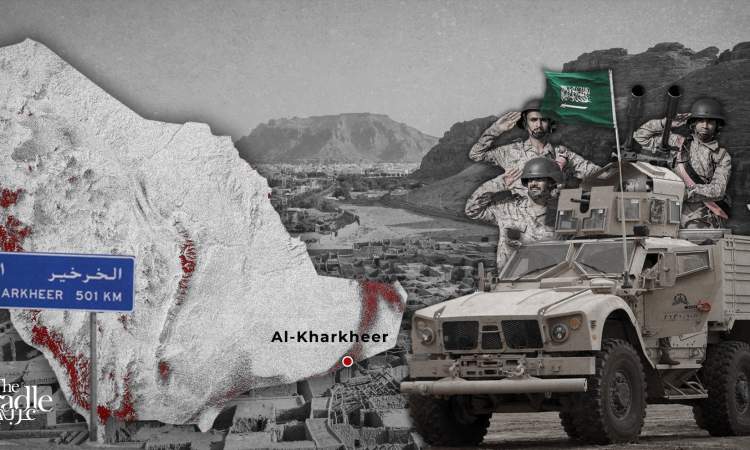
The newspaper indicated that the effects of this mandate quickly appeared in the Al-Kharkhir area on the edge of the Empty Quarter, where clashes erupted between the Riyadh-backed Homeland Shield militias and the Hadrami Al-Manahil tribes, resulting in injuries and the expulsion of some forces from their positions.
It also noted that Riyadh deployed new military formations and advanced into Hadramawt with heavy equipment, in an attempt to dismantle any local force that does not align with its agenda.
The newspaper confirmed that the most serious development was Saudi Arabia’s request to Google to remove the Yemeni villages of Al-Kharkhir from digital maps, a move activists considered an attempt to erase the identity of the oil-rich region and legitimize its control.
The newspaper quoted local sources as saying that videos showed Yemeni oil being transported across the border, sparking widespread anger and forcing Riyadh to order the withdrawal and dismissal of hundreds of soldiers.
The Cradle also highlighted that Al-Kharkhir, located at the border triangle between Yemen, Oman, and Saudi Arabia, is a strategically important area rich in oil and gas, and that the dispute over its ownership stems from conflicting maps and historical documents between the Mahra and Manahil tribes on one side, and Saudi Arabia, which bases its claim on the 2000 Jeddah Treaty, on the other.
The newspaper explained that the Saudi project to construct an oil pipeline extending from Al-Kharj to the Arabian Sea via Al-Mahra reflects longstanding ambitions. Riyadh seeks to secure a strategic alternative to the Strait of Hormuz and guarantee a direct route for oil exports, as part of its competition with Emirati influence and its efforts to redraw the southern map to serve its expansionist ambitions.
An investigative report reveals Saudi Arabia’s plundering of Yemeni oil and gas in the Empty Quarter.