
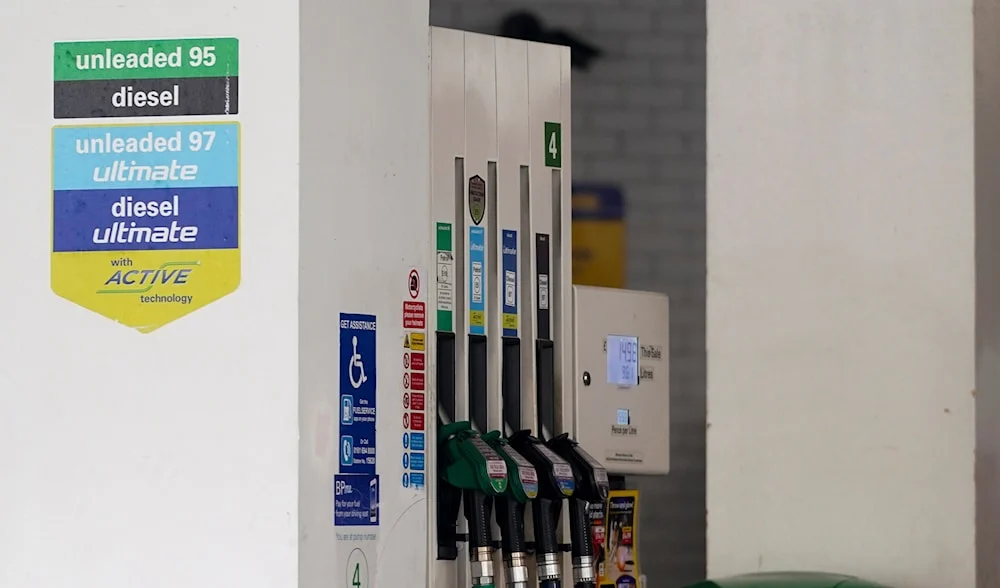
UK gas prices surge to four-year high amid war on Iran
Gas prices in the United Kingdom recorded their largest weekly increase in four years last week, according to government data, highlighting renewed pressures on the cost of living amid the ongoing US–Israeli aggression on Iran.
Data released on Tuesday showed that the average price of a liter of unleaded gas reached 135.67 pence ($1.83) on Monday, up 3.5 pence from the previous week, returning to levels last seen in December. Diesel prices also climbed, rising 6.9 pence to 149.01 pence per liter.
This surge marks the sharpest weekly increase since 2022. The rise comes as Brent crude topped $100 per barrel on Monday, with the ongoing US-Israeli aggression on Iran disrupting oil production and trade through the Strait of Hormuz.
These developments suggest that British households may face renewed pressures on living standards, particularly as mortgage lenders have recently raised interest rates amid expectations that the Bank of England may delay planned rate cuts. Economists warn that if disruptions in energy markets continue, inflation in the United Kingdom could climb to 5%, compounding the financial strain on consumers.
UK monitors economic fallout of US, ‘Israel’ war on Iran: Starmer
British Prime Minister Keir Starmer said Monday the government was monitoring the economic fallout of the US-Israeli war on Iran, as energy prices soared due to supply disruptions.
“The longer this goes on, the more likely the potential for an impact on our economy, impact into the lives and households of everybody and every business,” Starmer said, speaking at a community centre in London. He added that “our job is to get ahead of that, to look around the corner, assess the risk, monitor the risks, and work with others in relation to that.”
Starmer sought to reassure the public amid deep concerns over prolonged cost-of-living pressures and high energy bills following the outbreak of the war in Ukraine in 2022. The prime minister insisted the government was prepared to handle the economic fallout, noting that most households remain protected until summer by a price cap on gas and electricity.
His finance minister, Rachel Reeves, will join G7 counterparts on Monday for talks between the world’s leading industrialized nations as the war on Iran entered its 10th day. The discussions are expected to cover a joint release of strategic oil reserves coordinated by the International Energy Agency (IEA), the Financial Times reported.
Starmer defends US-UK ties despite recent spat
Starmer also defended UK-US ties, which appeared increasingly strained after US President Donald Trump criticized the British leader for initially refusing to take a role in the war.
“The discussion with our US counterparts, is happening at all levels, all of the time, every single day. That’s the nature of the relationship,” Starmer said, adding that he held his first phone call with Trump since the war broke out on February 28.
But he insisted that “decisions about what’s in Britain’s best interests are decisions for the prime minister of Britain.”
Global oil prices skyrocket
Global oil prices surged more than 20% in early trading Monday, reaching their highest levels since 2022, as the expanding US-Israeli war on Iran stoked fears of severe supply disruptions and instability across energy markets.
Brent crude jumped as much as $18.35, or 19.8%, to $111.04 per barrel, while US West Texas Intermediate (WTI) rose $20.34, or 22.4%, to $111.24 per barrel, reflecting mounting concern over disruptions to shipments through the strategically vital Strait of Hormuz.
The latest surge follows sharp gains last week, when Brent climbed 27%, and WTI surged 35.6%, underscoring the rapid escalation of energy market volatility as hostilities in West Asia intensify.
The spike has been driven largely by fears of prolonged disruptions to shipments through the Strait of Hormuz, a key global energy chokepoint through which a large portion of the world’s oil and gas exports transit. Shipping activity has reportedly been affected as tankers grow increasingly reluctant to navigate the area amid the ongoing war, raising the risk of supply shortages.
Although Saudi Arabia has reportedly increased shipments from ports along the Red Sea, the additional volumes remain insufficient to offset potential losses from supplies transiting the Strait of Hormuz.