
Gaza: Worsening Suffering and Renewed Resilience
In a scene where humanitarian tragedy intertwines with the steadfastness of the people, the Gaza Strip continues to confront the repercussions of the Israeli aggression, which has not truly ceased despite the declared ceasefire. Living conditions are deteriorating, and the circle of suffering is widening, under a suffocating siege and daily violations targeting people, land, and holy sites.
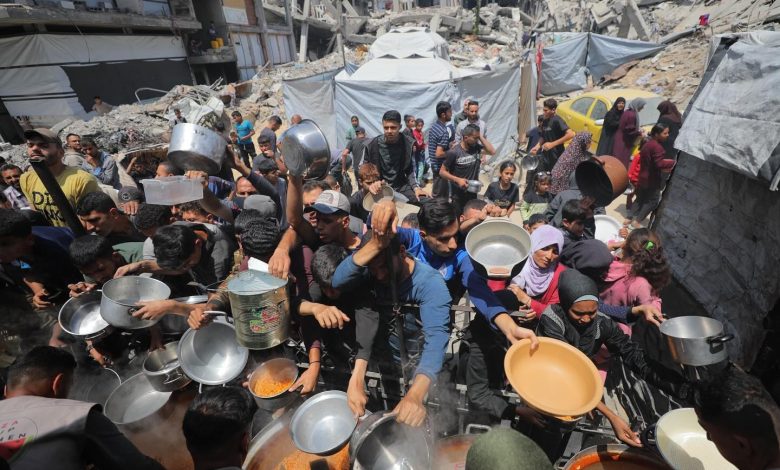
Water and Food in Danger
The pace of humanitarian deterioration in Gaza is accelerating, as the most basic necessities of life are threatened, most notably clean water. The United Nations Children’s Fund (UNICEF) confirmed that access to water has become a daily challenge for children, amidst long queues and unsafe sources, reflecting the scale of the catastrophe the population is experiencing, especially children and displaced persons.
In the same vein, the United Nations Relief and Works Agency for Palestine Refugees (UNRWA) warned that the current ceasefire is “superficial,” emphasizing that the suffering of the population continues, with worsening food and water shortages and the spread of diseases, amidst severe restrictions on the entry of aid.
Figures Reveal the Scale of the Genocide
Official statistics reveal the scale of the catastrophe caused by the aggression, with the number of martyrs exceeding 72,000 and the number of wounded surpassing 172,000. In addition, thousands remain missing under the rubble, as rescue teams are unable to reach them due to the ongoing bombardment and destruction.
The tragedy doesn’t end there. Data indicates that more than 244,000 Palestinians have been killed or wounded since the start of the aggression, most of them children and women, in one of the bloodiest wars in the history of the Palestinian people.
Orphans: An Open Human Wound
The genocide has left behind an unprecedented number of orphans, with their number rising to more than 64,000 children, including more than 55,000 who lost their parents during the latest aggression alone. These children are living in tragic circumstances, including displacement, homelessness, and the disruption of basic services, along with profound psychological suffering that threatens their future, amidst a severe shortage of care and support programs.
Dangerous Zionist Escalation
In parallel with the ground aggression, the Zionist enemy escalated its repressive measures by passing the so-called “Law for the Execution of Prisoners,” a move described by Palestinian factions as an unprecedented crime and a blatant violation of all international laws. The law allows for the execution of death sentences without judicial consensus, reflecting a dangerous trend toward the liquidation of prisoners and revealing the aggressive nature of the enemy’s approach toward the Palestinian people.
Ongoing Anger and Clashes
In response to this escalation, cities in the West Bank and occupied Jerusalem witnessed a general strike and clashes in the field, as crowds took to the streets to reject the law and the ongoing attacks. In Qalandiya camp and other areas, clashes erupted with enemy forces, reaffirming that the Palestinian people are continuing their resistance and rejecting all attempts to break their will.
Calls for General Mobilization
In light of these developments, Hamas called for widespread popular mobilization across the Arab and Islamic worlds in support of Al-Aqsa Mosque and in solidarity with the prisoners. It demanded an escalation of public activities and increased international pressure to halt Zionist crimes. Hamas stressed that the current stage requires unifying efforts and mobilizing the nation’s resources to confront the dangerous escalation targeting the land, the people, and the holy sites.
Gaza Defies Aggression
Despite the scale of the catastrophe and the complexities of the situation, the Gaza Strip proves day after day that the will to resist is stronger than all the tools of aggression. Between the siege, the destruction, and the starvation, the Palestinian people continue to cling to their rights and principles, affirming that the battle is no longer merely a military confrontation, but an existential struggle that will only be resolved through the steadfastness of the people and the continuation of the resistance.