
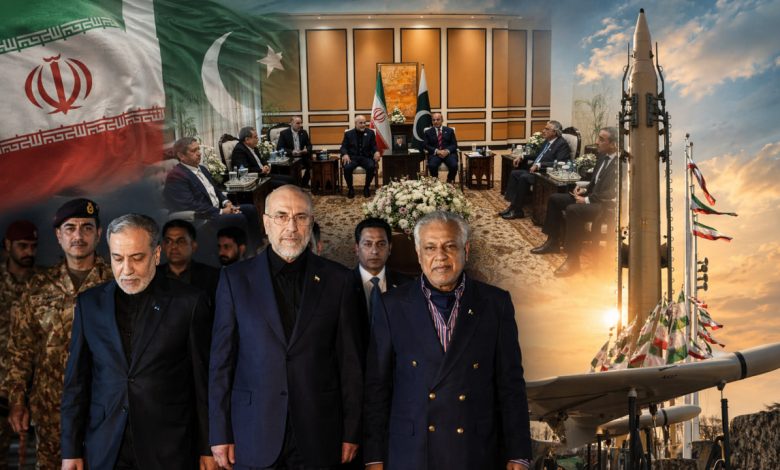
Tehran Draws Its Red Lines: No Compromise on Rights, Military Readiness Accompanies Negotiations
In a highly sensitive regional phase, Iran is approaching the negotiating table with remarkable steadiness, emphasizing that dialogue is not a substitute for force, but rather an extension of it. While engaging in a complex diplomatic process, Tehran is clearly drawing its red lines, rejecting any infringement on its rights and stressing that the readiness of its armed forces remains the true guarantee of imposing its terms.
Diplomatic Action Conditioned by Principles
Iranian government spokesperson Fatemeh Mohajerani confirmed that sending a high-level delegation headed by Mohammad Bagher Ghalibaf to Islamabad reflects Iran’s seriousness in the negotiations. However, she emphasized that Tehran “will not concede or back down on its rights.” This move comes within the context of sensitive negotiations with the United States, amidst Iranian assertions that any agreement must be based on respect for sovereignty and the lifting of pressure, not on imposing dictates.
Warnings Against US Maneuvers
Meanwhile, Iranian sources warned against US attempts to evade responsibility by portraying Israel as an independent actor in the escalation, a claim Tehran categorically rejects. Iran asserts that Washington bears full responsibility for its ally’s actions. These warnings reflect the deep-seated distrust on the Iranian side stemming from past experiences of broken agreements, making any progress in negotiations contingent on concrete steps, not mere promises.
Non-Negotiable Red Lines
Iran has laid out a set of fundamental conditions that it considers prerequisites for any agreement, most notably:
– A complete ceasefire in Lebanon
– The release of frozen Iranian assets
– Respect for sovereign rights, including strategic issues related to national security
Iranian officials emphasized that any violation of these commitments will be met with a direct response, clearly indicating that the negotiating track does not preclude the option of confrontation.
Military Readiness Accompanies Negotiations
In parallel with the diplomatic efforts, Tehran emphasized that its armed forces are at the highest level of readiness and that their “fingers are on the trigger,” in a deterrent message confirming that Iran is dealing with the current phase as a multi-pronged battle, simultaneously political and military. This balance between negotiation and military preparedness reflects an Iranian strategy based on imposing terms, rather than waiting for their outcome.
Pakistan as a Mediator in a Complex Equation
The Pakistani capital, Islamabad, is hosting these sensitive negotiations, where the Iranian delegation met with Prime Minister Shahbaz Sharif. Parallel meetings were also held with the American side in an attempt to bridge the gaps in viewpoints. Despite talk of “constructive engagement,” differences remain, especially given Iran’s insistence that the ceasefire in Lebanon has not been fully implemented.
The Battle to Establish Rights
This round of negotiations reveals that Iran is not entering the dialogue from a position of retreat or succumbing to pressure, but rather from a position of consolidating achievements and imposing equations. Diplomacy, as Tehran emphasizes, is not a path separate from confrontation, but rather an extension of it with different tools. Between the hardening of positions and the multiplicity of pressure paths, the next stage seems open to all possibilities, in light of a clear Iranian insistence that any future agreement must be the fruit of strength that enshrines rights, not the result of concessions.