
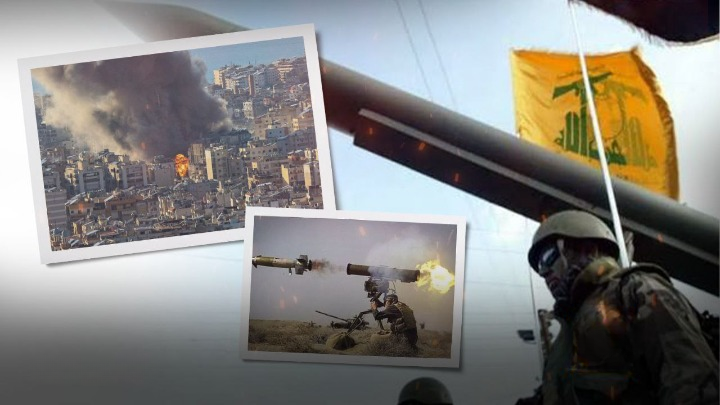
Resistance in Lebanon: Field Operations and Messages Affirming Continued Confrontation
The escalating field and political situation in Lebanon continues in response to Israeli aggression and repeated violations of the ceasefire agreement. The Islamic Resistance reaffirms its commitment to retaliation and defense, rejecting any direct negotiations with the enemy.
This comes amidst escalating field operations and repeated military actions by the Resistance in southern Lebanon, alongside political stances that emphasize the steadfastness of the current equation and the refusal to allow the imposition of facts on the ground.
Dismantling the Equations
In this context, Hezbollah MP Hassan Fadlallah affirmed that the Resistance will work to dismantle the so-called “Yellow Line” in southern Lebanon, along with all the repercussions of the war. He stressed that the continuation of the current situation depends on the Israeli enemy’s behavior and commitment.
Fadlallah clarified that the problem is not with the Resistance, but rather with a broad segment of the Lebanese population who reject any direct negotiations with the enemy. He considered this stance to reflect a firm national position that rejects normalization or sliding towards political settlements with the Zionist entity.
He also stressed that Hezbollah is not seeking internal conflict, calling for a readjustment of domestic policies based on a minimum level of national consensus, in order to preserve the unity of the Lebanese position in the face of challenges.
Continued Operations
On the ground, the Islamic Resistance announced the execution of two qualitative operations against gatherings of enemy soldiers in the town of Taybeh in southern Lebanon, using appropriate weapons, including a direct attack by a drone.
The Resistance affirmed that these operations come within the framework of responding to the enemy’s violations of the ceasefire agreement and its targeting of civilians in southern villages, emphasizing the continuation of the policy of reciprocity and preventing the consolidation of the equations of impunity.
These operations coincided with field reports that spoke of a series of escalating security incidents in southern Lebanon, including bombings, shootings, and repeated attacks on the enemy, amidst Zionist secrecy regarding the extent of the losses.
Targeting Civilians
In contrast, the Israeli enemy continued its attacks on Lebanese villages, committing a new aggression against the town of Taybeh, which resulted in martyrs, including journalist Amal Khalil, in addition to injuries among journalists and paramedics.
Hezbollah’s media relations office described the attack as a “brutal and treacherous crime,” asserting that it constitutes a clear attempt to silence the free media voice that conveys the truth about what is happening on the ground and exposes the enemy’s crimes.
A Firm Political Stance
Politically, Hezbollah emphasized its rejection of any path to direct negotiations with the Israeli enemy, affirming that the option of confrontation and defense of national sovereignty will remain in place as long as the enemy continues its violations and attacks.
In this context, statements issued by the resistance affirmed that any truce is conditional upon a complete cessation of attacks, including assassinations, the bulldozing of villages, and the destruction of civilian infrastructure, indicating that genuine commitment is the criterion for the continuation of any agreement.
A Continued Deterrence Equation
Field and political developments confirm that Lebanon is facing a new phase in establishing the deterrence equation, as the resistance continues its defensive operations in the face of ongoing Zionist escalation. In this context, the resistance emerges as a field and political balancing factor, preventing the enemy from consolidating its gains and affirming that the option of confrontation remains open as long as the aggression continues.