
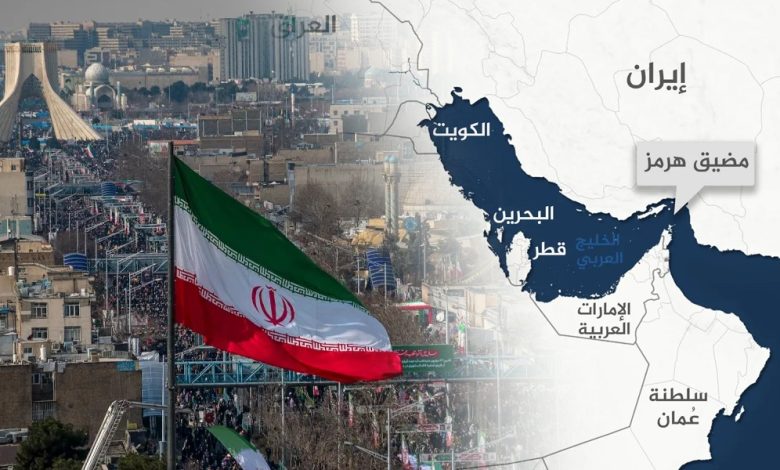
Hormuz Under Iranian Sovereignty: A Deterrent Equation That Confounds Washington
Amid escalating regional confrontations, the Gulf region is undergoing profound transformations, with the Islamic Republic of Iran emerging as a powerful force imposing new realities in one of the world’s most vital waterways, the Strait of Hormuz.
Between its growing military presence and calculated political maneuvering, the outlines of an Iranian strategy are becoming clear: to solidify its sovereignty, thwart American hegemonic attempts, and establish a new reality in the conflict.
Leadership Directives: A Decisive Guideline
In Tehran, members of the Iranian parliament affirmed that the Supreme Leader’s directives represent the “final word” on matters of war and negotiations, emphasizing that any political or military action is undertaken within the framework established by the leadership.
This stance reflects a clear cohesion within the Iranian decision-making structure and underscores that Tehran views the current phase as pivotal, demanding steadfastness and clarity of vision.
Hormuz: Sovereignty Imposed
On the ground, Iran is asserting its growing presence in the Strait of Hormuz, with military leaders emphasizing that the strait’s security and management are exclusively under the control of the Iranian armed forces.
They stressed that the passage of commercial and oil vessels will only be possible through prior coordination, warning that any violation of these regulations will be met with decisive measures.
These stances come in response to American moves, particularly the so-called “Operation Freedom Facility,” through which Washington is attempting to establish a naval presence in the Gulf. This is a direct violation of Tehran’s sovereignty and a threat to regional security.
Decisive Field Messages
Recent developments in the strait confirm the shift from rhetoric to action. Iran has announced a ban on US destroyers entering the strait’s waterway, in addition to issuing direct military warnings to suspicious maritime movements.
The region has also witnessed operations targeting and warning vessels in violation of regulations, sending a clear message that Tehran has seized the initiative and is capable of imposing new rules of engagement in this vital waterway.
Diplomacy from a Position of Strength
On the political front, Iran asserts that any negotiation process, whether on the nuclear issue or otherwise, will not be detached from the realities on the ground, but rather contingent upon a cessation of aggression and the lifting of pressure.
In this context, Tehran proposes a multi-stage approach, beginning with de-escalation, proceeding through the reorganization of the Strait of Hormuz’s management, and culminating in addressing strategic issues—a vision that reflects the interdependence of policy with the realities of power on the ground.
A New Equation of Deterrence
It is clear from all these developments that the Strait of Hormuz is no longer merely a waterway, but has transformed into a sovereign arena through which Iran is reshaping the balance of power in the region.
As this trajectory continues, a new equation of deterrence is solidified, one whose essence is that Tehran is capable of protecting its interests and asserting its presence in the face of American pressure. This places the region at a different stage, one in which influence and balances are being redefined.