
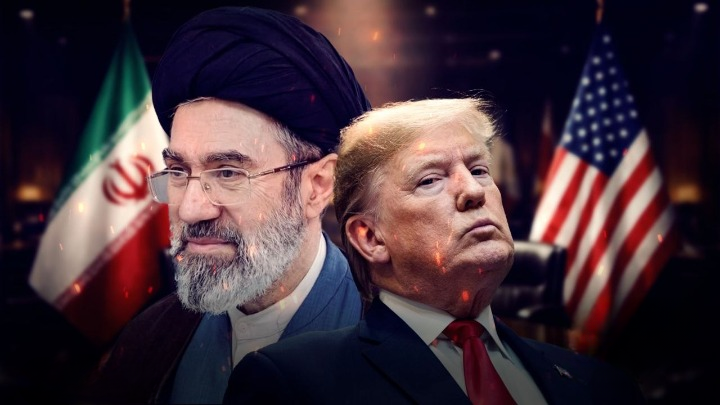
From the battlefield to understanding: How did Iran redraw the equations of power?
The memorandum of understanding signed between the Islamic Republic of Iran and the United States represents a political and strategic milestone that reflects the results of a phase of military confrontation and economic pressures, and embodies Iran’s ability to establish new equations in the region based on its field resilience and the cohesion of its internal front.
Over the past few hours, statements from senior Iranian political and military officials have been made confirming that what has been achieved was not just an agreement to stop the war, but the result of an integrated process that combined military power, diplomatic efforts, and popular support, which strengthened Iran’s position, consolidated its regional presence, and its ability to protect its national interests.
The field creates understanding
The Speaker of the Iranian Parliament and head of the negotiating delegation, Mohammad Baqer Qalibaf, confirmed that the United States was the one that sought a ceasefire, noting that Iran’s steadfastness and military strength imposed a new reality that prompted the Western parties to return to the path of negotiation.
These statements reflect a conviction that the achievements made on the ground constituted a key lever for reaching an understanding, and that military pressures did not succeed in achieving their goals, but rather pushed the adversaries to look for a political way out.
Qalibaf stressed that the real guarantee for any agreement lies in Iran’s strength, its defense capabilities, and the unity of its people, emphasizing that Tehran will abide by its commitments as long as the other party adheres to what has been agreed upon.
A document outlining a new phase
With the memorandum of understanding coming into effect, the document emerged as a political framework that regulates the post-war phase and opens the door to broader arrangements at the political, economic and security levels.
Iranian Foreign Ministry spokesman and member of the negotiating delegation, Ismail Baghaei, confirmed that the document became official and final after being signed by the presidents of the two countries, explaining that the next negotiations will be limited to the nuclear file and lifting the sanctions.
The memorandum included provisions relating to a cessation of military operations, lifting the blockade and sanctions, releasing frozen Iranian funds, launching a reconstruction and economic development program worth up to $300 billion, in addition to starting negotiations to reach a final agreement within sixty days.
Harmony between the field and diplomacy
In the Iranian view, diplomacy was not separate from the field, but rather came as an extension of the achievements made during the last confrontation.
In this context, Iranian Army spokesman Brigadier General Mohammad Akrami Nia confirmed that the military operations carried out by the armed forces contributed directly to achieving the current political results, noting that the victory was achieved thanks to the harmony between the field and diplomacy, in addition to the steadfastness of the Iranian people and their support for their leadership.
These positions coincided with statements by other officials who stressed that Iran’s defense and missile capabilities would remain outside any negotiating framework, and that the elements of power that proved effective during the last confrontation would remain a fundamental pillar in the deterrence equation.
The Strait of Hormuz and the equation of sovereignty
Among the issues that received a notable presence in Iranian statements was the Strait of Hormuz, where Tehran affirmed its adherence to its sovereign rights in this vital maritime passage.
Iranian officials explained that the post-war phase will not mean a return to the previous situation, but will witness new arrangements that take into account the sovereign rights of the coastal states, foremost among them Iran and the Sultanate of Oman, in order to guarantee the security of navigation and protect common interests. This approach reflects Iran’s keenness to turn the results of the confrontation into sustainable strategic gains that go beyond the direct military aspect.
The economy is at the heart of understanding
Economically, Tehran is focusing on what is considered one of the most prominent results of the understanding, which is the start of the process of lifting sanctions and restoring economic activity on a broader scale.
The terms announced in the memorandum confirm the release of frozen Iranian assets, the lifting of restrictions on exports of oil and petrochemical products, and the creation of conditions for the implementation of reconstruction and economic development projects worth hundreds of billions of dollars,