
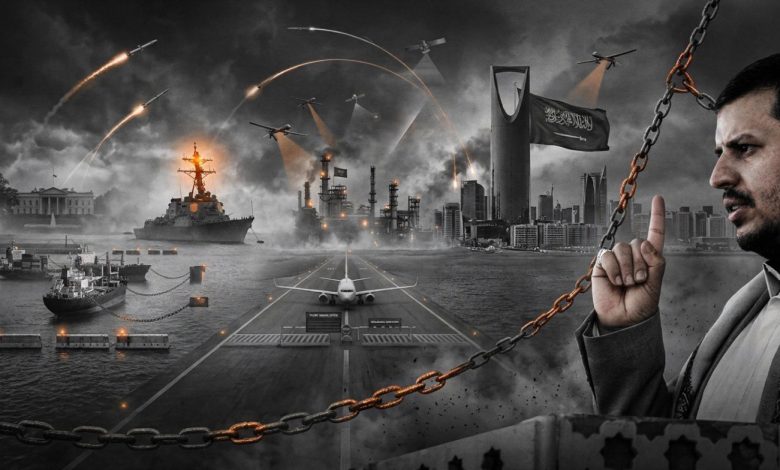
The equation for breaking the siege: How the popular and tribal support for the Yemeni armed forces’ options dismantled the margins of American and Saudi blackmail and piracy.
The effects of the Yemeni armed forces’ thwarting of the attempt to intercept the Iranian civilian aircraft in Yemeni airspace go beyond the immediate military dimension of the air defense systems. Nine days after the incident, it reveals that the provisions of the July 3 statement have been transformed into an operational strategy managed by the popular and tribal base in parallel with the military leadership.
This structural overlap gives the warning messages directed at the Saudi regime of “comprehensive response and targeting of its vital interests on land and sea” a local strategic cover that goes beyond traditional mobilization patterns, and moves them to the path of implementing options to break the siege by force and cut off the hand of guardianship over Sana’a International Airport, in conjunction with dismantling the economic and legal backgrounds associated with this aerial escalation.
Map of tribal and field mobilization
The popular response to the Armed Forces’ statement immediately shifted from political solidarity to a comprehensive armed tribal mobilization. Large gatherings of tribes from the Sana’a region, Bani al-Harith, Hamdan, Khawlan al-Tayyal, and the tribes of Dhamar, Amran, Ibb, and Hodeidah took place in the liberated provinces. These groups signed tribal covenants pledging their readiness to mobilize men and resources, considering the Saudi audacity in aerial piracy and the interception of a civilian aircraft carrying wounded and sick Yemenis a direct attack on national sovereignty and a provocation that strikes at the very heart of Yemeni tribal dignity and existence.
This social movement was directly reflected in the military training and qualification camps of the General Mobilization Committees in various districts, which witnessed an exceptional influx of recruits enrolling in advanced combat readiness courses and developing their skills in sniping, artillery, and field deployment. These initiatives translated the mobilization process from theory into practice, aiming to secure the home front and reinforce combat axes with trained popular forces possessing military awareness and a high capacity for immediate deployment upon receiving orders.
This armed mobilization is complemented by operational coordination between leaders of social groups and representatives of the Ministry of Defense in the Sana’a government, aimed at bolstering readiness and supplying the naval, missile, and drone forces with logistical and personnel needs. This joint tribal mobilization provides the revolutionary and political leadership with full strategic cover to pursue all available military options, and sends a clear message to the aggressor forces that any future aerial escalation will be met with an armed human wave that will eliminate any possibility of dismantling or subjugating the home front.
Moral collapse and international complicity
The Saudi-American air piracy incident has once again exposed the blatant bias and systematic legitimization practiced by the United Nations and its international institutions in favor of the aggressor forces. Through its complete silence and the Security Council’s failure to issue any statement of condemnation, the UN deliberately ignored the attempt by a hostile military formation to intercept a civilian aircraft carrying more than two hundred passengers, including the sick, wounded, and stranded. This stance brings to mind the UN’s long history of complicity in Yemen, from removing the Saudi-led coalition from the “list of shame” for killing children to its continued cover-up of attacks on vital and civilian infrastructure.
This legal collapse is evident in the complicit stance of the International Civil Aviation Organization (ICAO), which has shirked its legal and moral responsibilities under the Chicago Convention. This convention explicitly prohibits the use of weapons or military formations against civilian aircraft or any threat to the safety of air navigation. International organizations have remained silent regarding the repeated violations of Yemeni airspace and sovereignty. Instead, they have continued to provide diplomatic cover for Riyadh and Washington, allowing them to exploit airspace and airports as a tool of military and economic warfare. This demonstrates how these international entities have become mere instruments of US policy, funded by Saudi money, used to justify crimes against the Yemeni people.
Faced with this biased international reality, the reliance on flawed international laws and conventions—used only to protect the aggressor and punish the victim—has completely collapsed. Yemeni air defense missiles have emerged as the sole legitimate and ethical tool for protecting lives and reclaiming sovereignt