
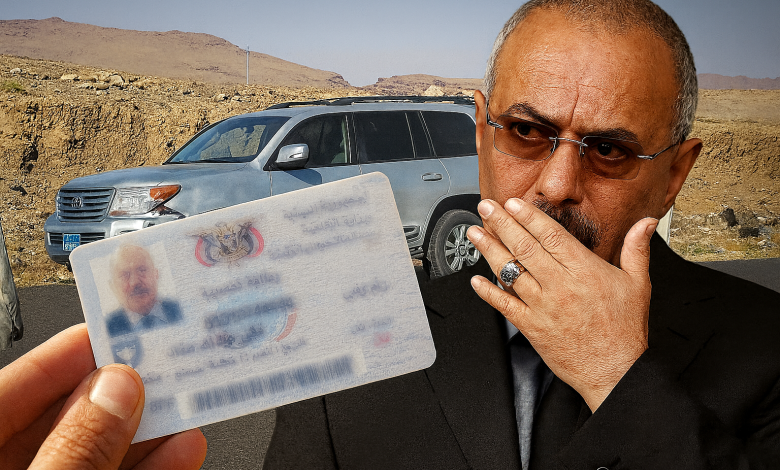
From Fake Partnership to Strategic Collapse: A Reading of the December Sedition and the Failure of the Aggression’s Plans After the Demise of Saleh
On the second of December, the Yemeni people saw the face of internal betrayal in its clearest form, revealing a calculated project to topple the state from within, led by the “leader of treachery,” the late Ali Abdullah Saleh (“Afash”), who gambled on his old authoritarian ambitions and believed that prolonged maneuvering would grant him the perfect cover to return to power.
What took place was not merely a struggle over influence or control of state institutions, but a strategic chapter in a carefully crafted plan to dismantle the Republic of Yemen, in preparation for restructuring the political scene in favor of hostile external alliances, led by the Saudi-Emirati coalition with American and Israeli backing.
Accustomed to political games and manipulating facts, the late Saleh believed that the temporary partnership with Ansar Allah since 2015 would be his gateway back to power, feigning loyalty while concealing his true intentions, as he wove in the shadows a network of conspiracies targeting state institutions, crippling their role and paving the way for internal chaos that could be exploited to turn public opinion against Ansar Allah and provide pretexts for external coalition intervention.
An analysis of this phase shows that Saleh greatly overestimated his own capabilities and underestimated the state’s resilience and the Yemeni people’s awareness. He knew that foreign intervention was a decisive element, but ignored that the unity of the people and the firmness of the security apparatus formed a solid barrier against any all-out sedition.
The second of December was not just a test of a false partnership between internal forces, but a test of the state’s strength and its ability to expose conspiracies before they turned into a national disaster. The events reveal strategic lessons: personal ambitions do not override the will of the state and the people, and any treacherous project built on internal division is doomed to fail in the face of a conscious leadership and united people. Yemen, despite the war, possesses enough awareness and firmness to contain and thwart any betrayal before it becomes an existential threat.
Fake Partnership and the Seeds of Treason
With the onset of the aggression in 2015, a temporary partnership was formed between Ansar Allah and the “leader of treachery,” the late Saleh. It appeared as a political commitment to confront the aggression, but in reality it served as a strategic cover to pave the way for his return to power.
He exploited this partnership to conceal his intentions, claiming loyalty and engagement in the state’s path, while secretly building a network of loyalists inside state institutions, gradually paralyzing their work and preparing the ground for internal sedition.
This false balance between declared loyalty and hidden treason gave him a false sense of control, but he overlooked the ability of Ansar Allah and the security services to detect his conspiracies before they evolved into an existential threat.
In this context, Saleh worked to disrupt the functioning of government institutions and cause confusion in vital services, creating social and economic disorder, while benefiting from weak media oversight and regional support. Local media loyal to him became a central tool to distort the image of Ansar Allah and portray the state as if it were collapsing, while his military plans were being drawn in the shadows through positioning in strategic locations to move at the right moment to ignite sedition.
Analysis shows that Saleh was not just a traitor, but a political player who tried to exploit every loophole within the state, relying on external alliances, yet failing to grasp the level of public awareness and institutional resilience.
The key lesson here is that Saleh overestimated his leverage, assuming that state institutions were weak and easily penetrated. He ignored that Ansar Allah and the Yemeni people, supported by security agencies and national figures, were monitoring his moves and limiting his influence. This twisted partnership exposed the fragility of alliances built on deception and confirmed that any treasonous project relying on internal division is doomed before national will and strategic awareness.
Security Eruption and the Field Movements of Sedition
As internal disputes escalated, the “leader of treachery,” Saleh, began implementing his most dangerous plan to ignite sedition in the capital Sana’a, exploiting the weak spots he had planted during the fake partnership.
His moves focused on sensitive strategic locations to destabilize internal security and confuse government institutions, while trying to project an image of control. At this stage, the plan was to create popular and political division, enabling him to man