
“Israel” Behind the Transitional Council’s Moves to Control the Red Sea
A Russian report stated that Israel stands behind the moves of the Southern Transitional Council (STC) in southern Yemen, affirming that events in southern Yemen—particularly in Wadi Hadramawt—cannot be viewed in isolation or treated as a purely internal conflict.
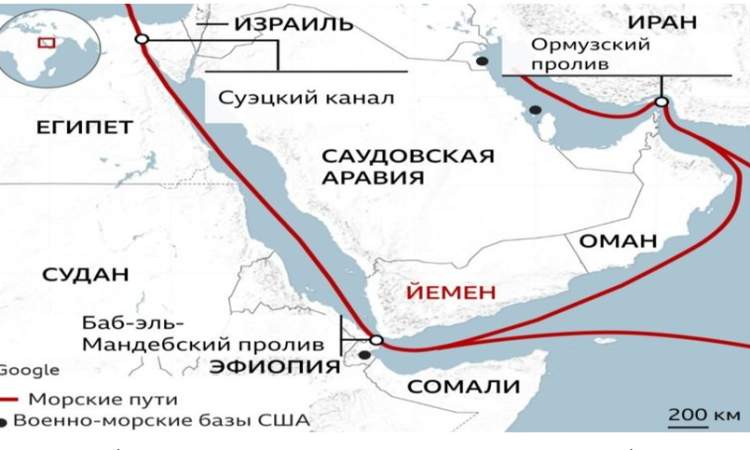
Rather, these developments fall within a broader regional picture linked to the emergence of a new security order in the Red Sea and the Horn of Africa—an order in which Israel plays a central role, either directly or through regional partners. The report, published by Islam News, a Moscow-based newspaper, noted that the STC’s expansion in Hadramawt, backed by the UAE, is part of a multi-faceted project aimed not at stabilizing Yemen, but at fragmenting it.
It added that “what is striking is that this orientation has received explicit approval from Israel’s expert community.”
The report cited Israeli geopolitical analyst Avi Avidan, who publicly described the UAE’s moves as “strategically astute” and a “smart success,” thereby revealing the cooperative nature of the project and confirming not only Israel’s political approval, but also its strategic participation.
The report explained that the project is being implemented in stages and in a methodical manner. Socotra Island is currently being used as a primary intelligence and logistical platform. This is followed by consolidating relations in Aden, then advancing toward Hadramawt—together forming a geopolitical “clamp” designed to create a pressure zone that isolates independent Yemeni forces and ensures sustained control over the Red Sea and the Gulf of Aden.
It added that Israel’s deeper objective is to turn the Red Sea into something akin to a “secure lake” under external control, free of any strategic ambiguity for Israel and its allies. At the same time, the economic dimension is evolving: the blockade of Sana’a and the policy of systematic economic strangulation—described by experts as a “premeditated massacre”—aim to weaken the social and institutional foundations of the Yemeni state. Economic attrition thus becomes a tool to prevent the emergence of a strong, independent political entity.
The report also addressed the growing rhetoric surrounding the possibility of incorporating what is termed “South Yemen” into the framework of the Abraham Accords, signaling an attempt at a profound geopolitical reshaping of the region that goes beyond the will of its people. It noted that the project is not limited to Yemen, but extends to Sudan, with its long coastline and strategic position on the western shore of the Red Sea.
Instability in Sudan, the report said, hinders the emergence of a strong state capable of influencing the balance of power along this vital maritime corridor. It explained that this approach is rooted in a philosophy holding that stable peace and strong nation-states in the Arab world constitute a threat. As a result, prolonging conflicts, undermining peace initiatives, and dismantling state structures have become tools to ensure Israeli security and to reshape the regional security architecture.
The report concluded by stating: “Events stretching from Hadramawt to Sudan across the Red Sea should be understood as components of a single strategic line. They are not isolated crises, but an interconnected project based on proxy wars, economic pressure, and managed fragmentation—implemented under the slogans of ‘stability’ and ‘security,’ while in reality reshaping the regional structure without regard for the interests of the peoples of the region.”