
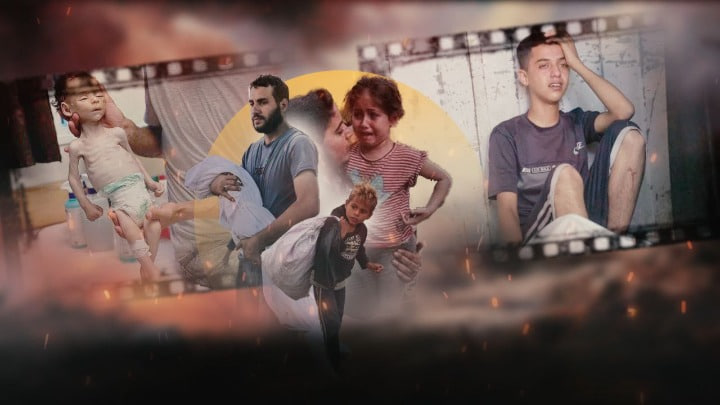
Gaza Under Siege: Ongoing Genocide and a Worsening Humanitarian Crisis
For more than two years, the Zionist enemy has continued its campaign of annihilation against the Gaza Strip, leaving behind thousands of martyrs and wounded and crippling vital infrastructure facilities. Nearly two million Palestinians are living under a suffocating blockade, deprived of fuel and essential supplies, while natural and environmental disasters intensify, placing civilians at the center of an unprecedented humanitarian tragedy.
Official statistics indicate that since the start of the aggression on October 7, 2023, the death toll has reached 71,266 martyrs, with more than 171,219 injured. Large numbers of victims remain trapped under the rubble, beyond the reach of ambulance and rescue teams.
Zionist Violations
Despite the declaration of a ceasefire on October 11, the Israeli enemy continues its daily violations through aerial and artillery bombardment, targeting homes and vital facilities. Enemy aircraft struck areas east of Gaza, Rafah, Khan Younis, and the Nuseirat and Al-Maghazi refugee camps, while Zionist warships shelled the coast of the Strip and artillery fire persisted on residential neighborhoods.
The Ministry of Health in Gaza confirmed that these violations resulted in additional martyrs and wounded, despite the ceasefire.
Destruction of Infrastructure
Municipalities in northern Gaza reported the destruction of 90% of water wells, 80% of water and sewage networks, and 90% of heavy machinery. Roads, schools, hospitals, and essential service facilities have sustained extensive damage.
More than 250,000 tons of waste have accumulated in the streets, around 30,000 inhabited buildings housing approximately 150,000 people have been damaged, 50,000 dunams of agricultural land have been destroyed, and 85% of the transportation sector has been crippled—leading to severe food insecurity.
Fuel and Aid Crisis
The imposed blockade has caused a severe shortage of fuel needed to operate water stations and generators, forcing the suspension of rescue teams, shelter operations, and relief supplies.
The International Commission to Support Palestinian People’s Rights (“Hashd”) affirmed that the enemy is using humanitarian aid as a weapon of war, preventing the entry of essential materials and obstructing civilian rescue efforts—thereby intensifying suffering and deepening the humanitarian crisis.
Environmental and Weather Risks
With the arrival of the latest low-pressure weather system, the suffering of 1.5 million displaced people living in tents and makeshift shelters lacking protection has intensified. The risk of building collapses and the inability to drain rainwater have increased, exacerbating the threat of flooding and disease.
The recent “Peron” depression affected more than a quarter of a million displaced people, while the ongoing shortage of fuel and maintenance equipment heightens the likelihood of repeated disasters.
International Solidarity
International protests have renewed, including demonstrations in Stockholm rejecting the continued violations by the occupying entity, calling for an end to the genocide, a halt to arms sales to the enemy, and the guarantee of lasting peace for the Palestinian people.
Gaza: An Ongoing Tragedy and a Symbol of Resilience
Today, Gaza faces an unprecedented humanitarian crisis as a result of continued aggression, blockade, and complicit Zionist-American policies that have turned the Strip into a devastated zone on all levels. Official statistics and field testimonies confirm the scale of the catastrophe and underscore the urgent need to support the Palestinian people, lift the blockade, and ensure the delivery of humanitarian aid to save civilians and safeguard their lives.
Gaza is no longer merely a geographic strip; it has become a symbol of Palestinian steadfastness and the will to live in the face of genocide—a stark testament to the immense harm inflicted upon innocent civilians by ongoing aggression.