
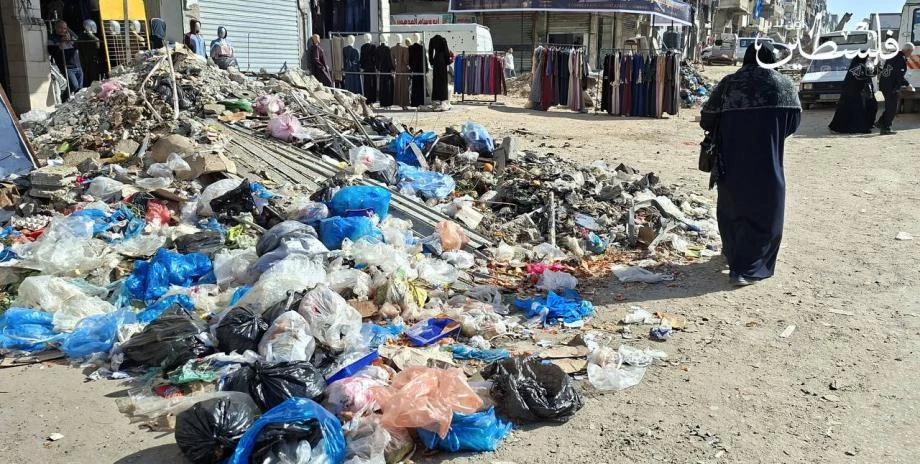
Gaza under siege: Lives of displaced amidst garbage, sewage
In the displacement camps west of Gaza City, the distance between tents is no longer just meters; it has expanded to encompass a distance of health and environmental hazards.
Here, the lives of the displaced are intertwined with piles of garbage and pools of sewage, a scene that encapsulates another facet of the ongoing war on the Gaza Strip, where bombardment is no longer the only threat, but also the repercussions of the siege and the daily destruction of infrastructure.
Umm Muhammad al-Gharabli, a mother of five displaced from her destroyed home in Jabalia, northern Gaza Strip, described to the newspaper Falastin the scene of her tent surrounded by garbage: “At first, we would collect the trash and move it a little, but over time, there was nowhere left to put it.”
She said that bags of spoiled food, torn diapers, and pieces of plastic have become part of their daily lives.
The crisis intensifies with the rising temperatures, as foul odors emanate and attract flies and rats. Children stand amidst this polluted environment, unaware of the health risks, according to al-Gharabli, who recounted that her youngest child suffered from severe diarrhea more than once, while the lack of medicine and nearby hospitals makes any treatment impossible.
In another camp west of the city, other displaced people face a silent threat from stagnant sewage water after the drainage networks were destroyed during the war.
Ahmed Younis, displaced from Beit Lahia, said, “We were fleeing the bombing, only to find ourselves living amidst sewage,” explaining that he tried to dig channels to divert the water away from the area. His children’s tent, but every attempt failed because the ground was flooded with contaminated pools of water.
The suffering intensifies at night with the spread of mosquitoes and insects, forcing families to close their tents despite the heat. This occurs amidst the absence of immediate solutions from municipalities, which are unable to operate what remains of the sewage networks due to fuel and spare parts shortages.
Al-Gharabli and Younis confirm that daily life has become a constant struggle between survival and protecting children from skin and respiratory diseases. This reality is imposed by the devastation of war and the absence of basic services, where every step between the tents becomes a potential danger.
This silent, daily scene reflects another aspect of the humanitarian catastrophe endured by thousands of displaced people in Gaza. Away from the cameras of the bombing, they live in a polluted environment that threatens their lives and the health of their children, revealing the depth of the ongoing crises left by the war.