
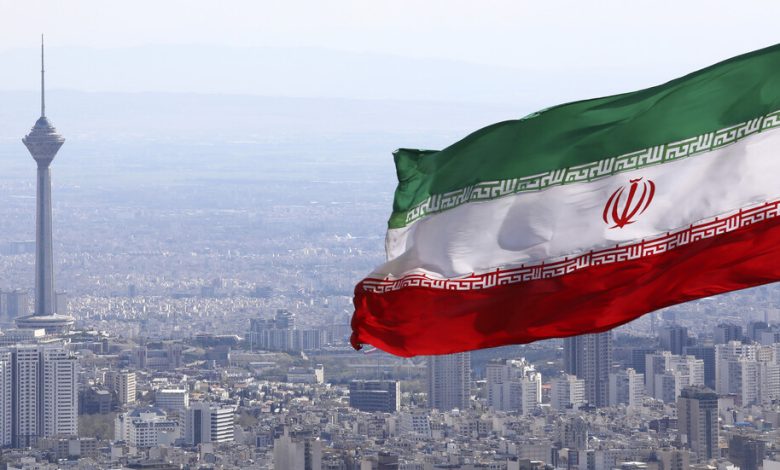
National Security Is a Red Line: Iran Warns Any U.S. or Zionist Intervention Will Be Met with a Decisive Response
Amid attempts by the U.S. administration and the Zionist enemy entity to exploit limited protests in Iran to advance their interests, Iranian warnings have escalated to an unprecedented level. Tehran has made clear that any external adventure will be met with a decisive response, and that Iran’s national security is a non-negotiable red line. Statements by officials of the Islamic Republic have converged to form a firm front against former U.S. President Donald Trump and his ambitions to interfere in Iran’s internal affairs, underscoring the ability of the people and the government to manage crises domestically and safeguard national sovereignty despite ongoing economic pressure and Western sanctions.
Warnings from the Iranian Leadership
Ali Larijani, Secretary of Iran’s Supreme National Security Council, stated that U.S. interference in Iran’s internal affairs would undermine American interests and destabilize the entire region. He added that a distinction can be made between legitimate protests and destructive elements seeking to sow chaos. Larijani issued a direct warning to the American public, saying that Trump has embarked on a path of adventurism and urging them to be cautious regarding their soldiers.
For his part, Ali Shamkhani, political adviser to Iran’s Supreme Leader, emphasized that Iran’s national security is a red line that cannot be compromised, and that any hand intervening under the pretext of “protecting Iran” would be cut off before it reaches its goal. He stressed that Tehran addresses any threat with the logic of sovereignty and decisive action.
Meanwhile, Speaker of the Iranian Parliament Mohammad Bagher Ghalibaf warned that U.S. bases in the region would become “legitimate targets” in response to any potential adventure, as statements by U.S. President Trump included explicit threats of military intervention should Iran engage with protesters.
America’s Dark Record and Iran’s Response
Iranian Foreign Ministry spokesperson Esmail Baghaei responded to Trump’s threats by recalling the long history of U.S. interventions in Iran—beginning with the August 28, 1953 coup against the elected government of Dr. Mohammad Mossadegh, continuing through support for Saddam Hussein during the imposed war, and extending to assassinations and malicious conspiracies carried out in collusion with the Zionist entity—along with the harshest economic sanctions in history.
Baghaei affirmed that the Iranian people, through dialogue and internal engagement to address their challenges, will not allow any form of external interference. He emphasized public awareness and the ability to distinguish between genuine protests and sabotage plots—an assessment echoed by Mohammad Mokhber, adviser to the Leader of the Revolution, who noted that the Iranian people have demonstrated prudent judgment at critical moments.
Confronting Digital Disinformation and Protecting Public Security
In a related development, Iran’s cyber police announced that certain social media pages had exploited artificial intelligence technologies to produce fabricated images and videos falsely attributed to police and military leaders, aiming to undermine public security. The police confirmed that these subversive activities pose a threat to societal security, and that authorities arrested those involved in Kermanshah Province and referred them to the judiciary.
Managing the Crisis Internally Despite Pressures
These Iranian warnings come as some cities experience limited protests due to economic deterioration, rising living costs, and the depreciation of the national currency against the U.S. dollar. These conditions led to the resignation of the Central Bank governor and the appointment of a successor. Despite these challenges, Iran’s leadership reaffirmed the continuation of national development across sectors—including the peaceful nuclear program and military manufacturing—and progress toward near self-sufficiency in food, reflecting the Islamic Republic’s capacity to withstand pressure and manage challenges without external intervention.
A Strong Message to Washington and Tel Aviv
Statements by Larijani, Baghaei, Shamkhani, Ghalibaf, and Mokhber converge on a single message: any U.S. or Zionist intervention will be met with a decisive response, and Iran will not tolerate attempts to undermine its sovereignty. Iranian leaders also noted that before contemplating interference in Iran’s affairs, the United States should address its own internal crises and the hardships faced by its citizens—homelessness and poverty—rather than pursue external interventionism.
National Security Is a Red Line
Against the backdrop of regional tensions, recent Iranian stateme