
Gaza Under Fire and Cold: Ongoing Genocide and a Ceasefire Without Protection
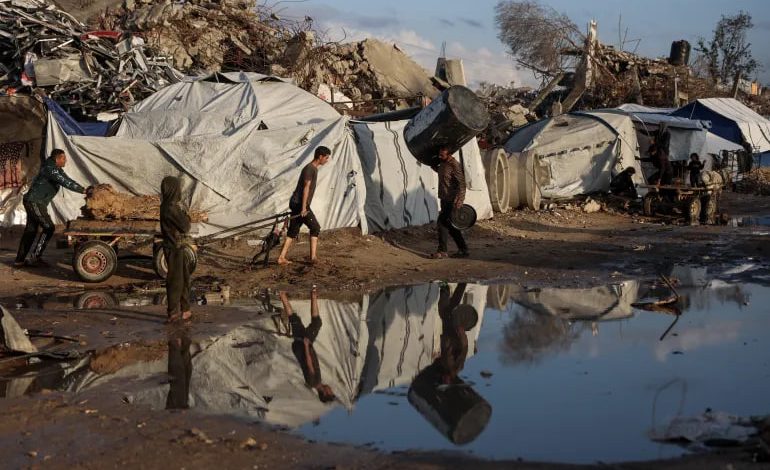
Between the rising death toll, images of tents torn apart by fierce winds, and the cries of children facing the cold without shelter, a harsh reality is unfolding in Gaza: the Zionist aggression has not stopped—it has merely changed its tools. While a “ceasefire” is supposed to prevail, extermination continues in other forms: sporadic bombardment, a suffocating siege, the obstruction of aid, and a deepening humanitarian catastrophe that worsens by the day—exposing the failure of the international community and the silence of the global conscience.
A Heavy Toll… and Suffering With No Horizon
According to the Palestinian Ministry of Health, the death toll from the Israeli aggression on the Gaza Strip since October 7, 2023 has risen to 71,424 martyrs and more than 171,324 wounded. In just 24 hours, hospitals received five martyrs and six injured, while the ministry confirmed that hundreds of victims remain trapped under rubble and in the streets due to the inability of ambulance and civil defense teams to reach them amid ongoing destruction and field dangers.
Since the ceasefire agreement entered into force in October, 447 martyrs and 1,246 wounded have been recorded as a result of fire from occupation forces, in addition to 697 bodies recovered from beneath the rubble—clear evidence that the ceasefire has failed to provide real protection for civilians.
Cold Claims Children’s Lives… A Tragedy Beyond Bombing
Bombs are no longer the only killers in Gaza. The bitter cold has become a silent executioner, especially in displacement camps. The Ministry of Health announced that child deaths caused by cold have risen to seven since the start of winter, including infants who found no warmth to shield them from the harsh weather.
In Deir al-Balah, a one-year-old child died today due to a severe drop in temperature, as the suffering of displaced families living in dilapidated tents intensifies, with no heating means and insufficient blankets.
Daily Violations… A Ceasefire on Paper
Despite the ceasefire, Israeli occupation forces continue daily violations through air and artillery strikes and the demolition of homes. Artillery targeted areas in Khan Younis, Rafah, and Al-Bureij, while occupation forces carried out home demolitions southeast of Gaza City, amid intensive warplane activity.
These near-daily violations confirm that the “truce” has not translated into a reality that protects civilians, but rather into a fragile cover under which abuses persist.
Shelter Catastrophe: Thousands of Tents Destroyed
The Government Media Office in Gaza warned of catastrophic humanitarian repercussions after the recent low-pressure weather system swept away nearly 7,000 tents in just two days, leaving thousands of families without shelter.
The office noted that cold waves coincided with collapses of damaged buildings, leading to new casualties and raising the death toll from structural collapses to 24 martyrs. Amid this reality, the crisis is compounded by an almost complete absence of heating supplies, a severe shortage of blankets and winter clothing, and the continued strict restrictions on the entry of humanitarian aid.
International Organizations: The Situation Is Collapsing
The United Nations sounded the alarm, with its spokesperson announcing that cases of acute malnutrition in Gaza have risen to approximately 95,000, following the screening of tens of thousands of children over recent months.
UNICEF also confirmed that more than 100 children have been killed since the ceasefire—nearly one child per day—due to airstrikes and various attacks, at a time when survival itself remains “not guaranteed.”
Meanwhile, OCHA warned that more than 1.1 million people are in urgent need of shelter as ongoing rainstorms have destroyed large parts of temporary housing, stressing that tents are merely a temporary solution that falls far short of the scale of the catastrophe.
Palestinian Positions: Genocide Through Multiple Tools
Hamas affirmed that the continued fall of martyrs—whether by bombardment, cold, or building collapses—constitutes an escalating humanitarian disaster directly caused by the occupation’s policy of preventing the entry of aid and shelter materials, including tents, caravans, and heating supplies.
The movement stressed that the international community has demonstrated its failure to protect civilians, calling on mediators and guarantor states of the agreement to assume their legal and moral responsibilities and compel the occupation to allow aid entry without restriction.
For its part, the Democratic Front for the Liberation of Palestine emphasized that what remains of Gaza’s homes has become an imminent threat to residents’ lives, demanding urgent international action to save what can still be saved of lives and humanitarian infrastructure.
International Sil