
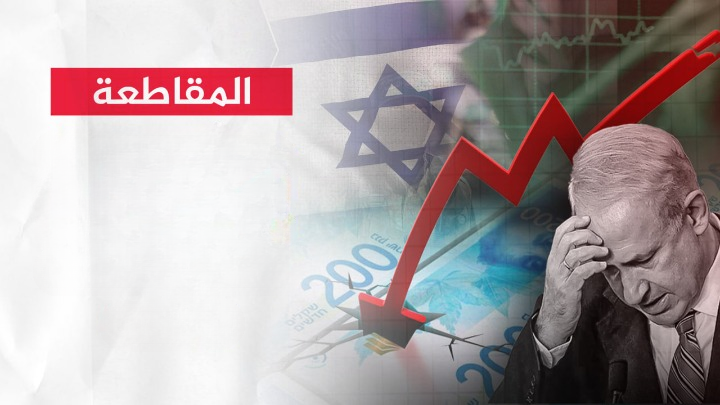
Economic Boycott in the Qur’anic Project: An Effective Weapon That Strikes the Enemy and Builds the Nation’s Resilience
Economic boycott, within the framework of the Qur’anic Project founded by the Martyr of the Qur’an, Sayyed Hussein Badr al-Din al-Houthi (may God be pleased with him), was never a transient protest stance or a spontaneous reaction to political developments.
Rather, it emerged as a conscious strategic choice, rooted in a deep Qur’anic understanding of the nature of the conflict with the American and Zionist enemy—as a civilizational and economic struggle that targets the will and awareness of the Ummah before targeting its geography.
From Awareness to Action
The Qur’anic Project began with a fundamental diagnosis of the Ummah’s condition, identifying the roots of weakness in economic dependence, cultural subjugation, and the absence of practical positions. It presented economic boycott as one of the most important and accessible tools of confrontation for peoples, and as a practical embodiment of the slogan of dissociation from the enemies of God and the enemies of the Ummah.
World Bank data for 2023 indicate that Arab countries depend on food imports for 60–70% of total consumption, while imports of electronic devices and automobiles exceed 80%. These figures demonstrate the real capacity of boycott to exert tangible pressure on foreign markets when pursued with awareness and organization.
The Martyr of the Qur’an emphasized in multiple speeches that raising the slogan and practicing economic boycott together constitute a practical stance that falls within the framework of jihad in the cause of God, due to their direct impact on the enemy and their genuine targeting of sources of power and influence.
Boycott as a Painful Weapon: Evidence and Figures
Past experiences and economic reports confirm that widespread popular boycotts have left measurable effects on hostile economies:
Following the American invasion of Iraq in 2003, major U.S. companies such as Coca-Cola and McDonald’s reported sales declines ranging between 20–35% in certain Arab countries as a result of popular boycott campaigns.
In 2017, amid rising calls to boycott American and Zionist products after the decision to move the U.S. embassy to Jerusalem, global economic reports warned that boycott threats could impact corporate revenues by billions of dollars if they expanded across Arab markets.
Recent European reports have pointed to an increase in bankruptcy rates among small and medium-sized enterprises in certain industrial sectors by 10–15% over recent years, amid compounded economic crises. Boycott is considered one of the influential pressure factors when it becomes widespread and sustained.
These indicators confirm that Western economies, despite their scale, are highly sensitive to organized boycott efforts—particularly when they target major consumer markets.
Boycott and Building Internal Resilience
According to the vision of the Qur’anic Project, the impact of economic boycott is not limited to weakening the enemy externally; it also extends to fortifying the internal front. This has been repeatedly emphasized by the Leader of the Revolution, Sayyed Abdulmalik Badr al-Din al-Houthi (may God preserve him), as boycott contributes to:
Consolidating public awareness and directing hostility toward the true enemy.
Protecting society from infiltration, collaboration, and normalization.
Encouraging local production and reducing economic dependency; FAO reports for 2022 show that Arab countries supporting domestic food production increased self-sufficiency rates by 15–25% over five years.
Reducing the drain on foreign currency reserves and laying the foundations for self-reliance; IMF data for 2023 indicate that spending on food and technological imports accounts for approximately 30–40% of foreign currency reserves in some Arab countries, underscoring the importance of supporting local alternatives.
Multiple experiences have demonstrated that when boycott evolves into a societal culture, it opens the door to national alternatives and drives growth in agricultural and industrial sectors.
Qur’anic Foundation and Moral Stance
The Qur’anic Project’s call for boycott is grounded in a clear Qur’anic basis, as reflected in the verse:
﴿O you who believe, do not say ‘Ra‘ina,’ but say ‘Unthurna’﴾ (Qur’an 2:104).
The Martyr of the Qur’an viewed this verse as a practical model for boycotting everything that serves the enemy—even if it appears trivial—so how much more so when it involves what channels billions of dollars to the enemy and strengthens its capacity for aggression and killing.
From this perspective, economic boycott becomes a religious duty and a moral stance before being a political option, as it represents a conscious refusal to finance crimes committed against peoples and sacred sites.
Economic Boycott: The Weapon of the Ummah
Economic boycott