
Sarhan: Over 80% of Gaza Destroyed, 300,000 Families Homeless, & Reconstruction Requires 60 Billion Dollars
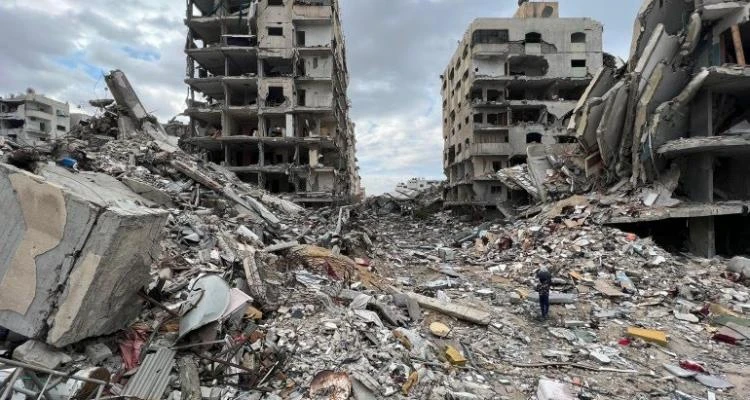
The head of the Housing Committee and coordinator of the municipalities in the northern Gaza Strip, Naji Sarhan, confirmed on Tuesday that the scale of destruction in the Strip is “unprecedented,” with over 80% of the Strip’s area subjected to total destruction, directly affecting all aspects of life.
Sarhan explained in an interview with the Palestinian “Shehab” agency that approximately 300,000 housing units have been damaged, either completely demolished or severely partially damaged, rendering them uninhabitable, in addition to widespread destruction of infrastructure including roads, electricity networks, water, and communications, which has exacerbated the humanitarian crisis.
He pointed out that reconstruction requires several essential conditions, most notably providing funding, allowing the entry of construction equipment and materials, and enabling international, especially Arab, companies to work in the Strip, as the scale of destruction exceeds the capabilities of local companies.
He stated that the current priority lies in sheltering about 300,000 families who have lost their homes, noting a severe shortage of shelter solutions. Currently, the available solution is limited to tents, which he described as “preliminary solutions that cannot withstand winter or summer and do not provide a dignified life.”
Sarhan highlighted the urgent need to introduce caravans and temporary shelter units, in parallel with the withdrawal of enemy forces from the areas they still occupy.
He indicated that about 50% of the Strip’s area remains occupied and that land suitable for establishing shelter camps is located east of the so-called “Yellow Line,” making the withdrawal of the Israeli enemy a fundamental condition for starting any actual arrangements.
He touched on the rubble crisis, explaining that Gaza faces more than 50 million tons of rubble scattered in the streets and sites of destroyed buildings. This constitutes a major obstacle to reconstruction and shelter and requires integrated management that includes removal, transportation, recycling, and safe disposal.
He added that removing the rubble requires massive funding and specialized technical studies. He estimated it would take about two years if equipment and funding are available, with the possibility of utilizing the rubble in development projects, as mentioned in the Egyptian plan, such as reclaiming parts of the sea and creating tourist areas as a relief for the people of Gaza.
Regarding reconstruction costs, Sarhan estimated that the minimum cost for reconstructing the Gaza Strip exceeds 60 billion dollars, with the expected timeframe for completing the process ranging between five to seven years. However, he confirmed that the duration could be reduced to less than five years if there is political will, funding, and construction materials and equipment.