
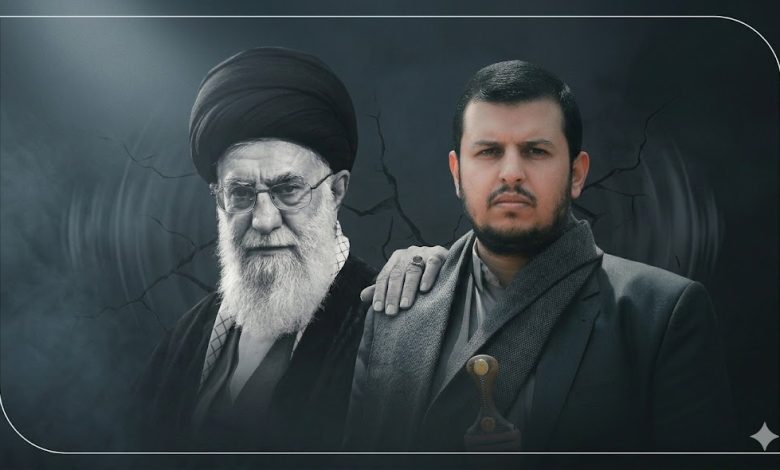
The Shockwaves: How did Sayyid Abdul-Malik Badr al-Din al-Houthi redefine the implications of the assassination of Sayyid Ali Khamenei?
Sayyid Abdul-Malik Badr al-Din al-Houthi’s interpretation of the post-assassination landscape of Grand Ayatollah Sayyid Ali Khamenei transcended mere political description, outlining a “strategic collapse” in the Zionist-American deterrence structure. Targeting the head of state in Tehran was no longer simply a criminal act, but a practical admission of the impasse in Washington and Tel Aviv’s military maneuvering after the failure of their war machine to achieve a decisive victory in the steadfast Gaza Strip. This shift in Yemeni discourse places the crime within the context of a “fiery escape,” an attempt to restore the prestige of power that had been shattered by the axis’s missiles and drones across open fronts of fire stretching from Tehran and Sana’a to encircle colonial interests at the heart of the world’s vital arteries.
This treacherous aggression, which sought to dismantle the greatest geopolitical obstacle to Zionist hegemony through a strategy of “shock and awe,” has crashed against the bedrock of the institutional and ideological foundations of the Resistance Axis. This axis has proven its resilience against the policies of “maximum pressure” and the cyber sabotage of the Natanz facilities. Instead of creating the desired leadership vacuum, the Yemeni discourse has redefined the equation of confrontation under the concept of “field loyalty,” affirming that the blood of the martyr has transformed into a transnational fighting doctrine. This doctrine grants all fronts of the axis—especially Yemen—the legitimacy to move to a phase of comprehensive attrition, one in which the dreams of “engineering the region” and liquidating the Palestinian cause will crumble. This phase heralds the beginning of a phase of “fiery initiative” that goes beyond mere reactive strikes.
Dismantling the Objectives of the Crime and the Fall of the Bet on Institutional Collapse
In his speech, the Leader demonstrated with conclusive evidence that the Zionist and American enemy acted out of “strategic desperation” after the failure of traditional means of pressure. Throughout the past decade, Washington has exerted its full weight to besiege Iran (freezing tens of billions of dollars, imposing an arms embargo, and imposing sanctions on more than 1,500 Iranian entities and individuals). However, the result has been the opposite; Tehran has increased its uranium enrichment to 60%, unveiled hypersonic missiles (Fatah 1 and 2), and revealed underground “missile cities.” Ayatollah Khamenei was targeted as the “primary architect” who oversaw the transformation of the Resistance Axis from “separate cells and formations” into a “non-traditional regional army” encircling the Zionist entity. Data indicates that the aim of the assassination was to create a leadership vacuum that would shatter the morale of the Revolutionary Guard (which includes hundreds of thousands of elite fighters), and to exploit this vacuum to push Arab normalization regimes toward liquidating the Palestinian cause through regional integration projects.
On an analytical and historical level, the Supreme Leader refuted the enemy’s bet on the “disintegration of the Iranian regime,” reminding the audience of the constitutional and jihadist structure of the Islamic Republic, which was designed to withstand “the shocks of great sacrifice.” And history on the ground bears witness to this. The assassination of Quds Force commander Qassem Soleimani in 2020 did not halt the expansion of the axis, and the assassinations of scientists (Fakhrizadeh) and commanders (Reza Mousavi and Zahedi) did not stop the logistical support for the resistance fronts. The reference to the “disappointment of the enemies” reflects a political reality demonstrated by the immediate and secure activation of the mechanisms of the Assembly of Experts and the transfer of power according to the constitution, which produced a state of “popular” and institutional “resilience.” The crime became a catalyst for tens of millions to take to the streets and renew their allegiance to the path of “freedom and dignity,” thus undermining the calculations of the CIA, which had been betting on an internal explosion.
In a broader context, the discourse links the timing of the crime to the attempt by the Washington-Tel Aviv duo to restore their “eroded deterrence” prestige after Iran’s previous “Operation True Promise” (April 2024) shattered the prestige of the Arrow, David’s Sling, and Iron Dome systems. The Yemeni perspective asserts that this criminal act has “immortalized the jihadist approach,” transforming the “assassination of the leader” into a steadfast fighting doctrine. This is a moment of “steadfastness of the righteous,” forcing the enemy to confront generations imbued with a culture that views the blood of leaders as fuel for strategic missiles, not a reason for surrender.
The Equation of Comprehensive Response and Integration of Fronts
In his speech, Mr. Abdul-Malik al-Houthi moved from diagnosis to outlining an “operational response map,” adopting the principle of “loyalty to the blood through steadfastness on the path.” The leader emphasized that the response would be “strong and continuous,” a formulation that, in military terms, signifies entering into a strategy of “comprehensive and open attrition” involving joint operations rooms from the Mediterranean Sea to the Indian Ocean. Linking the “Iranian response” to the “Yemeni position” legitimizes an unprecedented escalation under the banner of the “Promised Victory and Holy Jihad” battle, which has proven its decisive field effectiveness by targeting more than 200 enemy-linked vessels and completely paralyzing Zionist shipping in the port of Umm al-Rashrash (Eilat), which has officially declared bankruptcy.
A technical analysis of the discourse reveals a “field consensus” within the axis; the martyrdom of this symbol raises the cost of the American presence in the region, which includes more than 40,000 troops distributed across dozens of bases, making them legitimate targets. The popular momentum has been exploited to bolster mobilization, just as Sana’a did when it mobilized hundreds of thousands of fighters in the Al-Aqsa Flood military exercises. This integration ensures that any attack on the axis’s core will be met with simultaneous retaliatory strikes: from Lebanon, where over 100,000 settlers have been evacuated from northern Palestine and strategic bases (Meron and Gal Alam) have been rendered inoperable; from Iraq, where drones are striking vital targets in Haifa and Eilat; and from Yemen with game-changing weapons (Yafa drones, Hatem missiles, and Palestine missiles).
Regarding the Yemeni position, the rhetoric redefines the equations: Yemen is a genuine partner with the capability to acquire such capabilities (hypersonic missiles and stealth drones). The emphasis on “achieving the promised victory” foreshadows the nature of future operations, which will be more intense and destructive.