
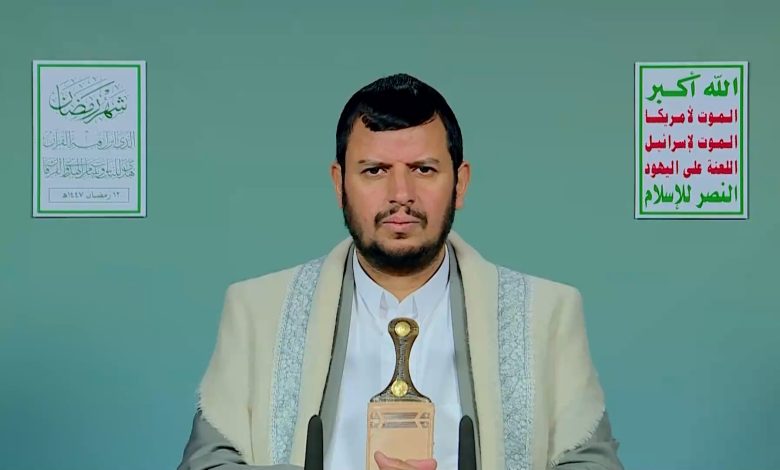
The Twelfth Ramadan Lecture by the Leader: Moses (peace be upon him) as a Model of Kindness and Responsibility
In his twelfth Ramadan lecture, the Leader, Abdul-Malik Badr al-Din al-Houthi, presented a profound analysis of the contemporary reality of the Muslim Ummah from a Quranic perspective. He reviewed the lessons learned from the life of the Prophet Moses (peace be upon him) and emphasized the necessity of acting in accordance with divine guidance to confront the challenges of our time.
Kindness and Responsibility Towards the Oppressed
The Leader focused on the incident of the oppressed people’s plea for help in Egypt, as recounted in Surah al-Qasas. He explained how Moses (peace be upon him) acted to rescue the oppressed, despite the potential dangers, affirming that this action represents the highest degree of kindness and commitment to religious duty.
He pointed out that the unintended consequence of his action (the killing of the aggressor) does not diminish the value of his deed, as he was striving to achieve a greater divine project: protecting the oppressed and changing the reality of injustice.
The Reality of the Nation: Between Vulnerability and Responsibility
The Leader reviewed the current state of the nation, pointing to the neglect of responsibility towards the vulnerable, highlighting the tragedy of the Palestinian people and the silence of the Arab and Islamic world regarding it. He explained that this neglect reflects a deficiency in faith-based education and a loss of the spirit of compassion, making the nation susceptible to exploitation by its enemies, especially the Israeli enemy and its global proxies.
The Challenges of the Age and the Nation’s Duty
The Leader clarified that the enemy is not content with direct military aggression, but also seeks to destroy the values, awareness, and human dignity of the nation, and to impose subservience and subjugation. He emphasized that confronting these dangers requires a collective response, action guided by the Quran, and adherence to the moral and religious duty towards the vulnerable, while drawing upon the practical lessons inspired by Quranic stories.
Practical Lessons from the Quranic Story
The Leader explained that the story of Moses (peace be upon him) provides a practical model of responsible action, where the believer acts according to God’s instructions, striving for correct action, rectifying mistakes, and avoiding impulsive reactions that could harm the greater cause. He emphasized that turning to God and seeking His help is among the most important principles for working on behalf of the oppressed and vulnerable, and that neglecting these principles leads to the weakness and decline of the nation.
Quranic Awareness and Benevolence: The Path to the Nation’s Resilience
The lecture presents a practical and Quranic vision for the resilience of the Muslim nation, drawing inspiration from the life of the Prophet Moses (peace be upon him). It emphasizes the necessity of acting in accordance with divine guidance, adhering to collective responsibility towards the vulnerable, and confronting the enemies of the nation in all their dimensions. It also underscores the importance of cultivating benevolence within the nation and strengthening the spirit of faith and human dignity, so that it may be capable of facing current challenges and achieving victory in this world and the hereafter.