
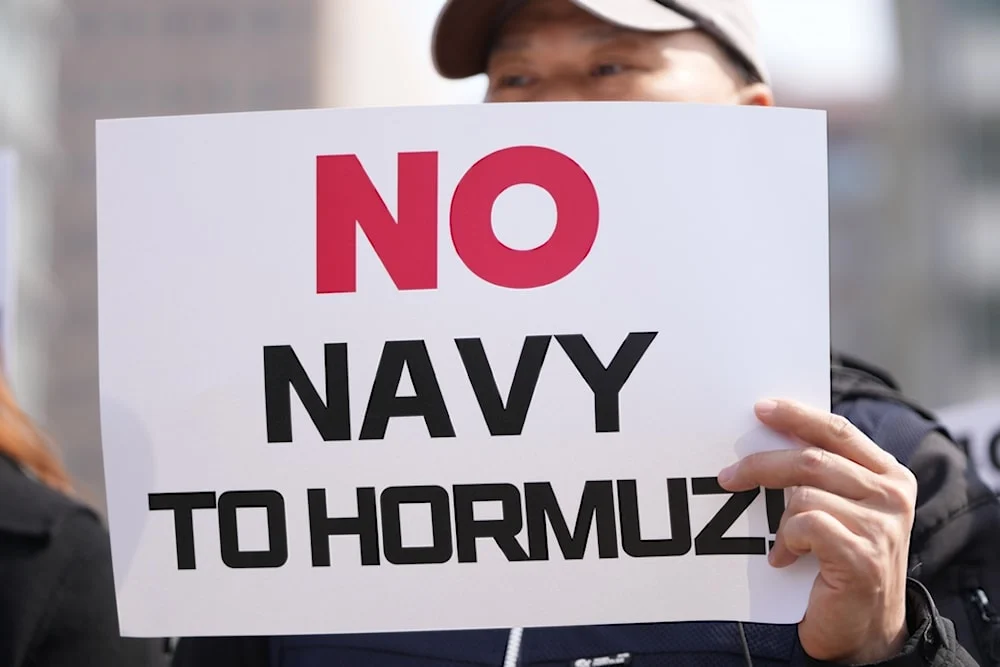
US allies hesitant to join Trump’s Strait of Hormuz coalition
US allies have not yet agreed to participate in a coalition proposed by President Donald Trump to secure navigation in the Strait of Hormuz, Axios reported, citing sources familiar with the discussions.
On March 14, Trump urged China, France, Japan, South Korea, the United Kingdom, and other countries to send warships to the strategic waterway to safeguard maritime traffic.
Responses from some nations have ranged from skepticism to outright refusal. According to Axios, a source said, “ didn’t give a final no, but at the moment it’s a no.”
The proposal comes amid ongoing US and Israeli strikes on Iran that began on February 28, targeting sites including Tehran. These operations have caused both damage and massive civilian casualties. Iran has retaliated with strikes on Israeli territory and US military positions across the Middle East.
Global impact on energy security
The US-Israeli war on Iran has effectively blocked the Strait of Hormuz, a key route for oil and liquefied natural gas shipments from the Gulf to global markets. The tensions have significantly affected oil exports and production in the region.
The uncertainty over international participation in the coalition, combined with the ongoing insecurity due to the war, has raised concerns about the security of energy supplies through the Strait of Hormuz.
Global oil prices climbed more than 2% in early trading on Tuesday as markets reacted to growing concerns over supply disruptions linked to the US–Israeli war on Iran and the near shutdown of the Strait of Hormuz, one of the world’s most critical energy chokepoints.
Brent crude rose $2.48, or 2.5%, to $102.69 per barrel, while West Texas Intermediate (WTI) increased $2.42, or 2.6%, to $95.92.
The rebound followed losses in the previous session, when Brent fell 2.8%, and WTI dropped 5.3% after a limited number of vessels managed to pass through the strategic waterway.
US allies reject calls for naval escort mission
The disruption has been compounded by the reluctance of several US allies to respond to calls by US President Donald Trump to deploy naval vessels to escort commercial tankers through the strait.
On his Truth Social platform, Trump urged the UK, China, France, Japan, South Korea, and other nations to deploy ships to the strait, claiming, “Many countries, especially those who are affected by Iran’s attempted closure of the Hormuz strait, will be sending war ships, in conjunction with the United States of America, to keep the strait open and safe.”
The refusal drew criticism from Trump, who accused Western partners of failing to support Washington despite decades of US backing.
For now, the head of the International Energy Agency suggested member states could release additional oil supplies beyond the 400 million barrels already approved from strategic reserves to help stabilize markets.