
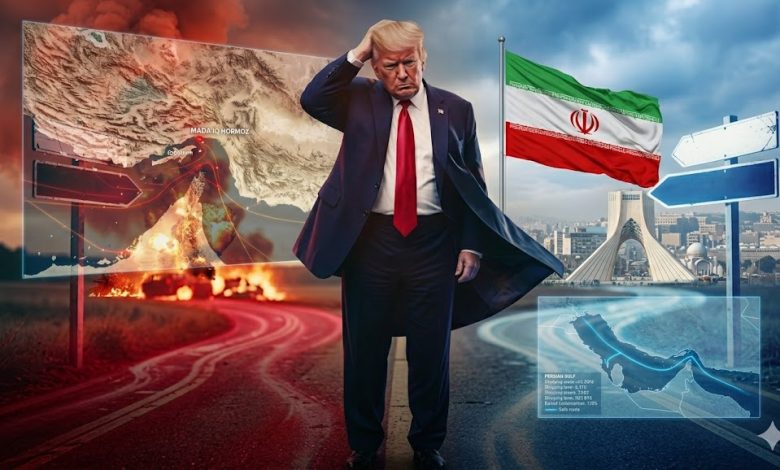
The US Blockade Fails in the Strait of Hormuz: Ships Pass Through as Iran Threatens to Close Navigation
The rapid developments in the Gulf and the Strait of Hormuz reveal a clear decline in the effectiveness of the naval blockade that the United States is attempting to impose on Iran. Meanwhile, Tehran is moving to establish new deterrent measures, linking the security of international navigation to the lifting of US sanctions.
A Field Failure of the Blockade
In a practical indication of the limitations of US measures, a new cargo ship carrying food supplies passed through the Strait of Hormuz bound for the port of Imam Khomeini, according to shipping tracking data. This occurred just hours after a giant oil tanker subject to US sanctions openly entered Iranian waters.
These developments contradict statements by the US Central Command (CENTCOM) regarding the imposition of a complete blockade, reinforcing doubts about Washington’s ability to effectively control maritime traffic in the region.
Navigation vs. Blockade
In response, Iran sent decisive messages. Major General Ali Abdollahi, commander of the Khatam al-Anbiya Construction Headquarters, affirmed that the continuation of the US blockade would be met with a complete ban on imports and exports in the Gulf, the Sea of Oman, and the Red Sea. This stance reflects a clear trend of linking the security of maritime routes to the lifting of pressure, a move that could reshape the rules of engagement in one of the world’s most important energy regions.
Preparing for Confrontation
On the political level, Iranian President Masoud Pezeshkian emphasized that his country does not seek war, but rejects any attempts to impose dictates upon it, stressing that any hostile approach is doomed to failure. In the same vein, Iranian officials called for the recognition of Tehran’s rights, foremost among them its sovereignty over the Strait of Hormuz, warning that ignoring these rights could lead to a renewed confrontation.
Domestically, Tehran announced the execution of security operations against cells linked to foreign entities, a move reflecting a tightening of security measures in parallel with the external escalation.
Internal Disintegration
Meanwhile, Iranian intelligence reports revealed a state of frustration and despair within the ranks of US forces deployed in the region, resulting from field pressures and attacks on military bases.
Estimates indicated hundreds of resignations within a short period, spanning various ranks, amidst unstable field conditions and frequent changes in military plans.
Emerging Equations
These combined indicators suggest that the US embargo is facing a real test on the ground, at a time when Iran is brandishing options capable of directly impacting global trade. With this escalating situation, the region appears to be entering a new phase, characterized by a redrawing of the balance of power, as previous equations are no longer able to withstand the rapidly changing circumstances.