
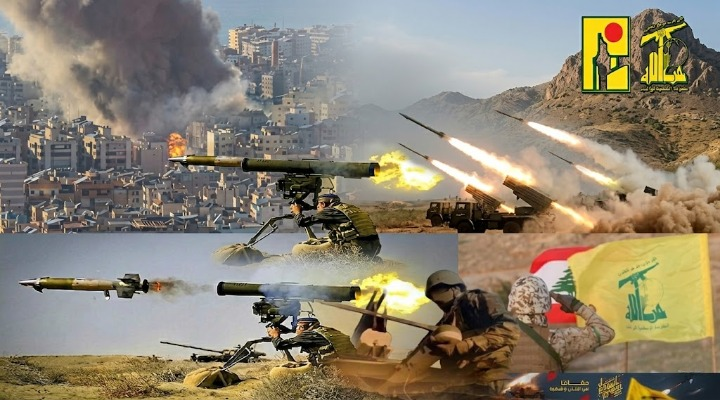
The Resistance in Lebanon Redraws the Equations of Deterrence: Precise Strikes Confound the Enemy and a Zionist Admission of Absolute Failure
In a field and political landscape reflecting a profound shift in the balance of power, the Islamic Resistance in Lebanon – Hezbollah – continues to solidify the equations of deterrence against the Zionist enemy through precise, high-quality operations in the occupied south. This coincides with a growing admission within the enemy entity of military and strategic failure and the erosion of its ability to achieve a decisive victory, despite all the resources it has amassed.
Precise Operations Strike Enemy Targets
As a legitimate response to the enemy’s continued violations of the ceasefire agreement and its attacks on civilians, the Islamic Resistance carried out a series of focused operations within the “Eaten Straw” campaign, targeting enemy vehicles and troop concentrations in occupied southern Lebanon.
According to official statements issued by the resistance, at 1:00 PM on Tuesday, fighters targeted an Israeli military bulldozer carrying out demolition work in the city of Bint Jbeil using a drone, scoring a direct hit. This sent a clear message that the enemy’s attacks on civilian property will not go unanswered.
At the same time, a gathering of enemy soldiers in the town square of Qantara was targeted with a similar drone, resulting in confirmed casualties. The operations continued at 2:00 PM with the targeting of a Merkava tank at the same location, scoring a direct hit. This demonstrates the accuracy of the reconnaissance and execution, as well as the comprehensiveness of the resistance’s target bank.
These operations are part of an escalating campaign that began in early March, during which the resistance continues to deplete the enemy’s capabilities and prevent it from establishing any stable status quo on the border.
Explosive Drones: An Effective Weapon Exacerbating Enemy Losses
In a further indication of the effectiveness of resistance tactics, the enemy army admitted that a number of its soldiers were wounded, one seriously, when an explosive-laden drone crashed during a military operation in southern Lebanon. This admission reflects the growing impact of this weapon in the battle.
Zionist data reveals the extent of the losses. The so-called Ministry of Health of the enemy announced thousands of injuries since the start of Operation “Lion’s Roar,” including hundreds on the northern front, confirming that this front has become a constant and open-ended source of attrition.
Enemy Media: Absolute Failure and Withdrawal Under Fire
Alongside the ground strikes, explicit admissions of failure are escalating within the enemy entity. The Hebrew newspaper Maariv acknowledged that the fighting in Lebanon is ending in utter failure, confirming that enemy forces are withdrawing while Hezbollah’s fire continues, in a scene that reflects a clear inability to impose a deterrent equation.
Zionist analysts pointed out that Hezbollah succeeded in re-establishing the rules of engagement it had sought, and even went further through flexible tactics that draw on historical experience and prevent the occupation forces from establishing a foothold or entrenching themselves.
The newspaper also revealed the withdrawal of prominent military units, including the 162nd Division and the Nahal and Paratroopers Brigades, with expectations of continued withdrawals. This reflects the extent of the predicament the Israeli enemy faces on the ground.
The most dangerous aspect of these admissions is the acknowledgment that the settlers in the north have been left to their fate, given the government’s inability to protect them, amidst what Zionist reports have described as abandonment under fire. This opens the door to a deepening internal crisis.
Strategic Confusion and Conflict with the American Ally
Zionist assessments indicate that the enemy committed a major strategic error when it expanded its aggression towards Iran without securing its fronts, finding itself facing multiple fronts, from Lebanon to Yemen, in the absence of effective coordination between these arenas.
Reports also reveal a clash of interests between the Israeli entity and the US administration, particularly concerning Lebanon and the security of the northern settlements. This further complicates the situation and limits the enemy’s ability to make decisive decisions.
In the same vein, criticism is mounting within the Israeli entity regarding the policies of Netanyahu’s government. Media reports confirm that the Israeli enemy has failed to achieve its objectives in the recent wars, leading to increased public discontent, especially with the approaching elections.
A deterrence equation is being solidified, and the situation is heading towards escalation. All these developments confirm that the Islamic Resistance in Lebanon is not merely responding, but is working to reshape the conflict environment by imposing new equations that make the cost of aggression high and open-ended.
Between precise field strikes, Zionist admissions of failure, and a deepening internal crisis, the Zionist enemy appears to be facing an unprecedented period of confusion, while resistance forces in the region—from Lebanon to Yemen—continue to solidify their presence as a decisive factor in the regional deterrence equation.
In light of this scenario, attention is turning to what the coming days will bring, given the resistance’s insistence on continuing its operations, in contrast to the enemy’s clear inability to regain the initiative, which makes all possibilities open to a wider escalation that may redraw the map of confrontation in the entire region.