
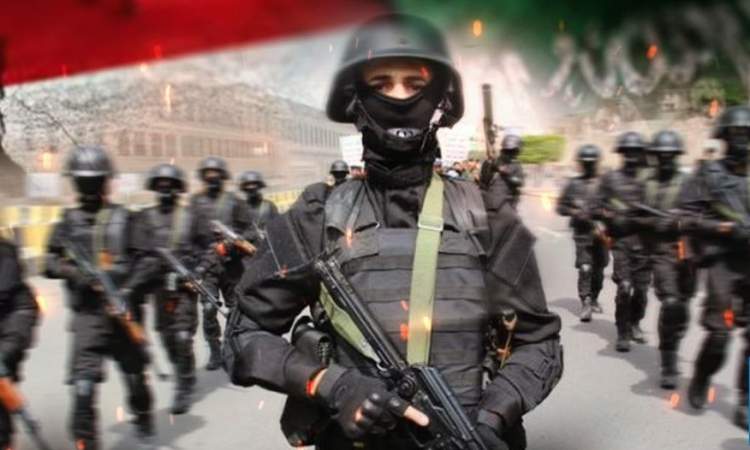
Politicians and security officials: De-escalation is a Saudi ploy; vigilance is the key to thwarting conspiracies.
The Saudi-American-Israeli aggressor trio continues to desperately rely on its espionage and intelligence activities as a last resort, despite the high level of vigilance of security agencies. These agencies have relentlessly pursued and dismantled dozens of cells since the start of Operation “Al-Aqsa Flood,” the latest being the American-Israeli-Saudi spy cell that sought to monitor and target military capabilities and leaders during the “Promised Victory and Holy Jihad” operation to support Gaza.
This frantic insistence on recruiting surveillance and blackmail cells is a natural consequence of the resounding military failures suffered by the American-Saudi aggressor states over the past decade. Their war machine has failed to achieve any of its objectives in subjugating the Yemeni people or seizing their national independence.
With the exposure of American and Israeli impotence in the face of the Yemeni armed forces’ strikes during their support of the Palestinian people and the resistance axis, this trio is now attempting to shift the battle to the home front through a “shadow war,” believing that intelligence infiltration can achieve what warships and fleets failed to accomplish. However, they are encountering a solid wall of societal awareness and security professionalism that transforms all their aggressive plots into resounding failures, revealing the extent of their defeat on the ground.
The policy of de-escalation as a continuous aggressive maneuver
In this context, Dr. Hazam al-Assad, a member of the Ansar Allah Political Bureau, affirms that the confessions of the discovered spy networks expose the world to the reality of intelligence collusion between Riyadh, Washington, and the interim entity targeting Yemen.
Al-Assad emphasizes that the Saudi regime is playing a functional role within this aggressive alliance to undermine the home front, exploiting the living conditions and the blockade to recruit some weak-willed individuals through money and blackmail. He stressed that these conspiracies, in which elements of the former regime were involved, aim to undermine Yemen’s supportive stance towards Gaza, emphasizing that any path to peace remains futile unless it includes a complete cessation of military, economic, and intelligence aggression, and respect for the country’s sovereignty.
For his part, Ansar Allah Political Bureau member Mohammed al-Farah explained that Saudi intelligence continues to recruit cells and intensify daily aerial surveillance operations, proving that the current “de-escalation” is merely a cover for the continuation of the war with aggressive intentions.
Al-Farah pointed out that Riyadh does not deal with Yemen with a peace-oriented approach, but rather exploits intelligence information and shares it with the Zionist and American enemies. This is confirmed by the confessions of captured individuals regarding the coordinates of last year’s aggressive airstrikes. He warned against “false complacency” and called on the armed forces and the public to remain vigilant to thwart any plans to attack the Yemeni people.
The Security Battle: Integrating Legal Strictness and Field Vigilance
The current intelligence battle necessitates a qualitative shift from a defensive to an offensive security approach. Dismantling espionage networks requires the firm application of the principle of “reward and punishment” to ensure that the national arena does not become an open stage for hostile intelligence agencies seeking to exploit social and technological vulnerabilities.
In this critical security context, security expert Brigadier General Abed Al-Sharqi calls for the imposition of the harshest deterrent penalties, including the death penalty, against spies working for Mossad, Saudi intelligence, and American intelligence. He emphasizes that leniency encourages treason.
Al-Sharqi believes that curbing the recruitment of spies requires dedicated and qualified security personnel who hold security work sacred. He considers citizen cooperation in reporting suspicious movements a fundamental pillar for the police. He commends the high professionalism of the Yemeni security services in uncovering these elements using distinguished methods that surpass those of many other countries, thus contributing to drying up the sources of information leaks and coordinates that lead to the tragic loss of martyrs’ lives.
For his part, Colonel Abdulrahman Al-Munawar, director of the Security Media Center in Taiz, emphasizes the importance of “informational discipline” and the necessity of breaking down the barrier of fear among citizens regarding reporting blackmail. He affirms the provision of confidential channels that protect whistleblowers from reprisals. Al-Munawar calls for activating “self-filtering” of content before digital publication and for considering the potential benefit the enemy might derive from leaked images or information about military movements. He believes that being mindful of divine oversight and wary of the “obsession with likes” is sufficient to thwart most open surveillance operations. In concluding his remarks to the Ansar Allah website, Al-Munawar stresses the importance of continuous awareness campaigns about legal penalties to create a general public deterrent against hostile surveillance tools.
Yemen is impenetrable.
With the unraveling of this new spy cell, adding to a record of security successes in dismantling dozens of previous networks, a fundamental question arises regarding the ability of the aggression coalition to adapt to changing circumstances, cease its hostile gambles, and seriously pursue the implementation of the peace roadmap. Or will it continue to cling to its futile policies, based on exploiting the weak-willed and relying on morally and patriotically bankrupt tools? The significant revelations today within the enemy’s intelligence apparatus confront the ranks of traitors with shocking realities. Will these successive security blows serve as a decisive deterrent to anyone tempted to become beholden to foreign powers or sell national sovereignty for illusory promises?
The established fact remains that the home front is an impregnable fortress thanks to the cohesion between the vigilance of the security services and the growing public awareness. This equation turns the Saudi and American regimes’ moves to destabilize the country into counter-reactions that deepen their field predicament, and proves that betting on penetrating the interior is a losing bet in the face of a people who know for certain that preserving independence begins with uprooting the centers of treachery and purifying the national arena from the stain of subservience to foreign will.