
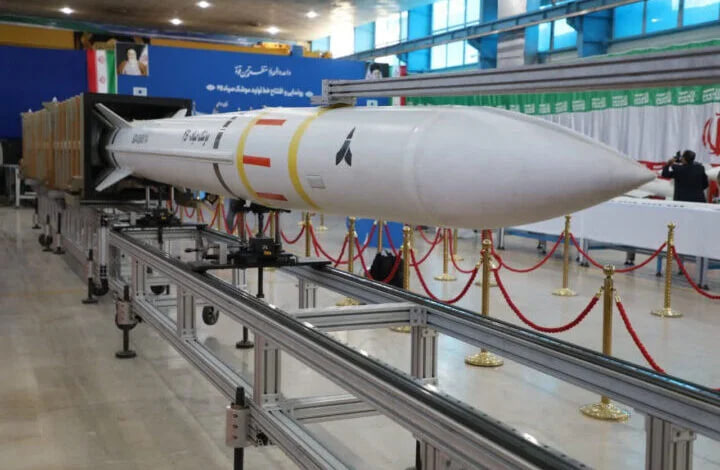
Iran raises its readiness level and warns against crossing red lines: New air defense systems and a decisive response to any aggression.
The Iranian armed forces renewed their warnings on Sunday against any new American or Zionist military adventure against the Islamic Republic, stressing that Iran continues to develop its defense and military capabilities at an accelerated pace, and that any attempt to cross the drawn lines will be met with a decisive and painful response, in light of the continued state of distrust towards the United States and the course of indirect negotiations.
In this context, Major General Ali Abdollahi, commander of the Khatam al-Anbiya Central Headquarters, affirmed that the enemies’ claims regarding the destruction of Iranian military capabilities have fallen in the face of field realities, noting that the enemy has repeatedly promoted the destruction of the Iranian military sector, but the course of the confrontation has proven the continued full readiness of the armed forces and the continued effectiveness and existence of various military capabilities.
Abdullahi explained that the Iranian armed forces are continuing to develop their military equipment in line with the requirements of the current stage and modern technological developments, noting that this path has become clear in the field and reflects the level of defensive progress achieved by the Islamic Republic during the past years.
The commander of the Khatam al-Anbiya headquarters stressed that Iran’s air defense systems performed much better than before during the third imposed war, confirming that Tehran is preparing to bring new air defense systems into service with the aim of enhancing the ability to counter air attacks and raising the level of operational efficiency in the face of any potential aggression.
Meanwhile, Major General Mohsen Rezaei, a member of the Expediency Discernment Council, issued a strongly worded warning to the enemies, stressing that the Islamic Republic’s apparent strategic patience masks deep and revolutionary anger among the Iranian people, and that any attempt to cross the lines drawn by Tehran will provoke a direct and decisive response.
Rezaei pointed out that the United States is faced with two options, and there is no third: either to engage in a military confrontation and try to achieve gains on the ground, or to seek to impose its conditions through negotiations. He stressed that any military action targeting the Strait of Hormuz or an attempt to enter the Persian Gulf by force will be met with a firm, painful, and unprecedented response from the Islamic Republic.
In the political and diplomatic context, Iranian sources revealed the continued deep pessimism towards Washington despite the efforts and indirect contacts sponsored by Pakistan. Tasnim News Agency quoted an informed source confirming that Tehran does not view the United States with optimism, and that the exchange of messages through the Pakistani mediator is always based on caution and distrust.
The source explained that the ongoing negotiations have not yet led to a final understanding, given the continued disagreements over a number of key points, stressing that any preliminary understanding – if reached – does not mean a change in the Iranian view of the United States or reassurance of its commitment to fulfilling its pledges.
The source stressed that the American record of violating agreements and circumventing previous understandings reinforces the Iranian pessimism, noting that Tehran will monitor Washington’s behavior and practical measures in the phase following any potential understanding, and that it will retain all its strategic leverage to deal with any American breach of commitments or attempts to impose new realities by force.