
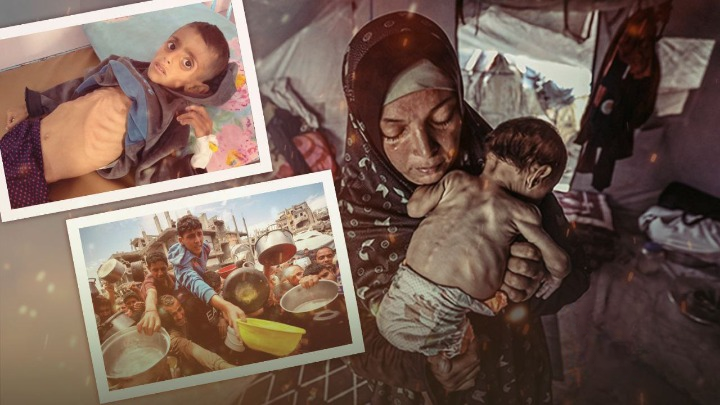
Gaza between disease and siege: A humanitarian catastrophe worsens under the weight of aggression
The Zionist aggression against the Gaza Strip is no longer limited to destruction and killing, but has created a complete environment for epidemics, hunger and health collapse, in one of the worst humanitarian disasters the world has witnessed. With the continuation of the siege and the prevention of the entry of medical and humanitarian supplies, the spread of diseases is widening, and the ability of the health sector to respond is declining, while more than two million Palestinians are facing unprecedented living and health conditions.
Daily events reveal that the humanitarian crisis in Gaza has entered a more dangerous phase, as the effects of the siege have become intertwined with the collapse of health services and the spread of infectious diseases, at a time when arrests and violations against Palestinians continue, along with the ongoing escalation against Al-Aqsa Mosque and the Ibrahimi Mosque, reflecting the widening scope of targeting to include people, land, and holy sites.
Skin diseases are spreading
In the latest indication of the deteriorating health situation, medical authorities in the Gaza Strip announced the registration of approximately 9,300 cases of infectious skin diseases in just two weeks, including chickenpox, scabies, and lice, across 130 health centers throughout the Strip.
Medical teams confirmed that the continued shortage of medicines and medical supplies threatens to cause the health situation to spiral out of control, especially within shelters and displacement camps that are severely overcrowded, coinciding with the spread of intestinal diseases resulting from water and food contamination. The sector also suffers from a severe shortage of medicines for chronic diseases, including medicines for diabetes, heart disease and high blood pressure, in addition to an escalating crisis in kidney dialysis supplies, which doubles the suffering of thousands of patients.
Aid is less than a quarter of what is needed
The health collapse coincides with a worsening humanitarian crisis resulting from continued restrictions on aid entry. Relief officials confirmed that between 150 and 200 trucks are currently entering Gaza daily, while the sector needs between 600 and 1,000 trucks daily to meet the minimum basic needs.
The displaced people are living in harsh conditions in more than 750 shelters, with tents deteriorating, insects and rodents spreading, and temperatures rising, in addition to the closure of a number of relief kitchens due to the prevention of aid from entering.
The toll of the aggression rises
In this context, the Ministry of Health in Gaza announced that the total number of victims of the aggression has reached 73,090 martyrs and 173,553 wounded since the start of the aggression on October 7, 2023.
She also explained that what reached the hospitals during the past forty-eight hours amounted to 16 martyrs, including 6 new martyrs, one martyr who succumbed to his wounds, and 9 martyrs whose bodies were recovered, in addition to 16 injuries. The ministry confirmed that a number of victims are still under the rubble and in the streets, as it is impossible for ambulance and civil defense teams to reach them.
Escalation against women and female prisoners
In the West Bank, arrest campaigns against Palestinian women continue, with the “Palestine Center for Prisoner Studies” documenting more than 770 cases of arrest of women and girls since the start of the aggression, including 109 cases during the first half of this year.
The center pointed out that the enemy continues to detain 98 female prisoners, who are subjected to harsh detention conditions, including medical neglect, abuse and deprivation of the most basic rights, while the entity continues its policy of enforced disappearance against female detainees in the Gaza Strip.
Escalating attacks on holy sites
In Jerusalem, the Al-Aqsa Mosque witnessed the storming of more than 1,403 settlers last week under the protection of enemy forces, amid escalating Palestinian calls for vigilance and intensive presence in the mosque to confront attempts to impose a new reality inside it.
In Hebron, the enemy continued to prevent the call to prayer at the Ibrahimi Mosque for the fourteenth consecutive day, coinciding with the continued restrictions on worshippers and the removal of a number of those in charge of managing the mosque, as part of a policy aimed at consolidating control over Islamic holy sites.
The Palestinian Scholars Association also warned that the enemy has moved from a stage of targeting people and land to a new stage that directly targets Islamic rituals, through attacks on mosques and Qur’ans, restricting the call to prayer, and accelerating the Judaization of the Al-